













My Child Can Read but Can't Spell: Why, and What Works
Reading is recognizing; spelling is recalling every letter. What a review of 53 studies found, and a 15-minute weekly routine that turns readers into spellers.
In short
- Reading needs only enough of a word to recognize it; spelling needs every letter, in order, from memory.
- A review of 53 studies found that teaching spelling directly works, lasts, and shows up most in children's own writing (Graham and Santangelo, 2014).
- Three 5-minute sessions a week: read the list, dictation, then check your own writing.
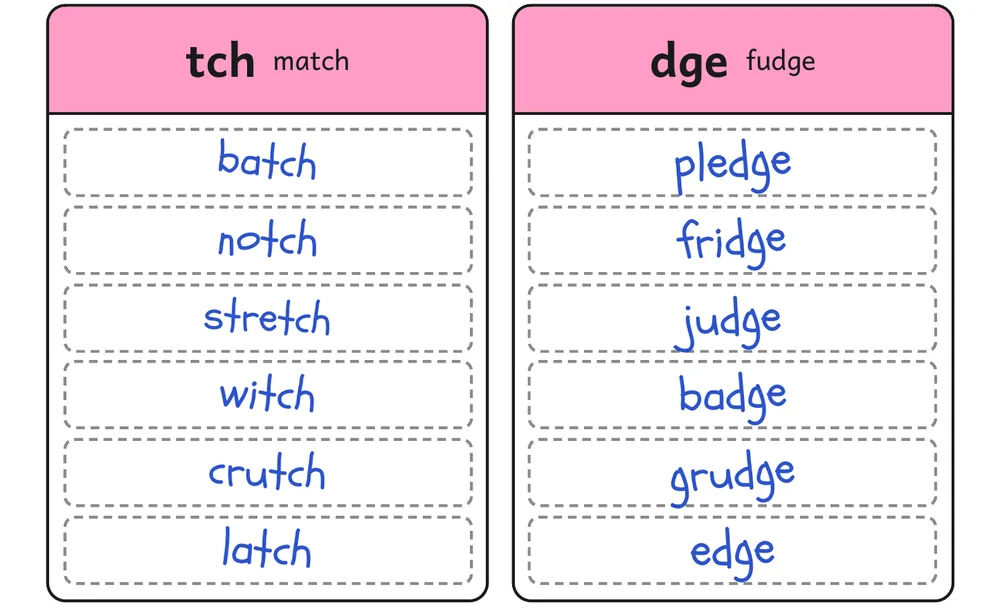
1tch or dge
2Soft c or Soft g
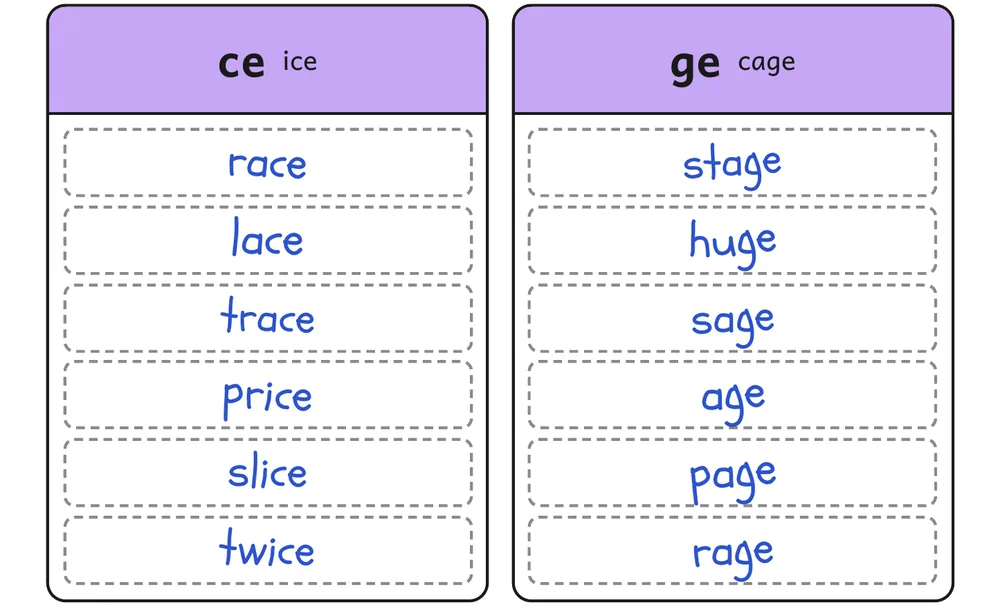
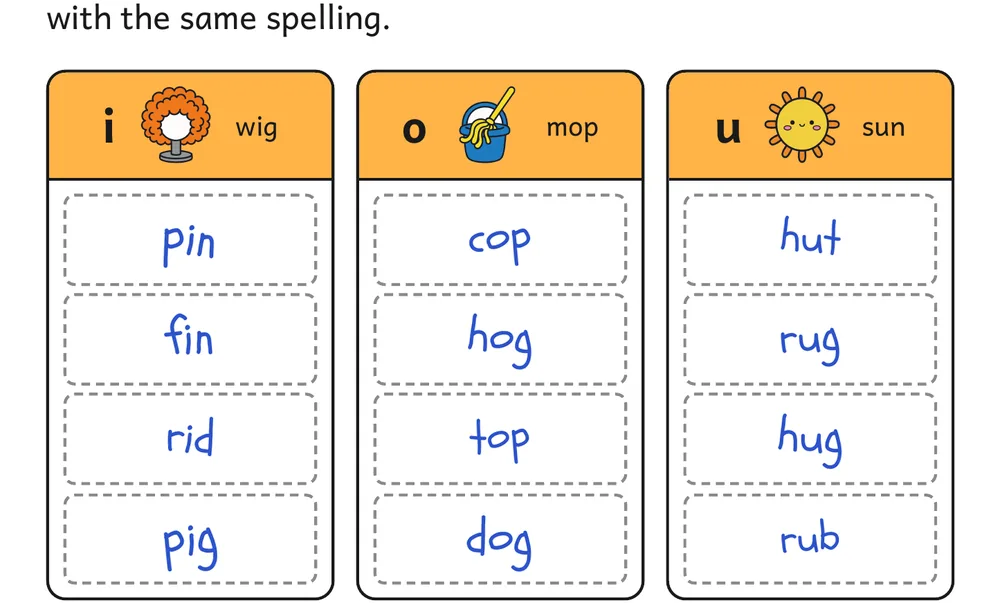
3Short i, o or u
Reads Well, Can't Spell? A 15-Minute Week
Save- 1MondayRead the list, underline the tricky part
- 2WednesdayDictation: the words, then one sentence
- 3FridayCheck my writing against the list
- 4Pick 5 to 8 wordsOne pattern, words they already read
- 5Keep the missesMissed words go on next week's list
Your child reads a whole page out loud, then writes "frend", "becuz" and "wus" in a thank-you card. It feels like a contradiction. It isn't. Reading and spelling use the same knowledge, but spelling asks for much more of it, and it gets better fastest when it is taught on purpose.
Reading and spelling, side by side
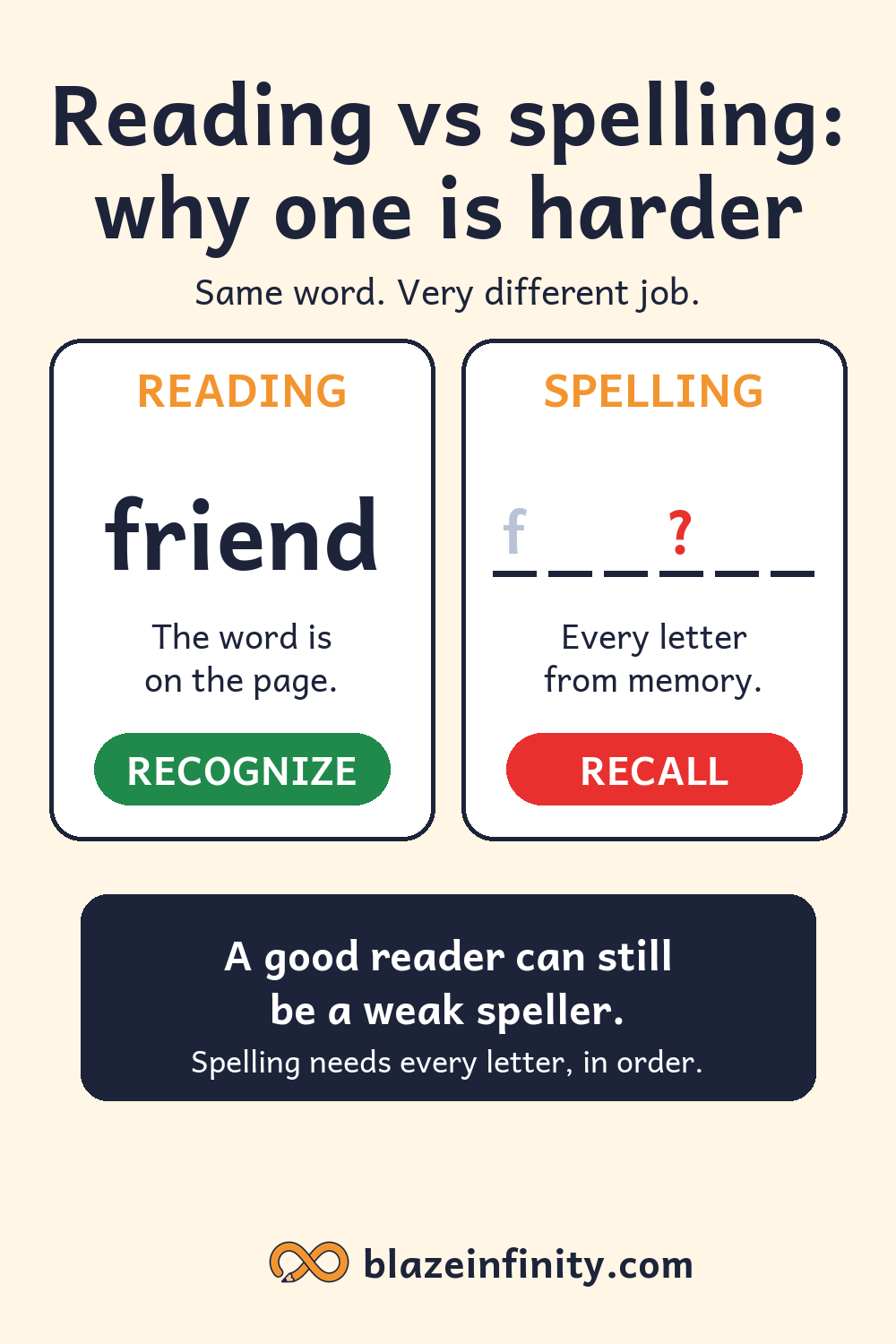
| When your child reads "friend" | When your child spells "friend" |
|---|---|
| The word is on the page. | The page is blank. |
| A few letters plus the sentence are enough to get it right. | Every letter has to come from memory, in order. |
| The silent i in "friend" can be skipped and the word still reads. | The silent i has to be remembered, with nothing to hint at it. |
| A good guess often works. | A guess is almost always a misspelling. |
| Recognizing. | Recalling. |
That is the whole puzzle in one table. A child can recognize a word with a partial memory of it. To spell it, the memory has to be complete.
Where those complete memories come from
The reading researcher Linnea Ehri describes how children store words. Early on, children connect only some letters to sounds, and their memory for correct spellings is weak. Once they can connect every letter in a word to its sound, she writes, they "can remember correct spellings of words much better" because the spelling is tied to the way the word is said.
So spelling problems in a good reader usually mean one of two things:
- The child reads by sight and context more than by every letter. Fine for reading, not enough for spelling.
- The word has a part that doesn't match its sounds (the i in friend, the b in climb). Those parts need extra, planned practice.
Does teaching spelling actually help? 53 studies say yes
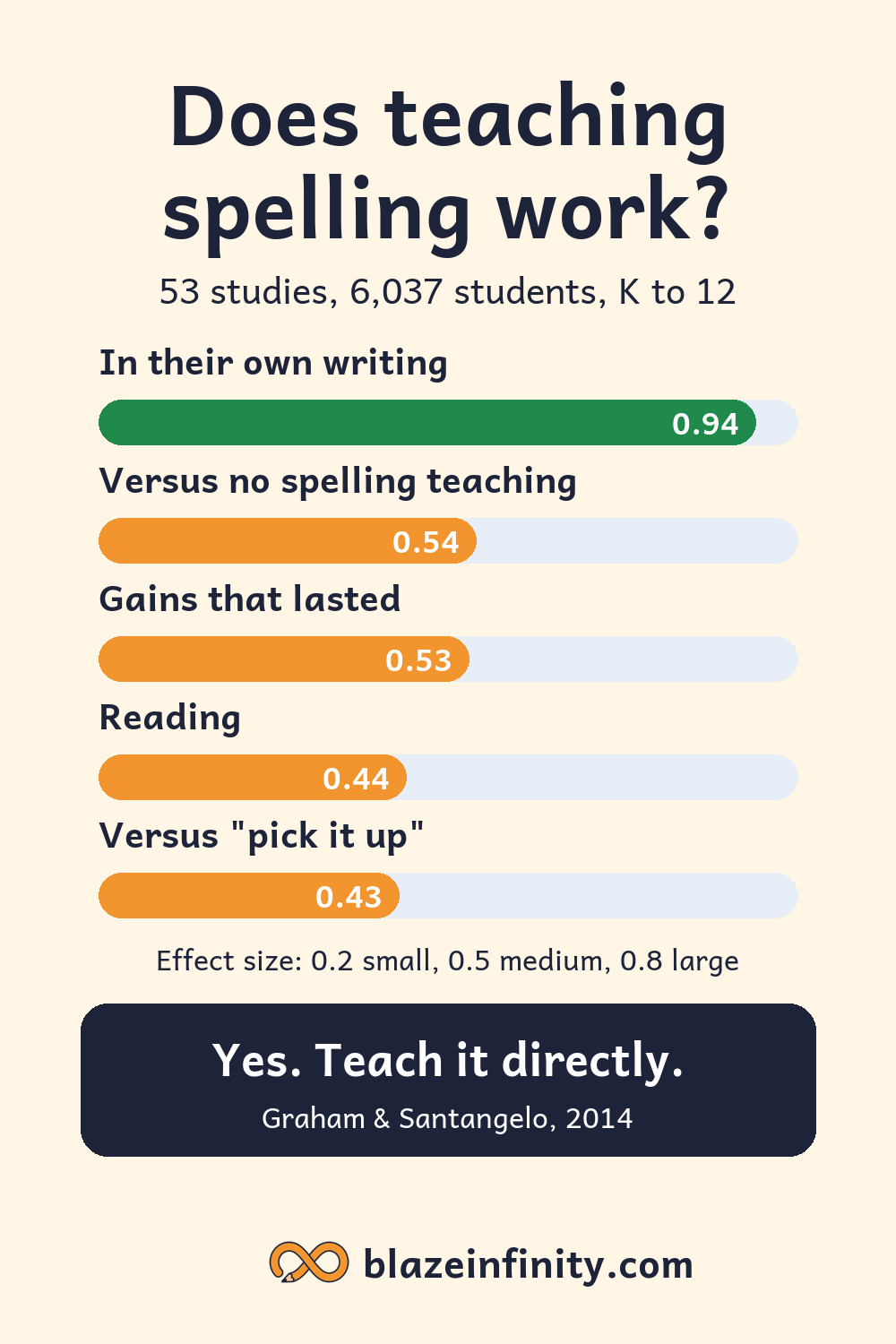
Some schools treat spelling as something children "pick up" from reading. The research says otherwise. Steve Graham and Tanya Santangelo (2014) combined 53 studies with more than 6,000 students from kindergarten to 12th grade. They found "strong and consistent support for teaching spelling". In plain words:
- Taught spelling beat no spelling teaching by a medium-sized amount (effect size 0.54).
- It beat "pick it up as you go" teaching too (0.43).
- The gains lasted after the teaching stopped (0.53).
- Children spelled better in their own writing, not just on tests, and this was the biggest effect of all (0.94, a large effect).
- It helped reading as well (0.44).
Researchers usually call 0.2 small, 0.5 medium and 0.8 large. The headline: direct spelling teaching works, it lasts, and it shows up in real writing.
The National Reading Panel found a related result for the youngest children: practicing sounds with letters had "a much larger impact on spelling" than practicing sounds without letters, and kindergartners gained more in spelling from this practice than first graders. Starting early pays off.
A 15-minute weekly routine
You don't need a spelling program at home. You need a small list, a dictation and a check. Three short sessions a week are enough.
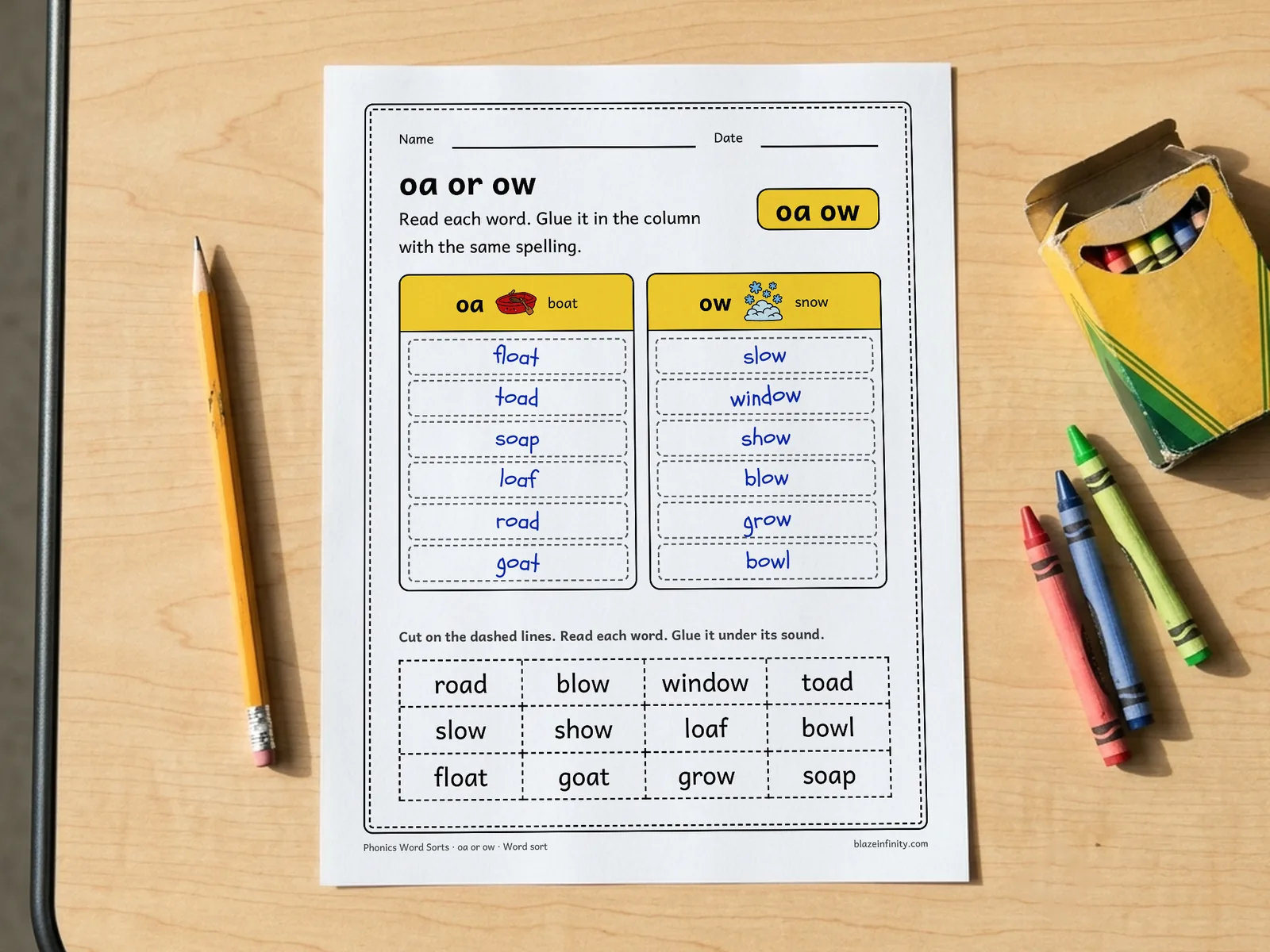
Monday (5 minutes): read the list and find the tricky part. Take 5 to 8 words that share one pattern your child is already reading (for example, words with ck, or silent e). Read each word, say it slowly, and underline the part that could trick you: the ck in "duck", the e in "cake".
Wednesday (5 minutes): dictation. Say a word, your child says it back slowly, then writes it. Do the list, then one short sentence that uses two of the words: "The duck is on the rock." Sentences matter, because the review above found the biggest gains in children's own writing.
Friday (5 minutes): check my writing. Your child circles any word they're not sure of, then checks it against the list. Fix it together by saying the word slowly and matching every sound to its letters. Keep words they missed for next week's list.
How to pick the 5 words that matter
- One pattern a week. Mixed lists teach memorizing; one pattern teaches a rule your child can use on new words.
- Words they already read. Spelling should trail reading, not lead it.
- Two or three words from their own writing. If "because" shows up in every card, it goes on the list.
- One tricky word at most. Words like "said" and "friend" need their odd part practiced; our guide to heart words shows how.
Good patterns to start with: short vowel words, then the FLOSS rule (puff, bell, miss), then silent e (cake, bike).
When to ask for help
Most children who read well but spell poorly just need the routine above. Talk with your child's teacher if, after a few months of steady practice, your child still leaves out sounds in short words (writing "sap" for "stamp"), can't spell words they read easily every day, or avoids writing altogether.
Ready-made lists and dictation pages
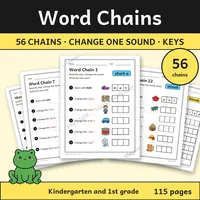
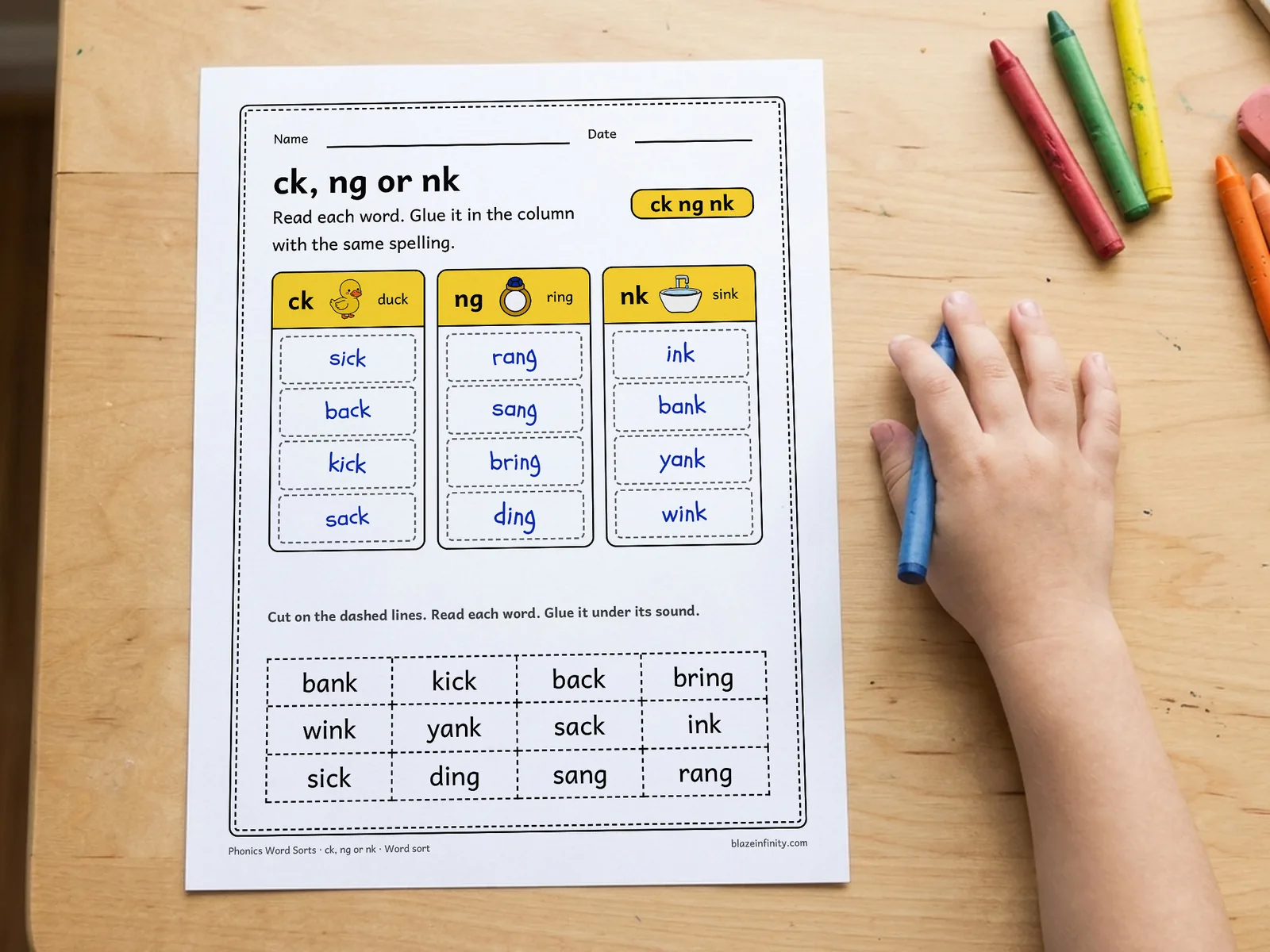
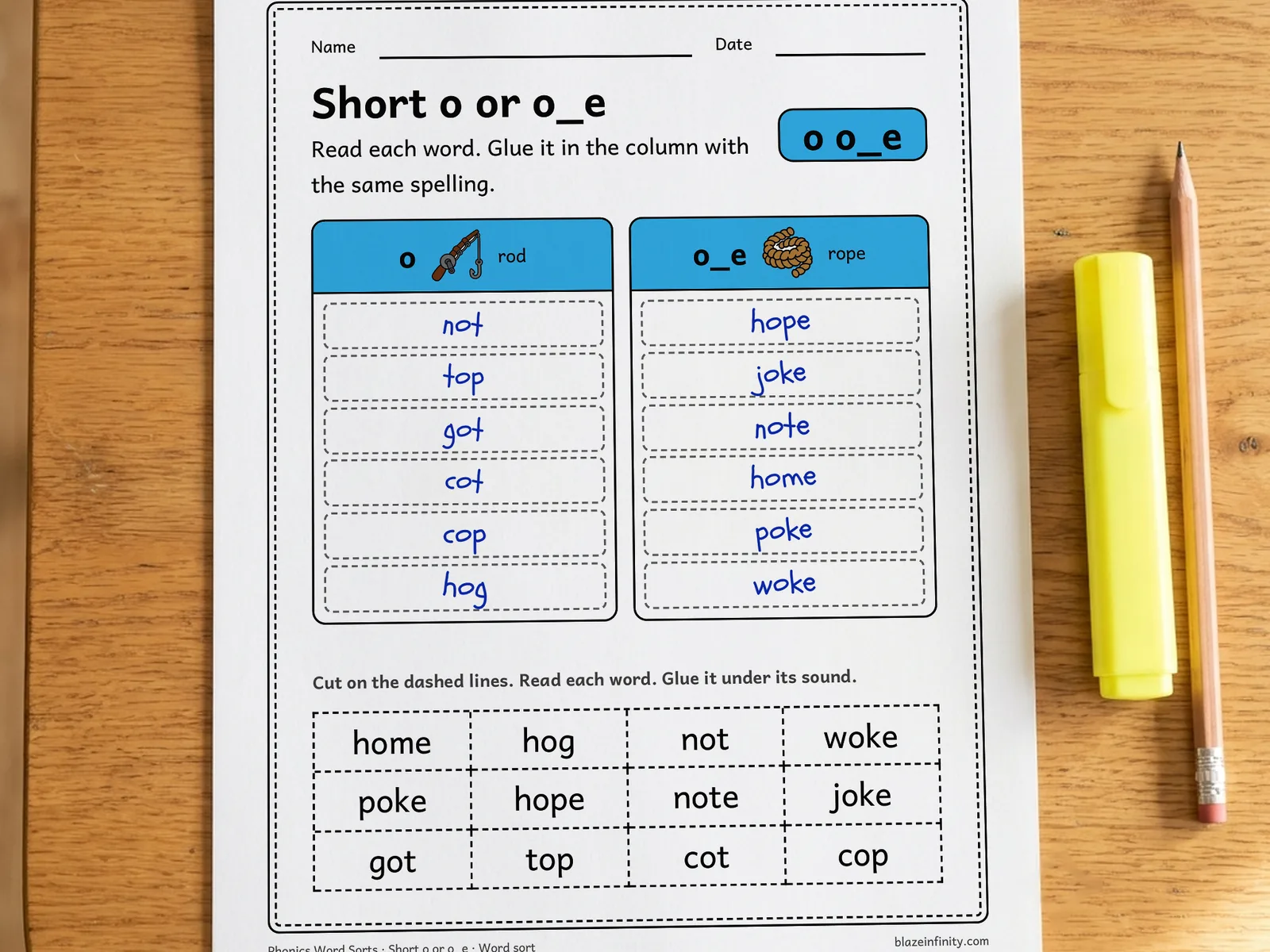
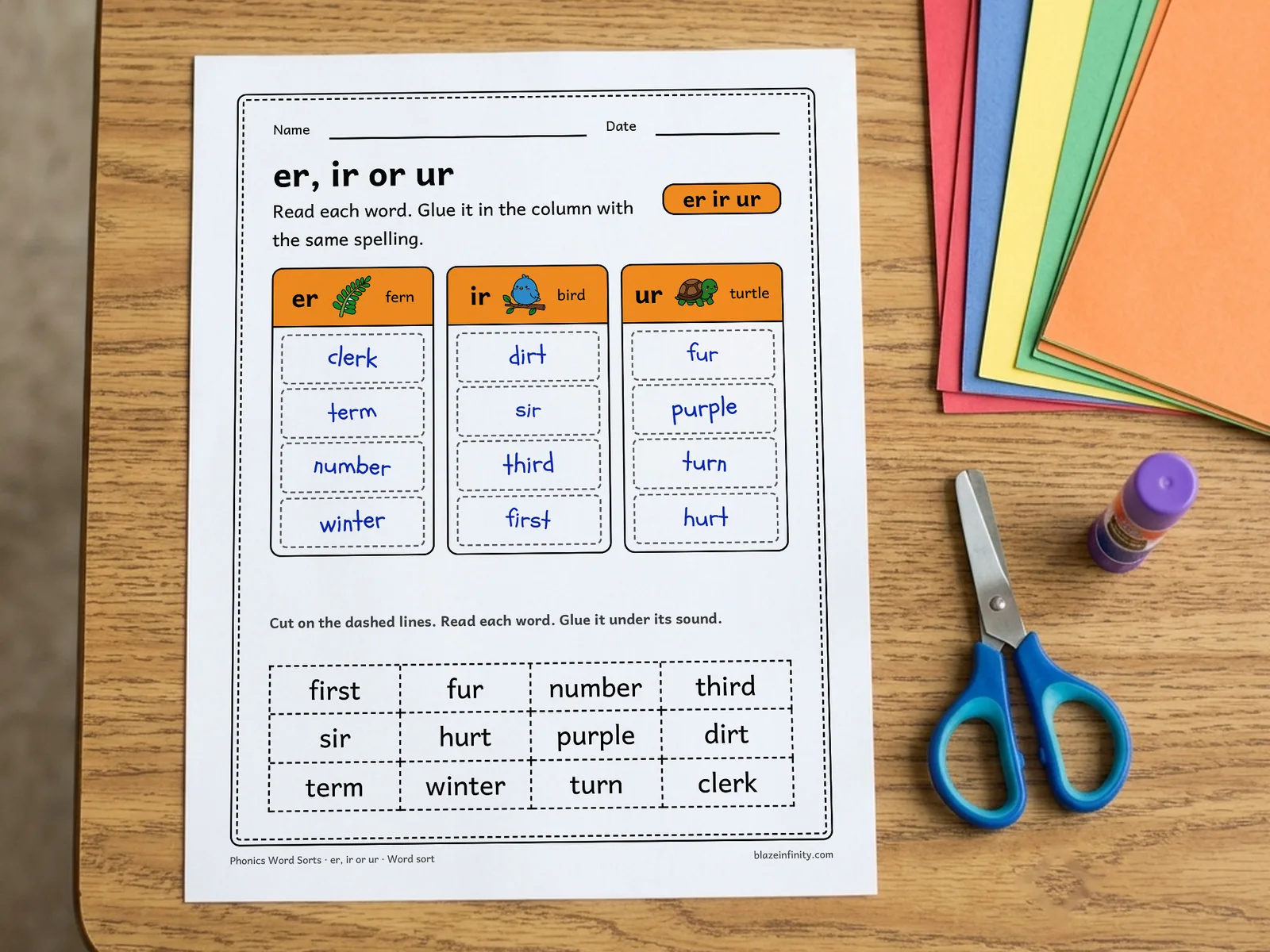
Our Spelling and Dictation set has 42 weekly spelling lists in teaching order, 42 dictation pages and 42 teacher pages with the words and sentences to read aloud, matched to our Phonics Rules set. For practice between dictations, Word Chains and Phonics Word Sorts work on one pattern at a time.
Free to try: fluency and spelling worksheets and missing vowel worksheets.
What the research says
- A meta-analysis of 53 studies (K-12) found strong and consistent support for teaching spelling: effect sizes 0.54 against no instruction, 0.43 against incidental learning, 0.53 maintained, 0.94 in students' own writing, 0.44 on reading. [1]
- Children who connect every letter of a word to its sound remember correct spellings much better (orthographic mapping). [2]
- Phonemic awareness taught with letters had a much larger impact on spelling than without letters; kindergartners gained more in spelling than first graders. [3]
Sources
- Graham, S., & Santangelo, T. (2014). Does spelling instruction make students better spellers, readers, and writers? A meta-analytic review. Reading and Writing, 27(9), 1703-1743.
- Ehri, L. C. (2014). Orthographic mapping in the acquisition of sight word reading, spelling memory, and vocabulary learning. Scientific Studies of Reading, 18(1), 5-21.
- National Reading Panel (2000). Teaching Children to Read, Reports of the Subgroups, chapter 2.
Common questions
- Why can my child read a word but not spell it?
- Reading needs only enough of the word to recognize it. Spelling needs every letter, in order, from memory.
- Will spelling improve on its own with more reading?
- Reading helps, but a review of 53 studies found that teaching spelling directly worked better than leaving children to pick it up.
- How many spelling words a week?
- For K to 2nd grade, 5 to 8 words that share one pattern, plus a sentence to write.
The full set for this skill
Phonics Word Sorts
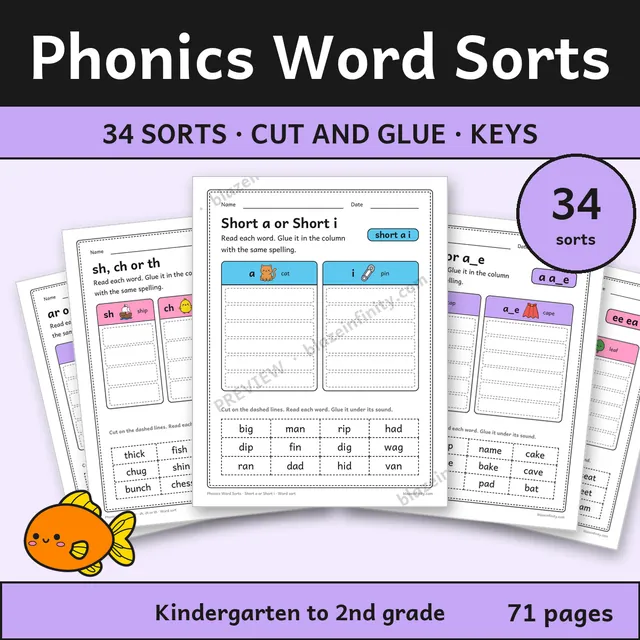
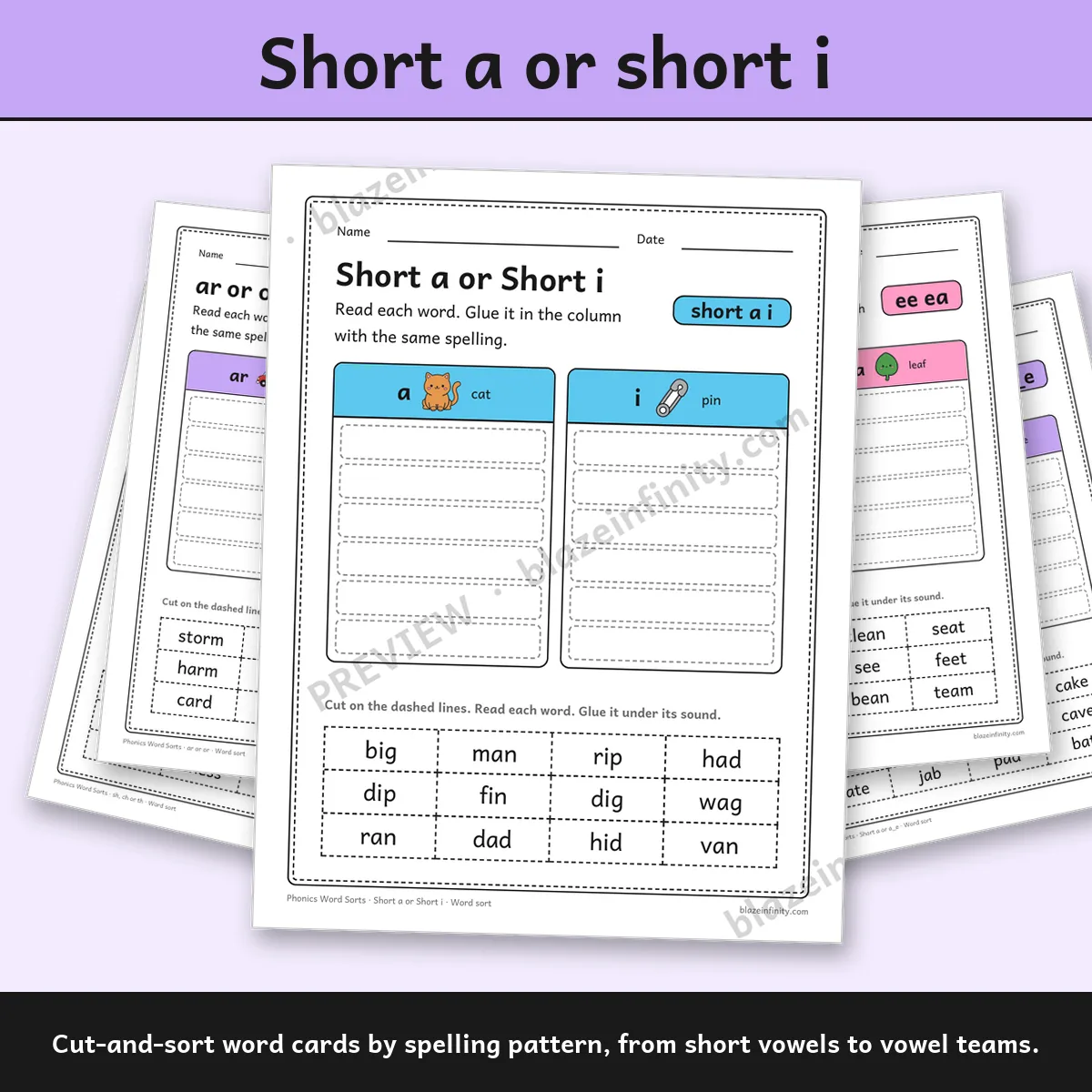
34 word sorts in teaching order: short vowels, digraphs, silent e, soft c and g, r-controlled vowels and vowel teams. Children read each card, then glue it under its pattern.
- 34 cut-and-glue sorts in teaching order
- A key word for every pattern, with a picture where there is one
- An answer key after every sort
- Long vowel spelling sorts for 2nd grade
- Color and black-and-white (ink-saving) editions