









Heart Word Activities: A 2-Minute Routine and 10 Games
A two-minute daily heart word routine and 10 heart word activities for kindergarten and first grade, sorted from quickest to longest, with free practice pages.
In short
- Practice heart words for two minutes every day: say it, tap the sounds, match sounds to letters, write it, flash older words.
- Good heart word activities make the child look at every letter and say the sounds. Only the irregular part is learned by heart.
- Take a heart off when the pattern is taught. Some words are heart words only until then.
- A heart word is learned when the child reads it in a sentence and spells it right in their own writing.
The best heart word activities are short and happen every day. In each one, the child says the sounds, looks at every letter, and gives extra attention to the one part that does not spell its sound the usual way. A two-minute routine at the start of your phonics block does most of the work. One game or activity a day keeps it fresh.
If you want to know what a heart word is and how to teach a brand new one, start with our guide to heart words and how to teach them. This page picks up where that one stops: what to do on every other day, so the words your class has met turn into words they read and spell without stopping.
The 2-minute heart word routine
Do this with the week’s new heart word, then flash a few older ones. The times are our suggestion for a whole class. With one child at home it often takes less.
- 1
Say it and use it
You say the word, the children say it back, and you put it in a short sentence. “From. It is from my dad. Say it with me.” About 15 seconds. - 2
Tap the sounds
Children tap one finger for each sound they hear, not each letter. From has four sounds: /f/ /r/ /u/ /m/. About 15 seconds. - 3
Match sounds to letters
Point to each part of the written word as the class says its sound. Stop at the surprise: “The /u/ sound is spelled o here. That is the heart part.” About 20 seconds. - 4
Write it, saying the sounds
On whiteboards or paper, children write the word while saying each sound, then draw a heart over the heart part. Cover the model first, then uncover it to check. About 40 seconds. - 5
Flash the old ones
Hold up three to five heart words from past weeks. The class reads each one. Any word that gets a pause goes back into tomorrow’s pile. About 30 seconds.
Keep the regular parts regular. The f, the r and the m in from are spelled the way children expect, so they sound them out like any other letters. Only the o needs to be learned by heart. When a child has that idea, a new heart word is mostly a word they can already read.
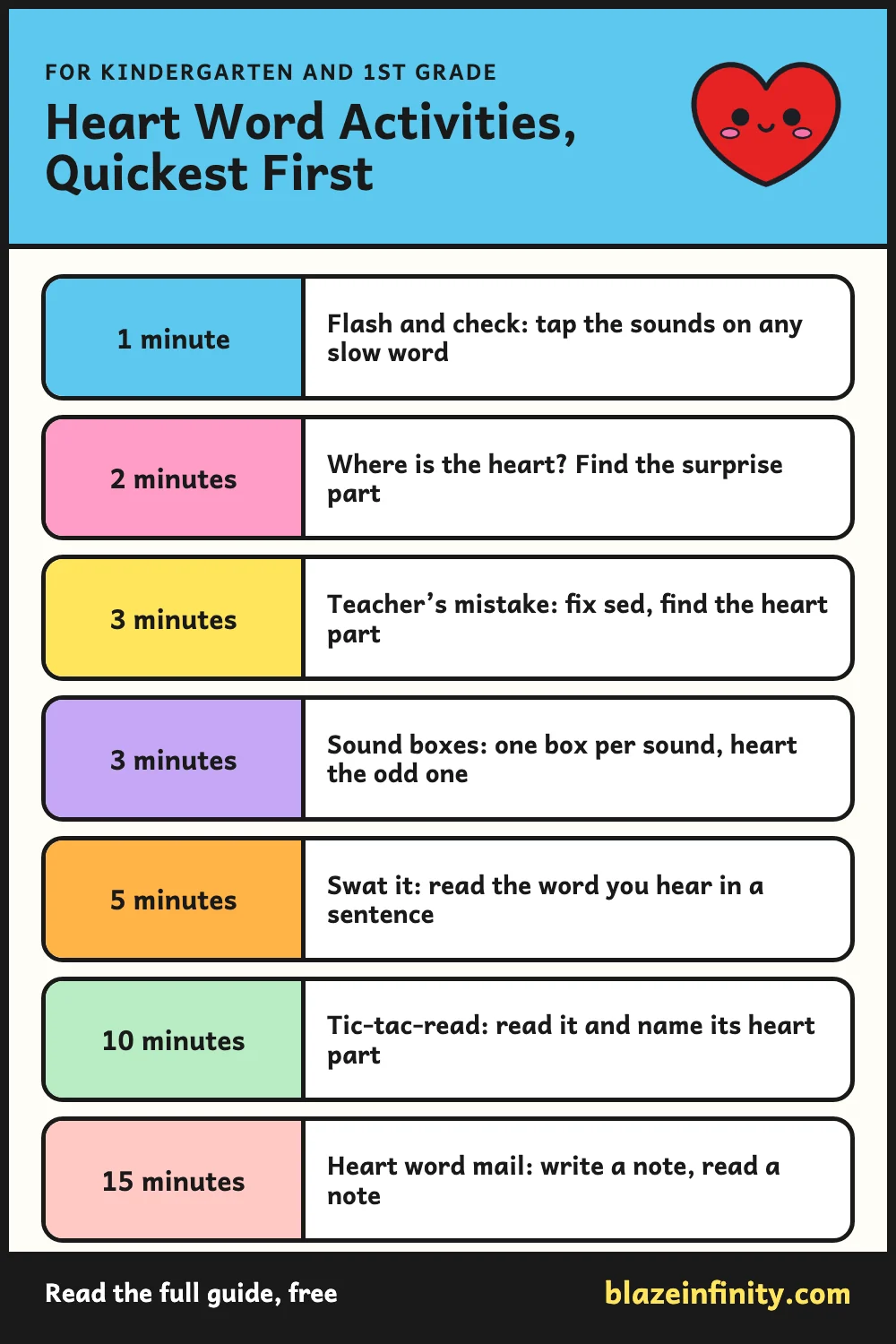
10 heart word activities and games, quickest first
Pick one a day after the routine. The quick ones fit between lessons. The longer ones work as a small group activity or a literacy center. All of them use the words your class has already been taught; none of them introduce a word for the first time.
1. Flash and Check
Teaches: Reading heart words instantlyYou need: Index cards with this week’s and older heart wordsAbout 1 minute
Flash the cards one at a time and let the child read each one. When a child stops on a word, do not just tell them. Say “Tap it,” let them say the sounds, point to the heart part together, then read it again. Slip that card back into the pile two or three cards later so it comes around again quickly.
2. Where Is the Heart?
Teaches: Finding the irregular partYou need: A whiteboard, or heart stickersAbout 2 minutes
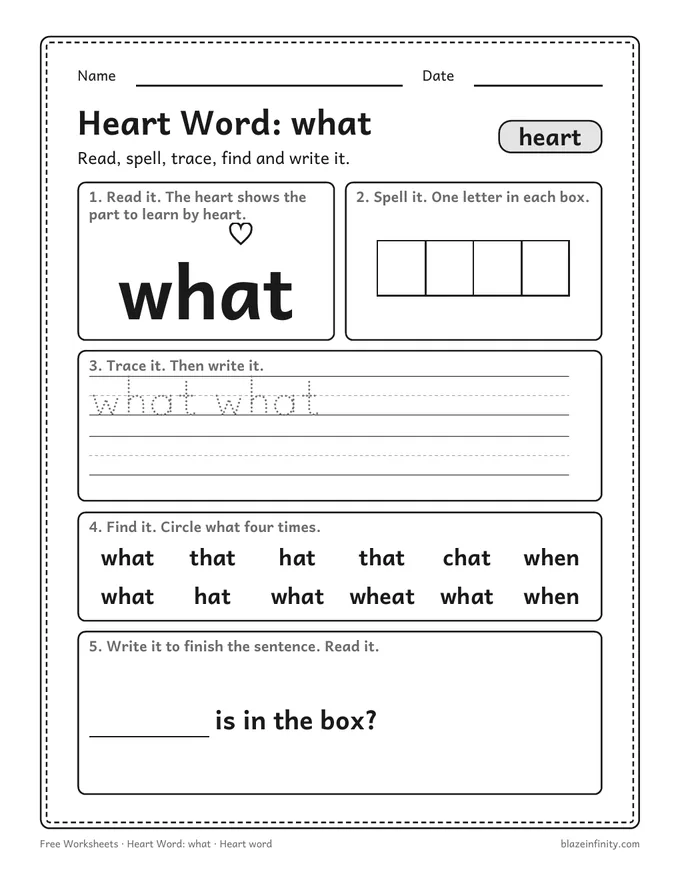
Write a word your class has learned, with no hearts on it. Ask the children to tell you which part gets the heart and why. For what, they should say that wh says /w/ and t says /t/, as expected, and that the a says /u/, which is the surprise. A child who can explain it has really learned the word.
3. Teacher’s Mistake
Teaches: Spelling the heart part correctlyYou need: A whiteboardAbout 2 to 3 minutes
Write a heart word the way it sounds, the mistake children really make, such as sed for said or frum for from. Say: “I made a mistake. Which part is wrong?” Children find that the sounds are fine and only one part is spelled wrong, and that part is always the heart part. Let one child fix it and draw the heart. Children enjoy catching the teacher, and the game shows them the regular parts were right all along.
4. Sound Boxes With a Heart
Teaches: Matching every sound to its lettersYou need: Paper with boxes drawn in a row, or a whiteboardAbout 3 minutes
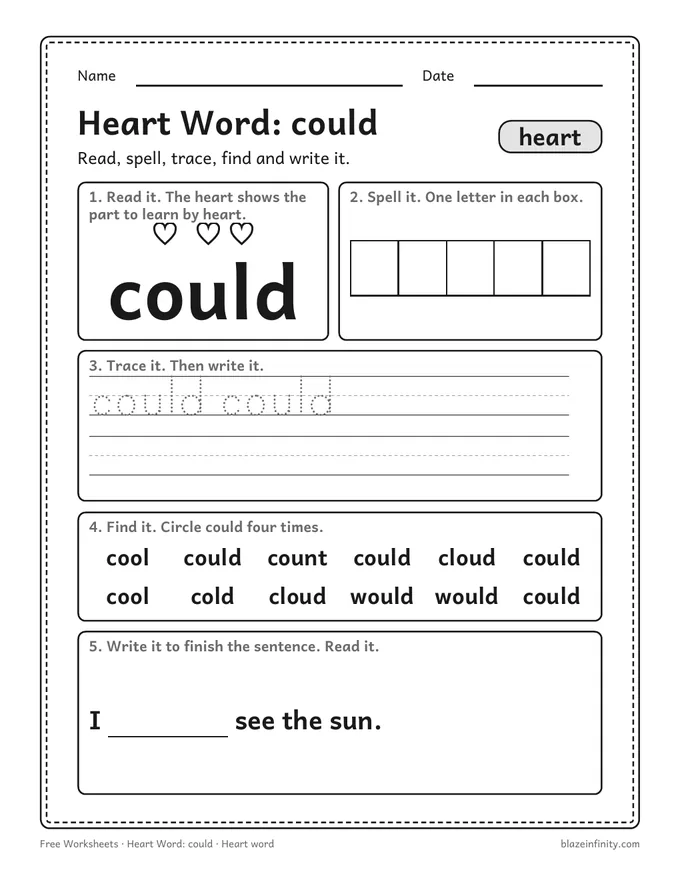
Say a word. Children draw one box for each sound they hear, then write the letters for each sound in its box. For could there are three boxes: c, then o, u, l together, then d. The box with the surprise spelling gets a heart above it. When letters that make one sound share one box, children can see which part is regular and which is not.
5. Vanishing Letters
Teaches: Remembering the whole spellingYou need: A whiteboard and an eraserAbout 3 to 4 minutes
Write the word and read it together. Erase one letter. Children read the word and tell you which letter is missing and what sound it made. Keep erasing, one letter at a time, until the board is empty. Then everyone writes the word back from memory, saying the sounds, and you rewrite it to check. Leave the heart part for last, so children hold on to it longest.
6. Swat It
Teaches: Reading heart words fast among other wordsYou need: Two fly swatters; words written large on the boardAbout 5 minutes
Write eight to ten words on the board: heart words you have taught, mixed with decodable words your class can sound out. Two children stand at the board with swatters. You say a sentence, such as “They like to run,” and name one word from it. The first to swat that word reads it aloud for the point. Swap players after each round.
7. Look-Alike Hunt
Teaches: Checking every letter, not just the first oneYou need: The free worksheet below, or a strip of paper and a pencilAbout 5 minutes
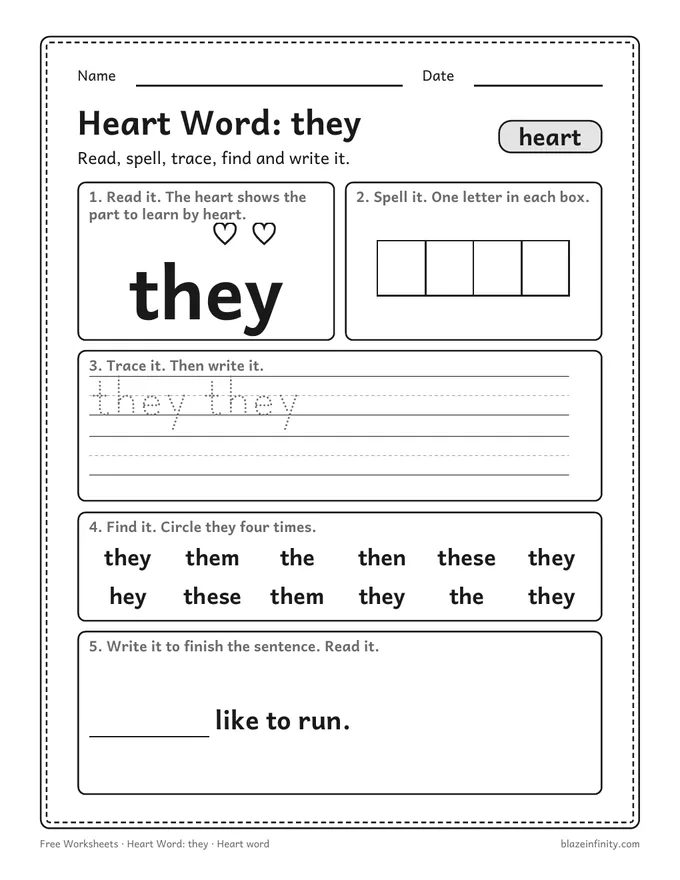
A common heart word mistake is reading the first letter and guessing the rest. Write the heart word several times among words that look almost the same: same first letters, a letter missing, or a letter changed. The child circles only the real word and reads each circled one aloud. The “find it” row on our heart word pages works this way. On the page for they, the child has to tell it apart from them, then, the and these.
8. One Page, Five Jobs
Teaches: Reading, spelling and writing one wordYou need: One free heart word page and a pencilAbout 10 minutes
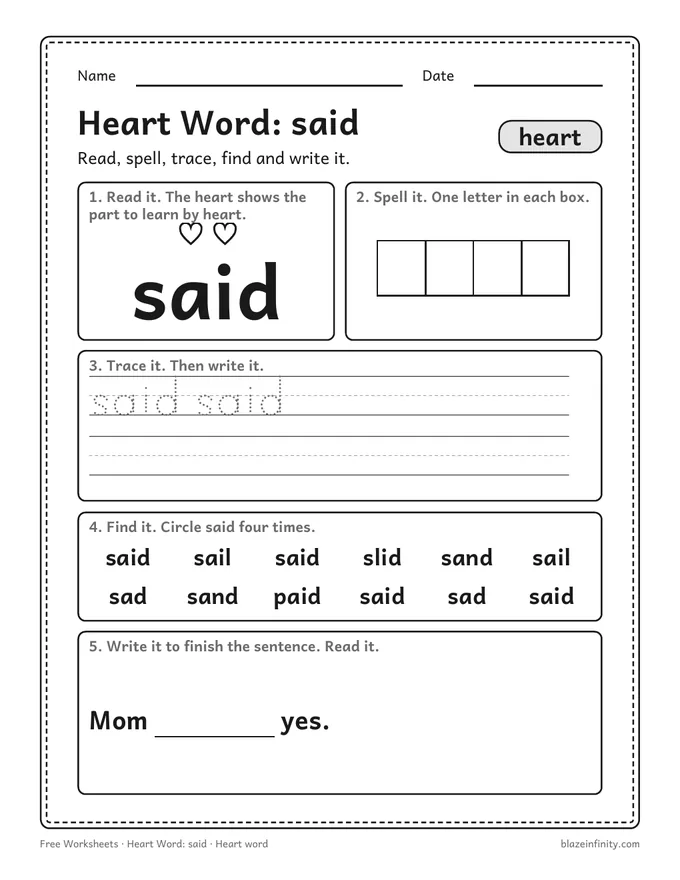
Each of our free heart word pages takes one word through five jobs. The child reads it, with a small heart over each tricky letter; spells it with one letter in each box; traces and writes it; finds it four times among look-alike words; and writes it to finish a sentence. Have the child say the sounds aloud while spelling, and read the finished sentence to you. The pages are grouped by grade under heart word worksheets, kindergarten heart words, first grade heart words and heart words for first and second grade.
9. Tic-Tac-Read
Teaches: Reading and explaining heart wordsYou need: Paper and a pencil for two playersAbout 10 minutes
Draw a tic-tac-toe grid and write a heart word in each square. Repeats are fine, and older words are better than new ones. To claim a square, a player reads the word and says which part is the heart part. If they read it right but cannot name the heart part, the other player can explain it to get the square. Play two or three rounds with a new grid each time.
10. Heart Word Mail
Teaches: Using heart words in real writingYou need: Small pieces of paper, pencils and a box for “mail”About 10 to 15 minutes
Each child writes a short note to a classmate using at least two heart words from your wall, such as “Do you want to play?” The notes go in the mailbox and are handed out. The person who gets the note reads it aloud and draws a heart over each heart part they find. This is the closest a game gets to the real test: spelling the word right in your own writing, without a model in front of you.
How to tell the practice is working
Keep the cards in two piles: words still in practice and words that are done. Once a week, check each practice card two ways. Can the child read it at once inside a short sentence? Can they write it from dictation? Two yes answers move the card to the done pile, which you shuffle into the flash step now and then. A word that is still slow after a couple of weeks usually needs another look at its heart part, not more drilling of the whole word.
Most children need several meetings with a word before it sticks, and some need many more. That is normal. Keep the routine short and do it every day, so each child gets those meetings without sitting through long lessons.
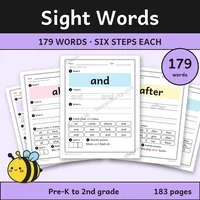
When you want a page for every word through second grade, our Sight Words set has one practice page for each of more than 170 high-frequency words, with the same steps on every page: read, trace, write, find, spell and read it in a sentence. For the phonics that turns heart words into regular words, see our guides to digraphs and blends and vowel teams.
What the research says
- An irregular word is either permanently irregular (the sounds of the letters are unique to that word or a very small number of words) or temporarily irregular (the student has not yet learned the letter-sound correspondences in the word). Many readers commit irregular words to memory after only a few (1-4) exposures; a struggling reader may need 20 or more exposures. [1]
Sources
- University of Florida Literacy Institute (UFLI). Instructional Activities: Irregular and High Frequency Words.
Common questions
- How do you practice heart words?
- Use a short daily routine: say the word, tap its sounds, match each sound to its letters, write it while saying the sounds and mark the heart part. Then add one quick game, such as a flash card check or a find-the-word hunt, and review older words every day.
- How do you teach heart words in kindergarten?
- Teach a few new heart words a week, chosen to fit your phonics lessons. Children sound out the regular parts, learn only the irregular part by heart, and practice the words a few minutes every day with games, writing and short sentences.
- How many times does a child need to practice a heart word?
- It varies a lot. UFLI notes that many readers remember an irregular word after only a few exposures, while a struggling reader may need 20 or more. Keep a word in daily review until the child reads it in sentences and spells it in their own writing.
- Are all high-frequency words heart words?
- No. Many common words, such as but, will and not, follow regular phonics patterns and should be sounded out. Only words with a part the child cannot yet decode get a heart.
- What is a temporary heart word?
- It is a word that looks irregular only because the child has not learned its pattern yet, such as she before the sh digraph is taught. Once the pattern is taught, the heart comes off and the word is decoded like any other.
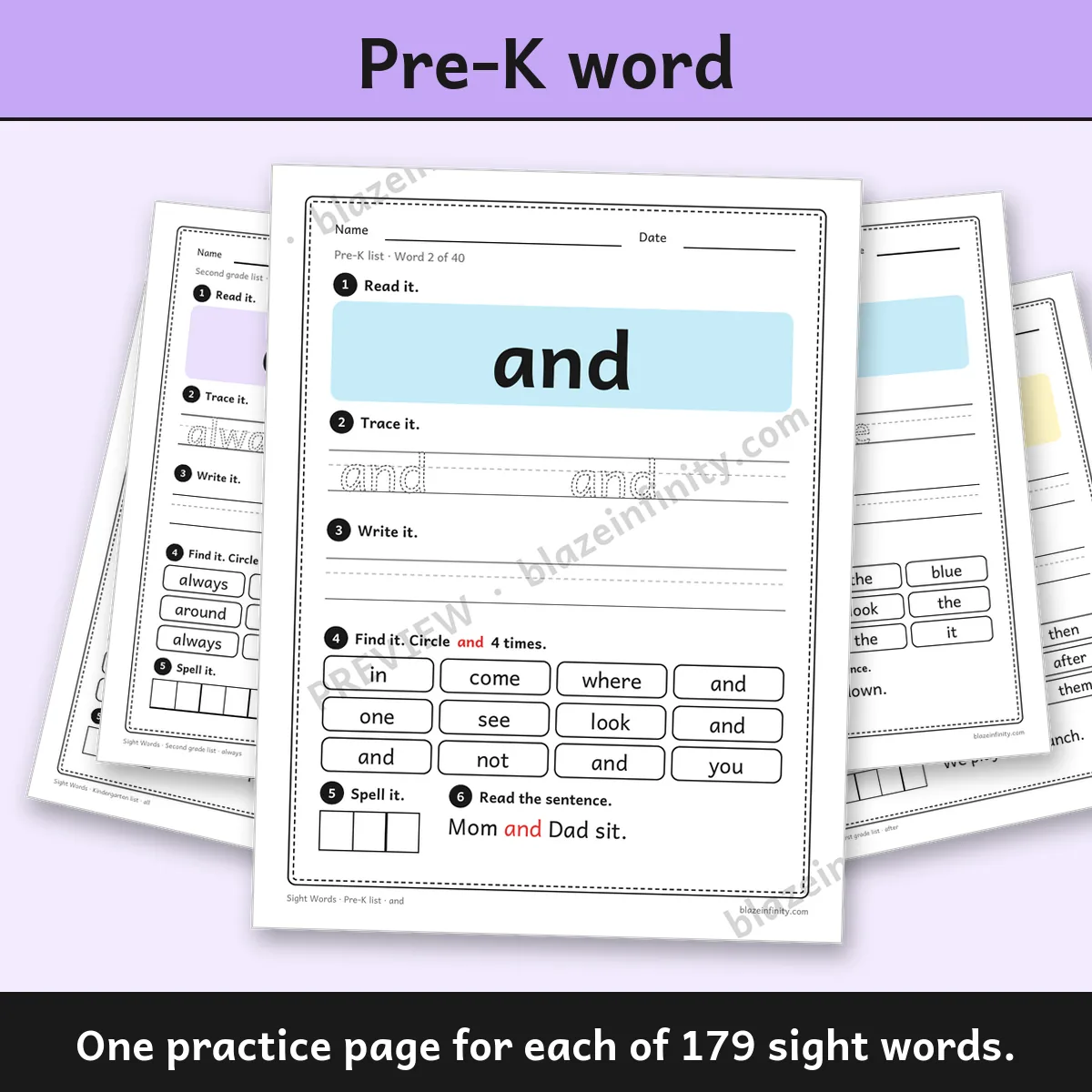
The full set for this skill
Sight Words
Read it, trace it, write it, find it, spell it and read it in a sentence. One page for every word on four grade lists.
- 179 practice pages, one word per page
- Pre-K, Kindergarten, first and second grade lists
- The same six steps on every page
- A short sentence for every word
- Word lists with page numbers