






How to teach blending CVC words, step by step
How to teach a child to blend sounds into CVC words: listen first, pick the right first words, blend without stopping, and fix common problems.
In short
- Practice blending spoken sounds before blending letters.
- Start with words that begin with a stretchy sound such as m, s or f.
- Hold each sound and slide into the next without a gap, then say the word fast.
Blending is the moment reading begins: a child looks at c, a and t, says the three sounds, and hears the word cat. Many children know their letter sounds and still cannot do it. The good news is that blending can be taught, step by step, and most children who are stuck are stuck for one of a few reasons. This guide covers both.
Step 1: blend by ear first
Before print, play with spoken sounds. Say the sounds of a word slowly, with a tiny pause between them, and ask the child to say the word: /m/ /a/ /p/, map. Start with two sounds (/u/ /p/, up), then three. This is a phonemic awareness skill, and a child who cannot do it by ear will find it much harder with letters. A few minutes a day for a week or two is usually enough.
Step 2: choose the right first words
Start with words that begin with a sound you can stretch, such as m, s, f, n or l: mat, sun, fan. These are called continuous sounds. Stop sounds like b, d, p, t and k cannot be held, and children add an extra “uh” to them (“buh-a-tuh”), which turns bat into something unrecognizable. Use one vowel at a time, usually short a first, and only letters the child already knows.
Step 3: blend without stopping
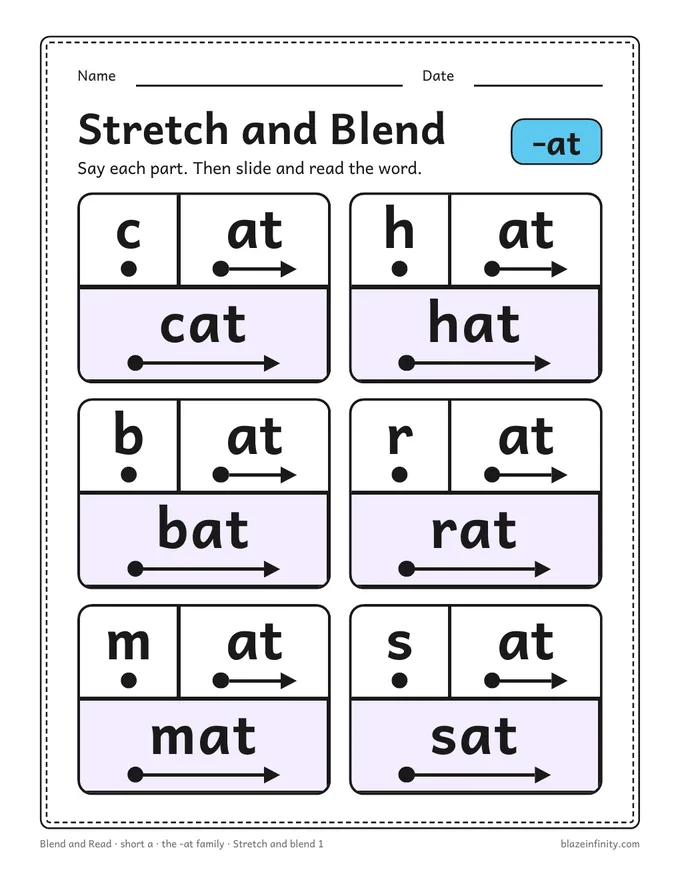
Teach continuous blending: the child says the first sound and holds it, then slides into the next without a gap, “mmmaaat”, then says the word fast. Run a finger under the letters as the sounds come out. Saying three separate sounds and then trying to put them together asks a young child to hold too much in memory at once.
Step 4: other routines that help
- Successive blending. Say the first sound, then add the vowel and blend those two (“m, a, ma”), then add the last sound (“ma, t, mat”).
- Vowel first. Read the vowel and the ending together (“at”), then add the first sound (“m-at”). This is where word families help.
- Sound boxes. Draw three boxes. Push a counter into each box as you say each sound, then sweep a finger across all three and say the word.
When a child cannot blend
- They say the sounds but guess a different word. They are not holding the sounds. Go back to stretching continuous sounds.
- They add “uh” to every sound. Model clipped sounds: /b/ is a quick puff of air, not “buh”. Start with words that begin with continuous sounds.
- They read the first letter and guess. Cover the word and reveal one letter at a time so every letter gets a sound.
- They cannot blend by ear either. Go back to step 1. The problem is hearing sounds, not reading letters.
What comes after
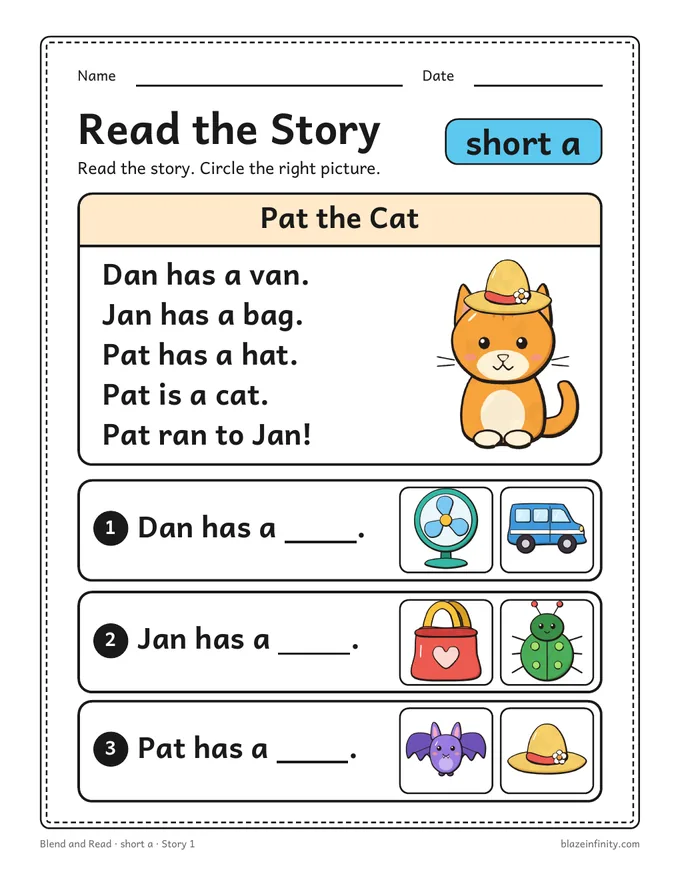
Once a child blends three-sound words with ease, give them sentences and short stories made only of words they can decode, so blending becomes reading. Then move on to words with blends and digraphs. Our guides to CVC words and digraphs and blends cover those next steps.
Common questions
- What is blending in reading?
- Saying the sounds of the letters in a word one after another and joining them to hear the word, such as /s/ /u/ /n/, sun.
- Why can my child say the sounds but not blend them?
- Usually because the sounds are said separately with gaps, or with an extra “uh” on each. Practice holding each sound and sliding into the next.
- What words should I use to teach blending?
- Short words with one short vowel that start with a continuous sound, such as mat, sun and fan, using only letters the child already knows.
- How long does it take to learn to blend?
- It varies. With a few minutes of daily practice, many children blend three-sound words within a few weeks of knowing their letter sounds.
Ready-made pages for this skill
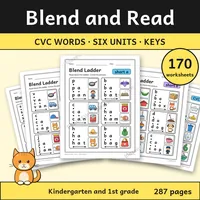
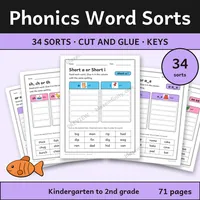
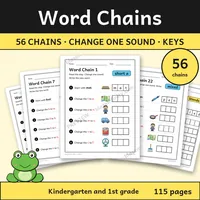
Blend and Read: ready-made printable pages for this skill.
See the set