





Reading comprehension in kindergarten: how to teach it
What reading comprehension means in kindergarten, what children are expected to do, and how to build it with read-alouds, questions and retelling.
In short
- In kindergarten, comprehension grows mostly through read-alouds and talk.
- Kindergartners answer questions, retell stories and name characters and settings, with support.
- When children start reading, use short decodable stories and simple who, what and where questions.
Most kindergartners cannot yet read a book on their own, so it can seem odd to talk about their reading comprehension. But comprehension, understanding what words mean when they are put together, starts long before independent reading. In kindergarten it grows mostly through listening, and a little through the first short stories children can read themselves.
What reading comprehension means in kindergarten
Researchers describe reading as two skills multiplied together: decoding (turning print into words) and language comprehension (understanding those words). This is called the Simple View of Reading. A child who decodes perfectly but does not understand the words has not really read; neither has a child who understands stories but cannot decode. In kindergarten, language comprehension runs far ahead of decoding, so most comprehension work happens during read-alouds.
What kindergartners are expected to do
The Common Core standards for kindergarten literature (RL.K.1 to RL.K.3) ask children, with prompting and support, to:
- ask and answer questions about key details in a story;
- retell familiar stories, including key details;
- name the characters, the setting and the main events.
Notice the words “with prompting and support”. A kindergartner is not expected to do this alone. Your questions are part of the skill.
Five ways to build it
- Read aloud every day, and talk. Stop two or three times per book. Ask “What do you think will happen?” and “Why did she do that?”
- Teach words on purpose. Pick two or three interesting words from each book, explain them in child-friendly language, and use them again that week.
- Retell with five fingers. Characters, setting, beginning, middle, end: one finger for each.
- Picture the story. After reading, children draw their favorite part and tell you about it. You will learn quickly what they understood.
- Connect. “Has something like this ever happened to you?” Children remember what they link to their own lives.
When children start reading on their own
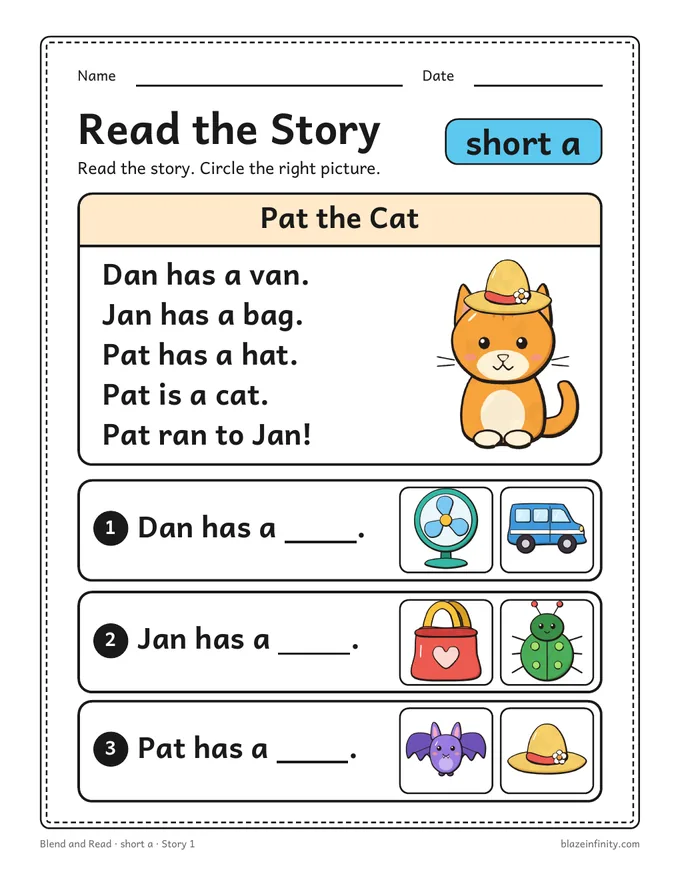
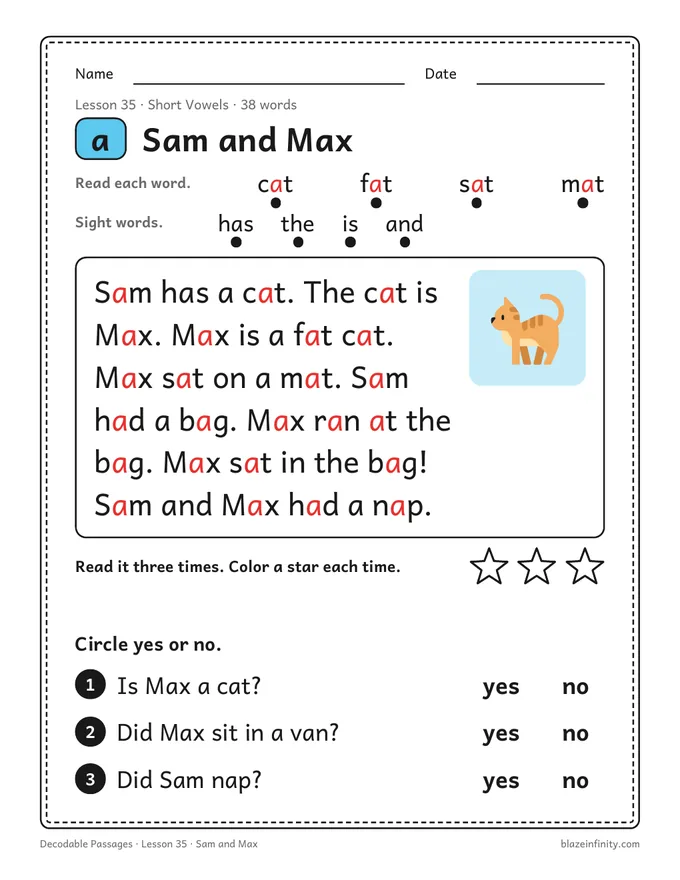
Once a child can blend sounds into words, give them short decodable stories, made only of letter patterns they have learned. Keep the questions simple and concrete: who, what, where. If a child cannot answer, ask them to read the sentence again. Often they spent all their effort on sounding out and none on meaning; a second read frees up attention to understand.
Signs a child needs more support
Watch for a child who cannot retell a story they have heard several times, who answers questions about the pictures but not the words, or who has a small vocabulary for their age. More read-aloud talk helps all three. If language seems well behind other children, mention it to the child's teacher or doctor; early speech and language support makes a big difference.
Common questions
- What is reading comprehension for kindergarten?
- Understanding the meaning of a story: who is in it, where it happens, what happens and why. In kindergarten it is built mostly by listening to stories and talking about them.
- How can I improve my kindergartner's reading comprehension?
- Read aloud every day and talk about the book: predict, ask why, explain new words, and have your child retell the story in order.
- What questions should I ask a kindergartner about a story?
- Who is in the story? Where are they? What happened first, next and last? Why did a character do something? What do you think will happen next?
Ready-made pages for this skill
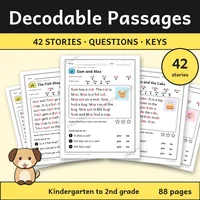
Decodable Passages: ready-made printable pages for this skill.
See the set