














Child Guesses Words When Reading? Try This 2-Minute Test
Guessing is a symptom, not a habit. A 2-minute plain-card test shows why your child guesses, and three changes that get them sounding out words instead.
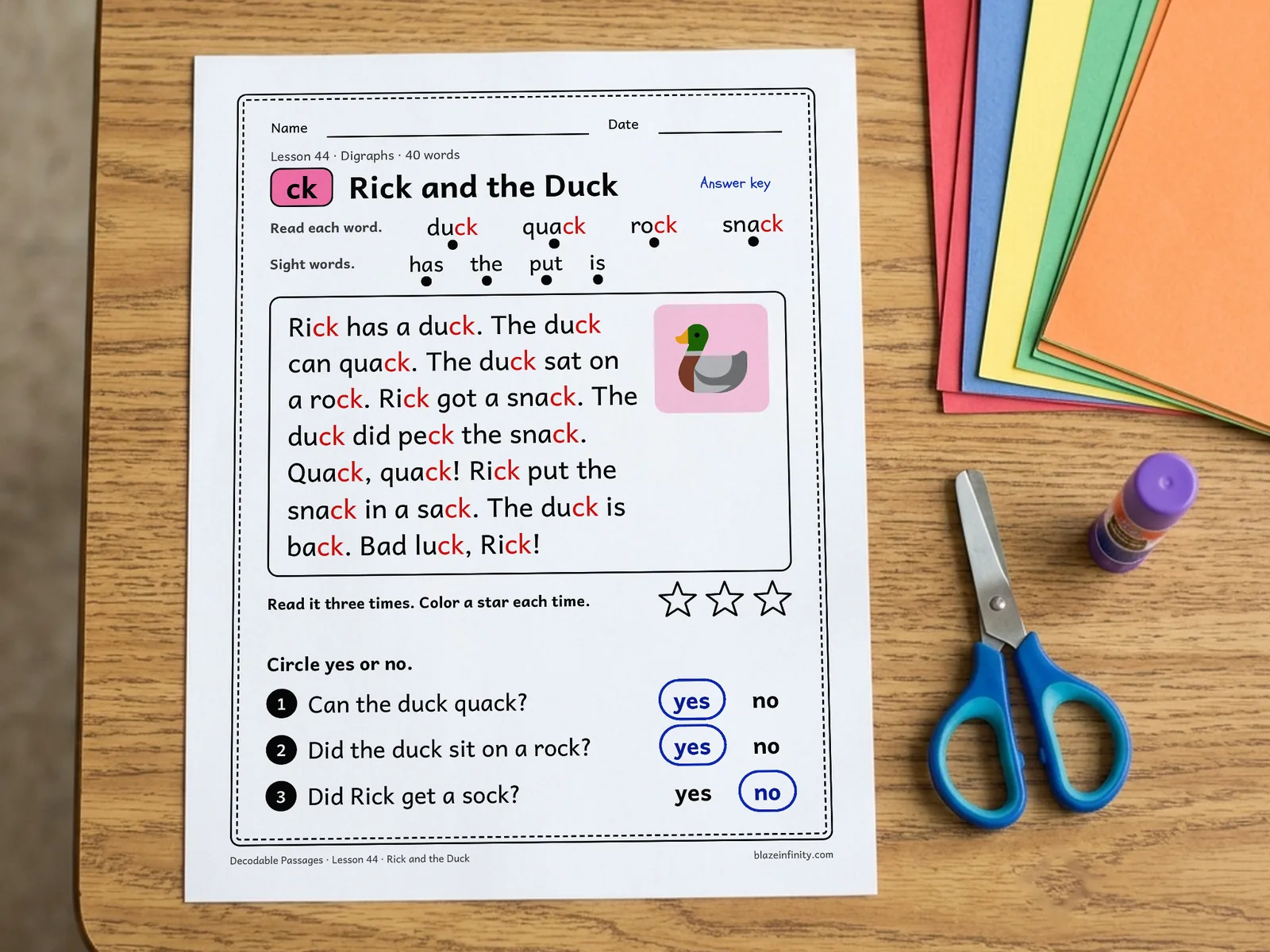
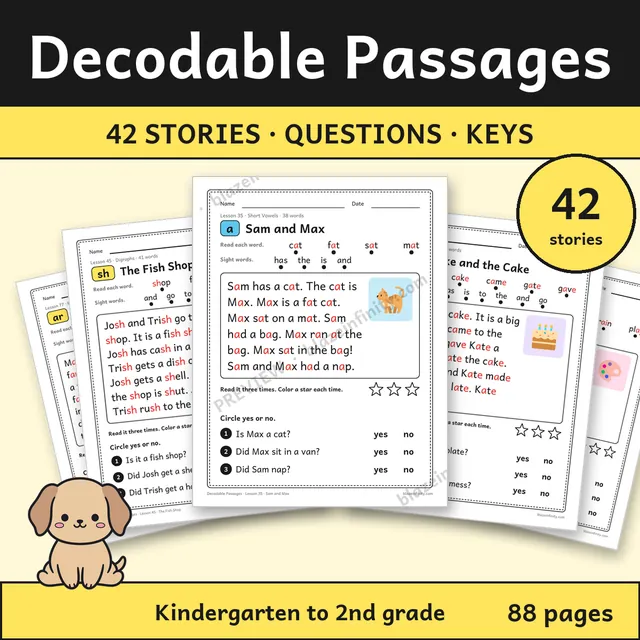
In short
- A plain card, with no picture and no sentence, shows whether your child reads the word or guesses it.
- Sounding a word out is how it gets stored; a guess can be right but the word is not stored (Ehri, 2014).
- Change what you say, swap some books for decodable ones, then reread and test on plain cards.
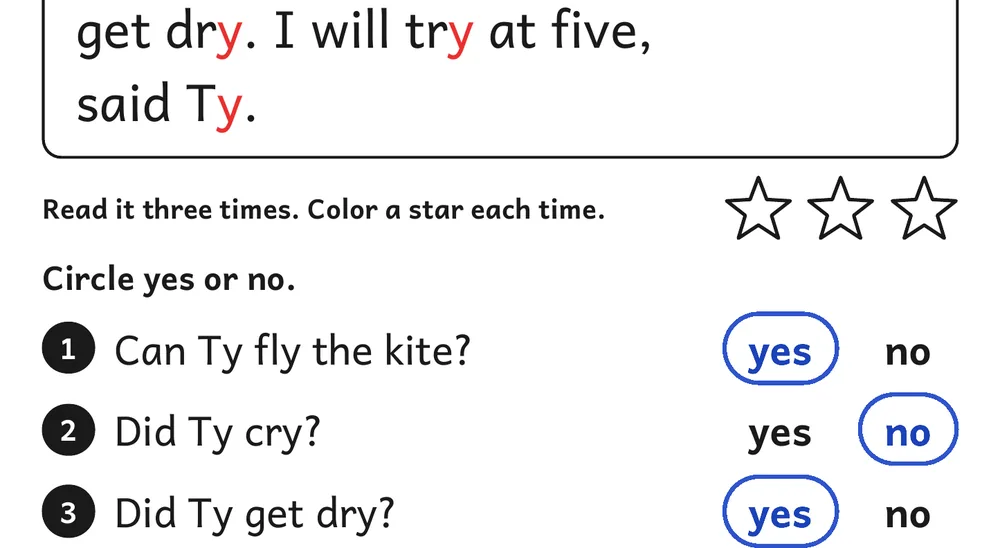
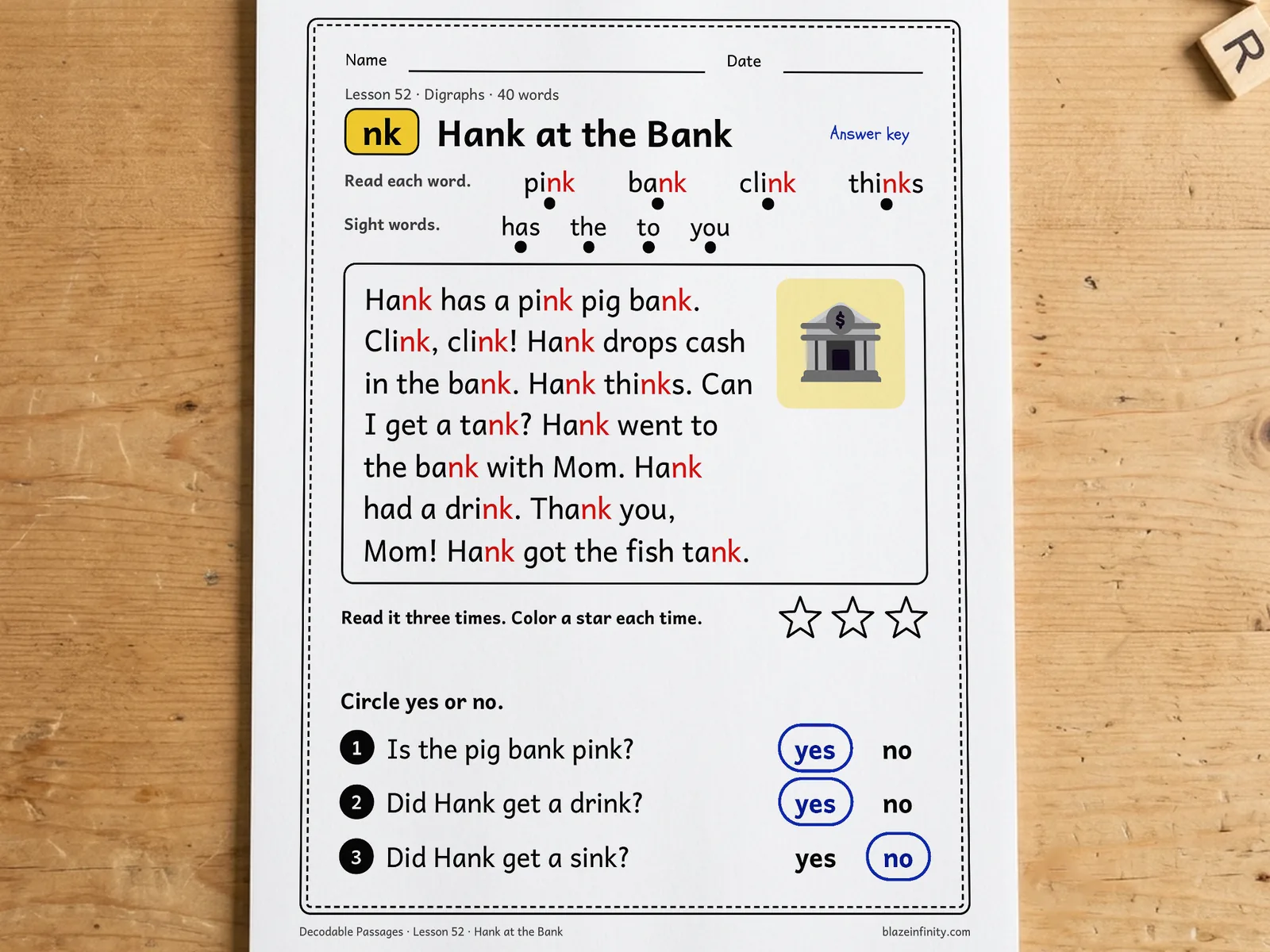
1Lesson 61 · Silent e · 41 words
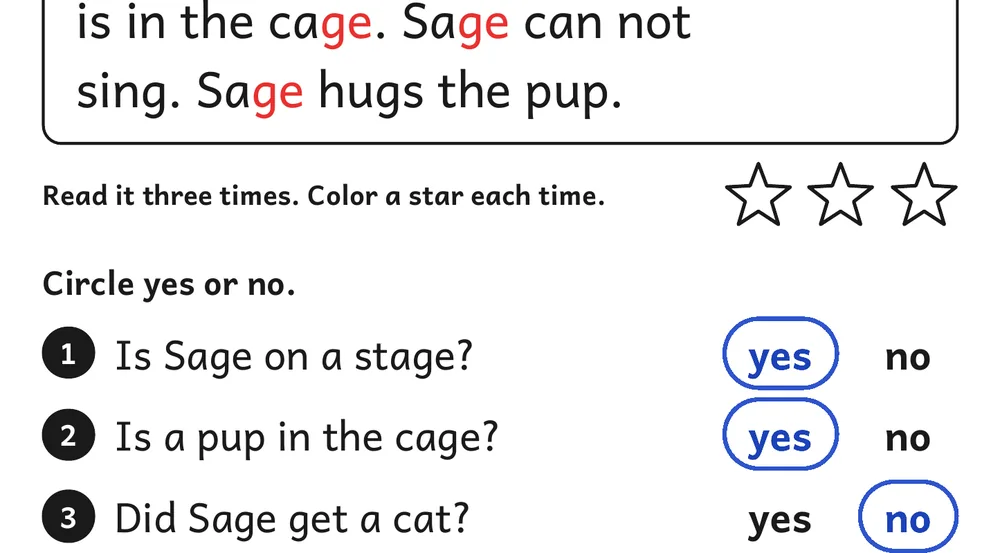
2Lesson 65 · Endings · 40 words
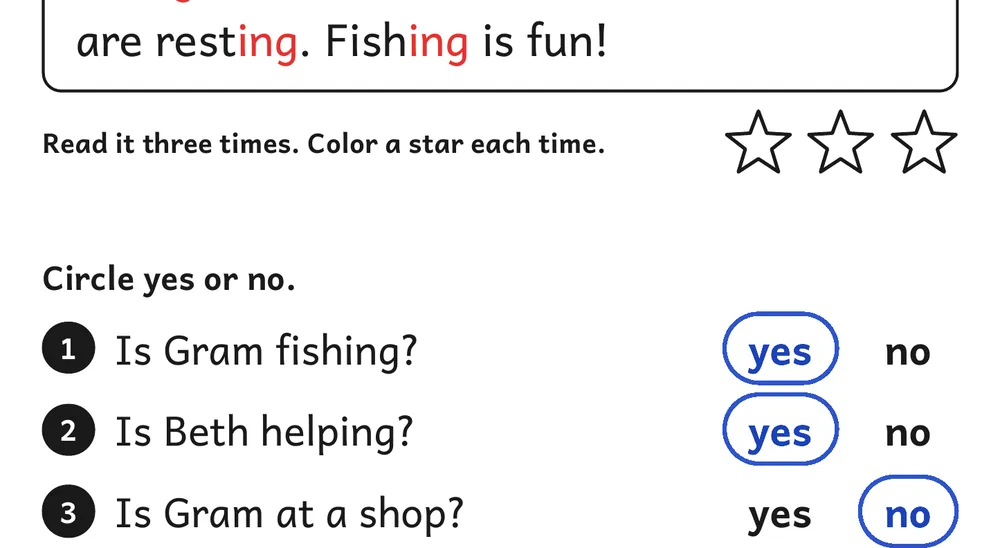
3Lesson 73 · Endings · 40 words
Child Guesses Words? 5 Steps
Save- 1TestWrite 8 book words on plain cards
- 2SayPoint and say each sound
- 3BooksDecodable books when your child reads to you
- 4RereadThe same story two or three days, then the cards again
- 5Ask for helpIf three-letter words still can't be blended
Your child reads "puppy" where the page says "dog", or "house" where it says "home". The story still makes sense, so it can look like good reading. But it is a sign your child is using the pictures and the first letter to fill in words they can't yet read. Guessing is a symptom, not a bad habit, and the fix starts with finding out what is behind it.
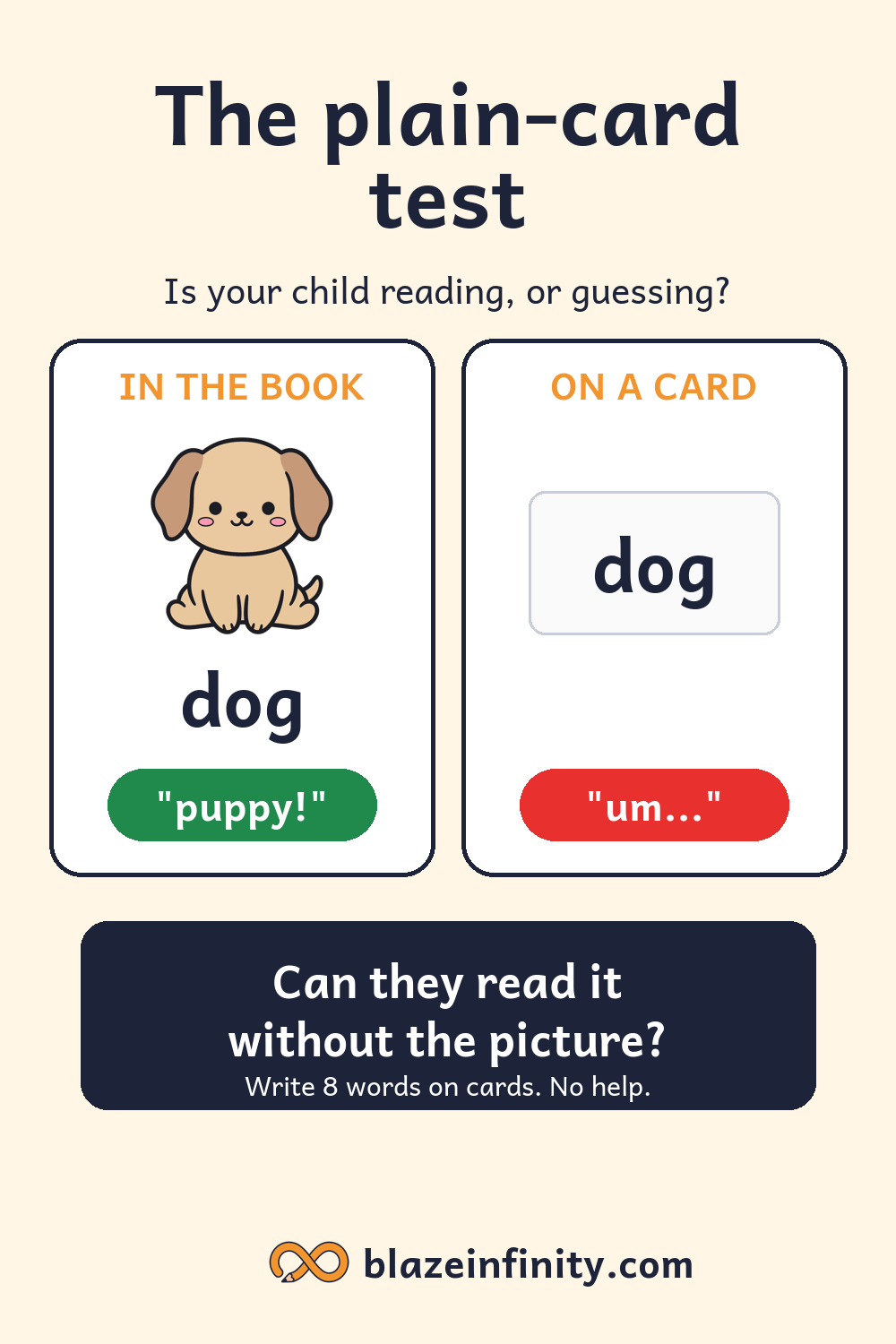
The 2-minute plain-card test
- Pick 8 words your child read "correctly" in a picture book this week.
- Write each one on a plain card or a sticky note. No pictures, no sentence around it.
- Ask your child to read each card. Don't help.
What it tells you:
| What happens | What it means |
|---|---|
| Reads almost all the cards | Not a guesser. The mix-ups in books are slips. Point to the word and ask them to check it. |
| Reads the first sound, then says a different word ("d... duck" for dog) | Knows letter sounds but doesn't blend all the way through. Go to fix 1. |
| Stuck, or looks at you for help | The pictures and story were doing the reading. Go to fixes 1 and 2. |
| Gets short words, guesses long ones | Blends 3-letter words but not longer ones yet. Go to fix 2, at a higher skill. |
Why guessing doesn't build a reader
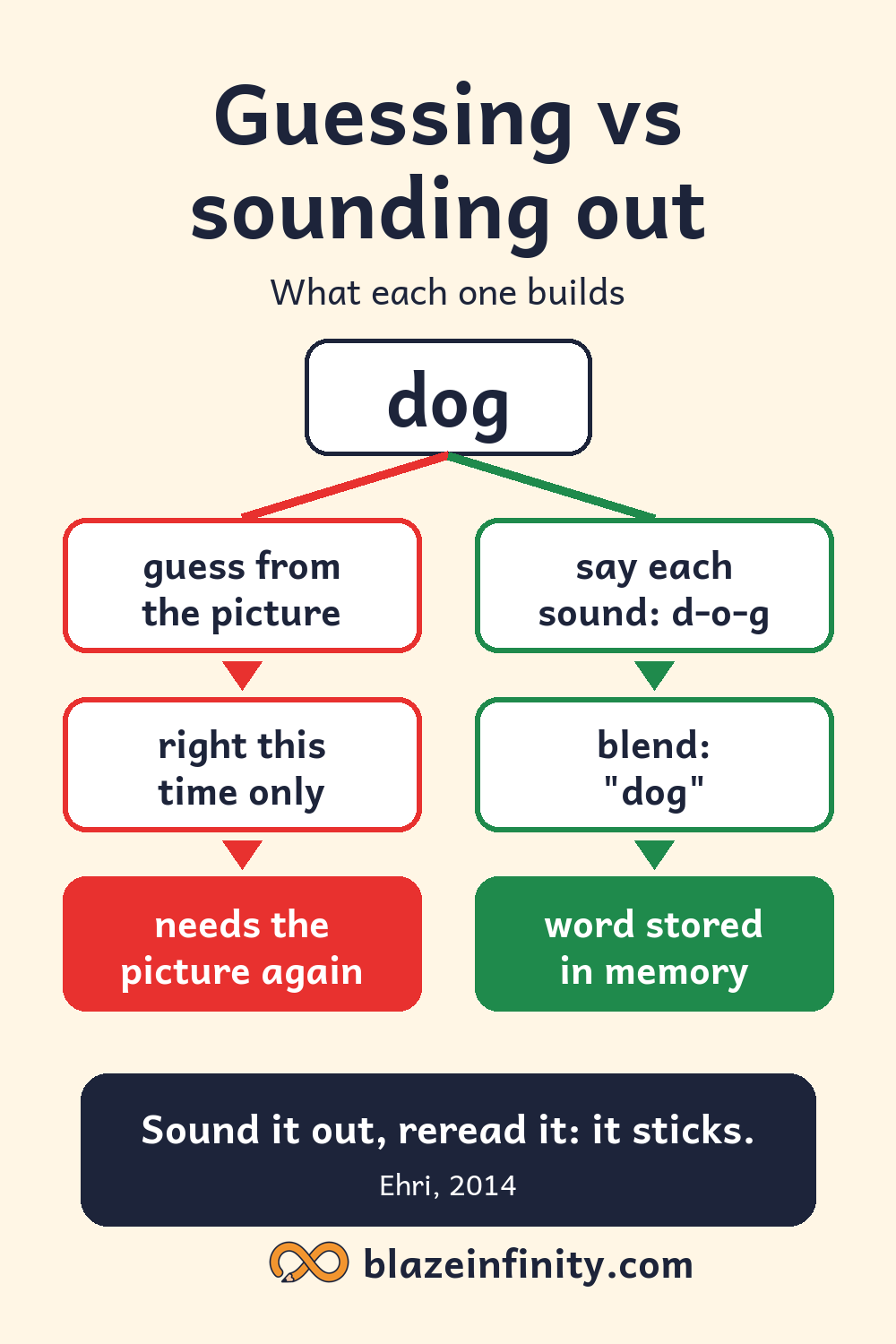
Reading researcher Linnea Ehri explains how children store words. "Decoding letters into blended sounds helps readers figure out words they have not read before," she writes. "Rereading them a few times moves the words into memory so they can be read by sight."
Sounding a word out is how it gets stored. A guess can land on the right word, but it doesn't connect the letters to the sounds, so the word isn't stored. Next time, your child needs the picture again. That's why a guesser can seem fine in kindergarten books and then struggle when the pictures get smaller and the words get longer.
Experts in reading science describe a "strong scientific consensus about the value of phonics instruction" (Castles, Rastle and Nation, 2018). In a commentary on that review, reading researcher Rebecca Treiman wrote that the link between letters and sounds "does not come naturally to children and must be taught explicitly."
Fix 1: change what you say
When your child gets stuck, the words you use decide what they practice.
| Instead of | Say |
|---|---|
| "Look at the picture." | "Point and say each sound." |
| "What would make sense?" | "Say the sounds, then say them fast." |
| "It starts with d, so what could it be?" | "Every letter. Start at the beginning, go to the end." |
| "Good guess!" | "You read every sound. That's how you remember it." |
Once the word is right, then check that it makes sense. Sense is the check, not the strategy.
If your child knows the sounds but can't put them together, our guide to teaching blending has a step by step ladder.
Fix 2: swap some books
Books written to be predictable, with a big picture and a repeated line, reward guessing. Books where the words use only the letter sounds your child has learned reward sounding out. A review of the research by Cheatham and Allor (2012) found that this kind of text, called decodable text, "increases the likelihood that students will use a decoding strategy", with immediate gains in accuracy. They also note that decodability shouldn't be the only thing that matters in choosing a book, so keep the read-alouds too.
A simple split:
- Your child reads to you: decodable books, matched to the sounds they know.
- You read to your child: any picture book you both love.
Fix 3: reread, then read on the plain page
Ehri's point is that a word is stored after it has been sounded out and then read a few times. So:
- Read the same short story two or three days in a row. Point under each word.
- Then write 4 or 5 words from it on cards and play the plain-card test again. Words that are now read at a glance have been stored.
- Words that still need help go on next week's cards.
When to ask for help
Most guessers improve within a few weeks of these changes. Talk with your child's teacher if your child still can't tell you the sounds of most letters, can't blend three-letter words like "sit" and "mop" after steady practice, or guesses even on words you've practiced many times.
Stories that only use the sounds your child knows
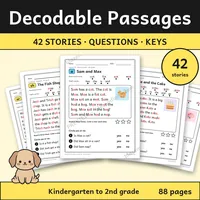
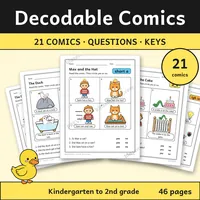
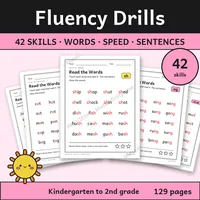
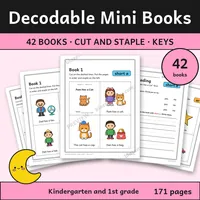
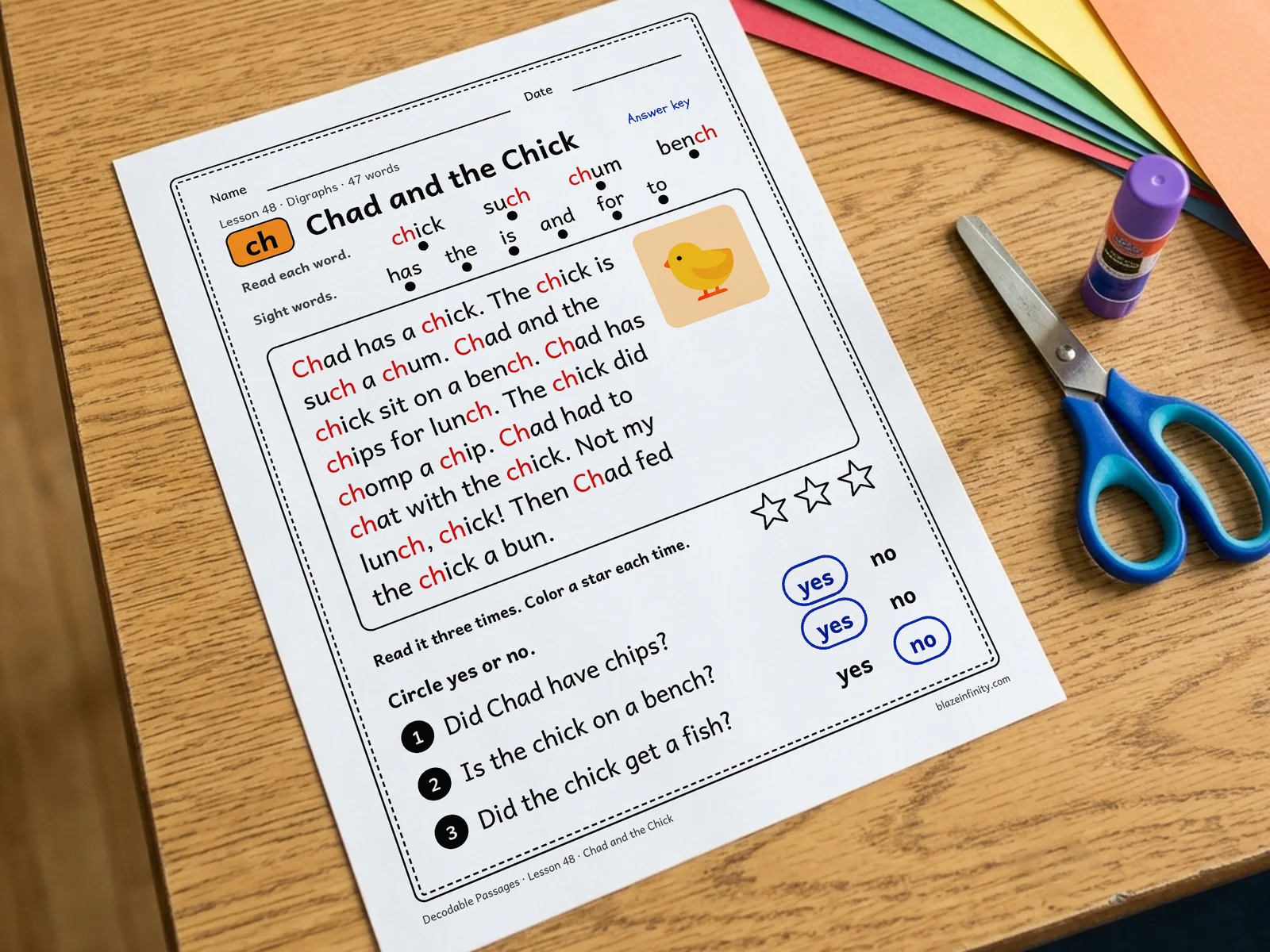
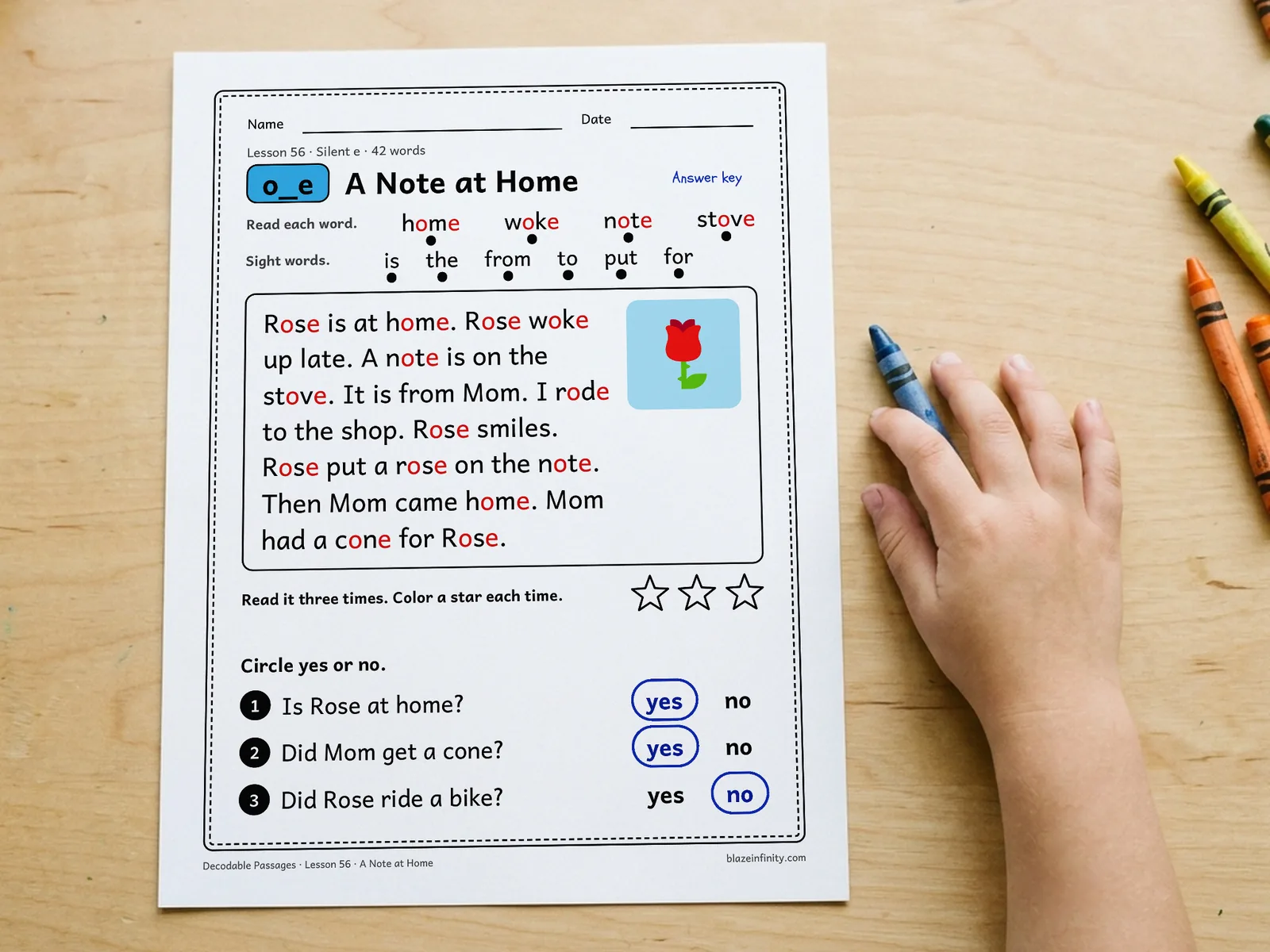
Our Decodable Passages set has 42 stories that follow our phonics order, one skill at a time, so your child can read every word by sounding it out. Decodable Mini Books and Decodable Comics give more to read at each level, and Fluency Drills build the "read it at a glance" step.
Free to try: decodable passages and CVC stories.
What the research says
- Decoding letters into blended sounds helps readers figure out new words; rereading them a few times moves the words into memory so they can be read by sight. [1]
- Decodable text increases the likelihood that students use a decoding strategy, with immediate gains in accuracy; decodability should not be the only criterion for choosing text. [2]
- There is a strong scientific consensus about the value of phonics instruction. [3]
Sources
- Ehri, L. C. (2014). Orthographic mapping in the acquisition of sight word reading, spelling memory, and vocabulary learning. Scientific Studies of Reading, 18(1), 5-21.
- Cheatham, J. P., & Allor, J. H. (2012). The influence of decodability in early reading text on reading achievement: A review of the evidence. Reading and Writing, 25(9), 2223-2246.
- Castles, A., Rastle, K., & Nation, K. (2018). Ending the reading wars: Reading acquisition from novice to expert. Psychological Science in the Public Interest, 19(1), 5-51.
Common questions
- Why does my child guess words instead of sounding them out?
- Usually because sounding out is still hard, or because the books have pictures and patterns that let them get by without it.
- Is using pictures to read bad?
- Pictures help a child understand a story. They shouldn't be how a child works out what a word says.
- My child sounds out words but then says a different word. Why?
- They have the sounds but aren't blending them all the way. Try saying the sounds without stopping: "mmmooop", then faster.
The full set for this skill
Decodable Passages
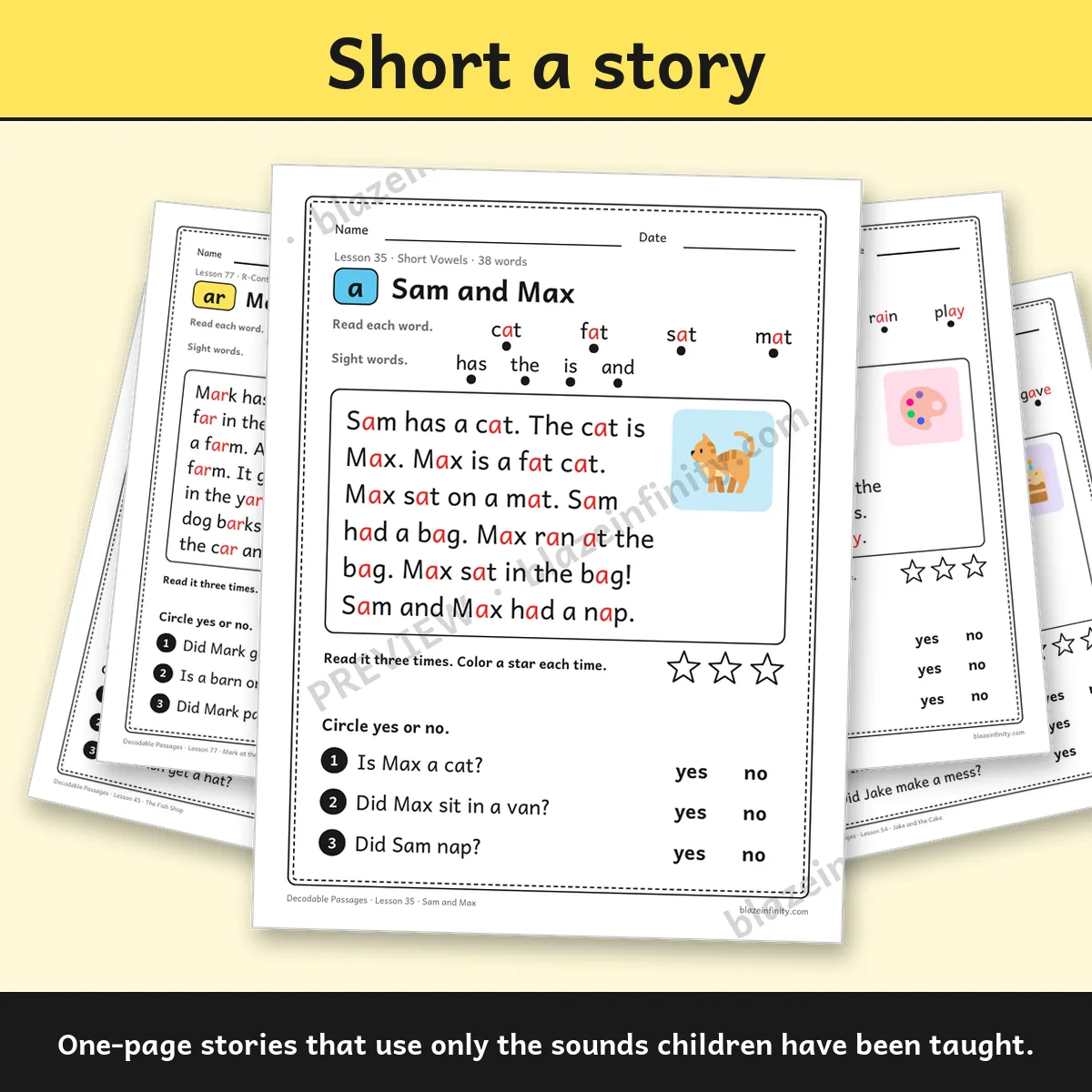
42 short stories, one for each phonics skill. Every word is checked against the lesson it belongs to, so children can read the whole story on their own.
- 42 one-page stories in teaching order
- Warm-up words and sight words above each story
- Three yes-or-no questions for every story
- An answer key for every story
- Lesson numbers that match Phonics Rules