




Early Finisher Activities for Kindergarten and 1st Grade
An early finisher system for kindergarten and 1st grade: one rule, six kinds of puzzle page, a ten-minute bin setup, fixes for what goes wrong and a checklist.
In short
- Teach one rule: when I am done, I check, then I choose. Practice it before you need it.
- Mix page kinds. Mazes suit everyone; secret codes and writing prompts suit children who finish first.
- Put answer keys in the bin. If children check their own pages, the system runs without you.
Four minutes into the math page, a hand goes up: "I'm done." Then another. You are at the back table with five children who need you, and now three more are wandering. A longer list of ideas will not fix this. What fixes it is a small system the children can run without you.
This guide gives you that system: one rule, a menu of six kinds of page, a bin you can set up in ten minutes, and what to do when it goes wrong.
The rule: check, then choose
Teach one sentence and have the class say it with you until it is automatic:
Check means three things, and they are the same three every time. Post them where the children can see them, with a small picture beside each one for children who cannot read them yet.
- Name. Is my name on it?
- Every box. Did I skip anything? Touch each one.
- Best work. Can someone else read it?
Choose means: put the work in your usual turn-in tray, take one page from the bin, go back to your own seat. One page, not three. No asking the teacher which one.
Practice it before you need it. Give the class a two-minute task, such as writing their name three times. Then walk through the rule together: check, tray, bin, seat. Do that on two or three days before you count on it during small groups.
The menu: six kinds of page and what each one really practices
The best pages for a finisher bin need no directions from you, are quiet, and can be stopped halfway when you call the class back. Puzzle pages fit all three. Each kind practices something different, so a mix serves more children than a stack of one kind.
| Page kind | What it practices | Good for | Watch out for |
|---|---|---|---|
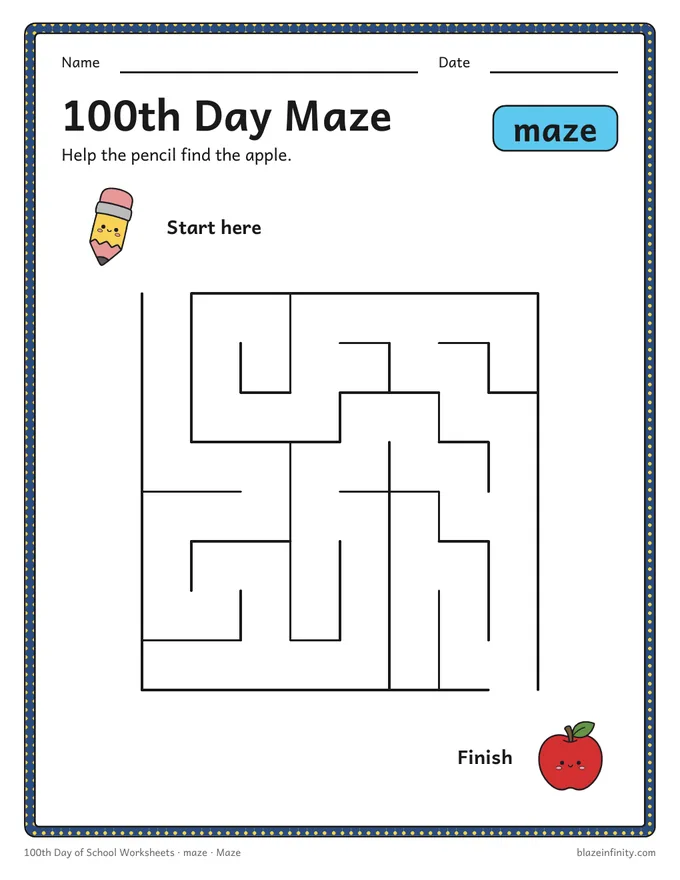
| Mazes | Pencil control and planning a path before drawing it | Children who need a calm, wordless job; kindergarten early in the year | A child who scribbles through the walls. Ask them to trace the path with a finger first. |
| Word searches | Looking closely at the letters of a word, in order, and at its spelling | Children who can already name letters quickly | It is not reading practice. A child can find a word without being able to read it. |
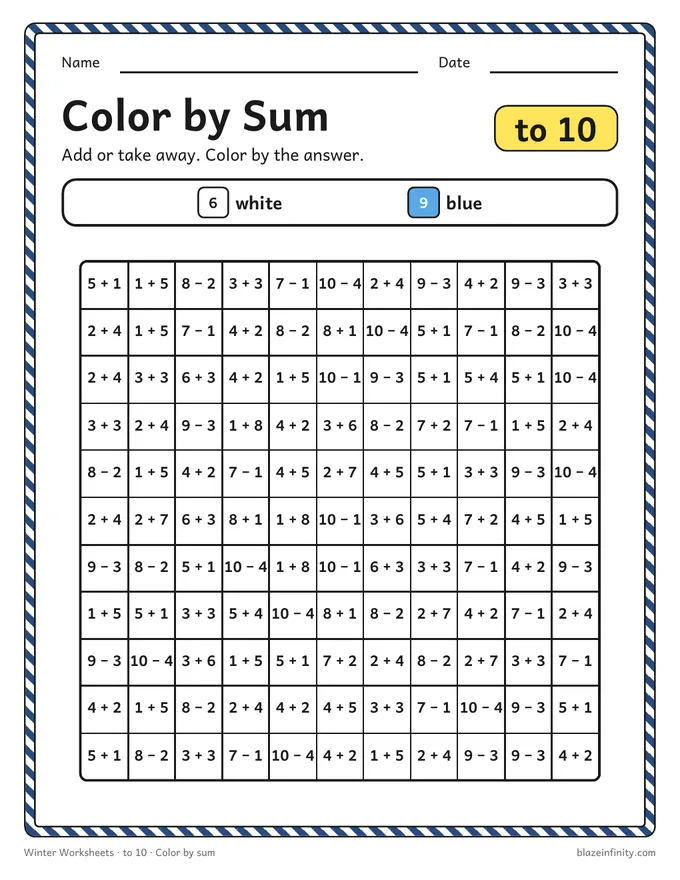
| Color by number and color by sum | Number recognition; on a sum page, adding and taking away | Children who love to color and would skip a plain facts page | The coloring takes far longer than the math. Fine for a bin, poor for a lesson. |
| Secret code and word scramble | Matching a symbol to a letter, writing letters, then reading the word they make | Strong readers who need something that makes them think | Too hard for a child who is still learning letter sounds. Frustration is noisy. |
| I spy count pages | Counting scattered pictures and writing the number | Kindergarten and anyone who still loses track when counting | Counting the same picture twice. Teach them to cross out each picture as they count it. |
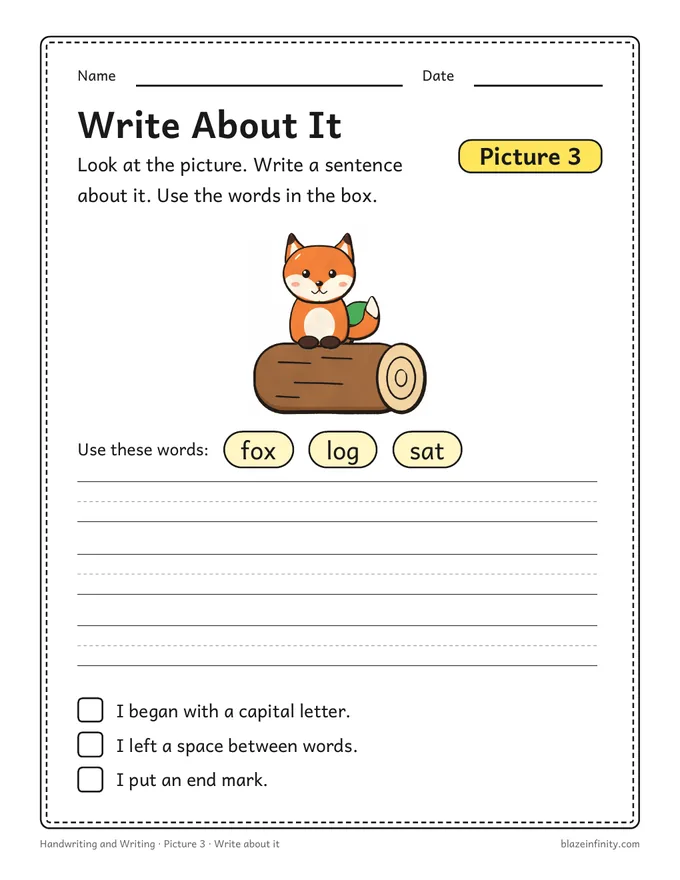
| Picture writing prompts | Writing a sentence about a picture | Children who finish first in everything and need an open-ended job | No answer key, so you have to read these. Give them their own tray. |
Two of these deserve a closer look: the one to start with, and the one most often mixed up.
Mazes are the safest first page
A maze has no reading in it, so every child in the room can start one alone. Put mazes in the bin in the first week, when you are still teaching the rule and do not want the page itself to cause questions.
Color by sum makes children add first; color by number does not
On a color by number page, the child reads a numeral and picks a crayon. That is number recognition, which is real work in kindergarten and very light work by the middle of first grade. On a color by sum page the child has to add or take away first, then color by the answer. Same calm, more math. Give first graders the sum pages.
Set up the bin in ten minutes
You need one hanging file box or plastic bin, six folders, one red folder, two trays and a marker. Nothing needs laminating. The ten minutes is for the setup, not the copying.
- 1
Number six folders, 1 to 6
One kind of page in each folder. Draw a small picture on the tab as well (a maze, a crayon, a magnifying glass) so children who are not reading yet can find their favorite. - 2
Put the easiest kind in folder 1
Mazes or I spy count pages at the front, secret code and word scramble pages toward the back. Children learn that higher numbers are harder and sort themselves. - 3
Add a red answer key folder at the back
One copy of the key for every page, with the page name written large at the top. Children check their own page against the key and fix it with a crayon, not a pencil, so you can see what they changed. The child takes the key to their seat and brings it straight back. - 4
Add a tray for finished pages
Finished puzzle pages go here, not on your table. Writing pages get a second tray, because those are the only ones you need to read. - 5
Show it once, then open it
Hold up one page from each folder and do the first part of it in front of the class. For a kind the children have never seen, do a whole page together as a class before it goes in the bin.
How many copies? Here is a worked example. Say about 6 of your 24 children finish early in a typical work block, and you have two such blocks a day. That is about 12 pages a day, or 60 a week. Ten copies in each of six folders gives you 60. Count what is left on Friday and you will know your own number by the second week. These figures are a planning guess, not a rule.
A child brings you a finished color by number page and asks, 'Is this right?' What do you say? (tap to check)
"Where does the key live?" Then nothing else. If you check one page, you will check twenty, and the bin stops doing its job. The key folder is what makes the system run without you. The first week, you will send children to it many times a day. After that, they go on their own.
When it goes wrong
It will, often once the bin is no longer new. Here are five common problems, with a fix for each.
If you see
Children rush the main work to get to the bin
The bin is more attractive than the work, and nothing stands between them.
Try this
If you see
The same three children always finish first
The main task is too easy for them. More puzzles will not fix that.
Try this
If you see
“I’m done” every two minutes
The child is finishing bin pages fast, or has not learned that the rule needs no announcement.
Try this
If you see
The bin runs dry by Wednesday
Too few copies, or one folder is far more popular than the rest.
Try this
If you see
The bin area gets loud
Children are choosing together, or working at the bin instead of at their seats.
Try this
What not to put in the bin
Some things look like good early finisher work and cause trouble within a week.
- More of the same worksheet. If the reward for finishing ten problems is ten more problems, children learn to work slowly. The bin should feel different from the task.
- Anything new. A finisher page should use a skill the child already has. If it needs explaining, it needs you, and you are busy.
- Anything that needs the teacher. No pages you must check on the spot, no supplies only you can reach, no directions a child cannot follow from the page itself.
- Anything that cannot stop. A page should be easy to slip into a desk half done. Projects with glue, scissors and many pieces are for another time of day.
- Seasonal pages out of season. A snowman page in April tells children nobody takes care of the bin. Swap themed pages as the year turns. Our guides to winter activities and the 100th day of school have themed pages that fit.
Unfinished work from earlier in the day is a fair exception. Many teachers make "finish what is in your folder" the step before the bin, and that works well as long as the folder is not a punishment.
A checklist to print
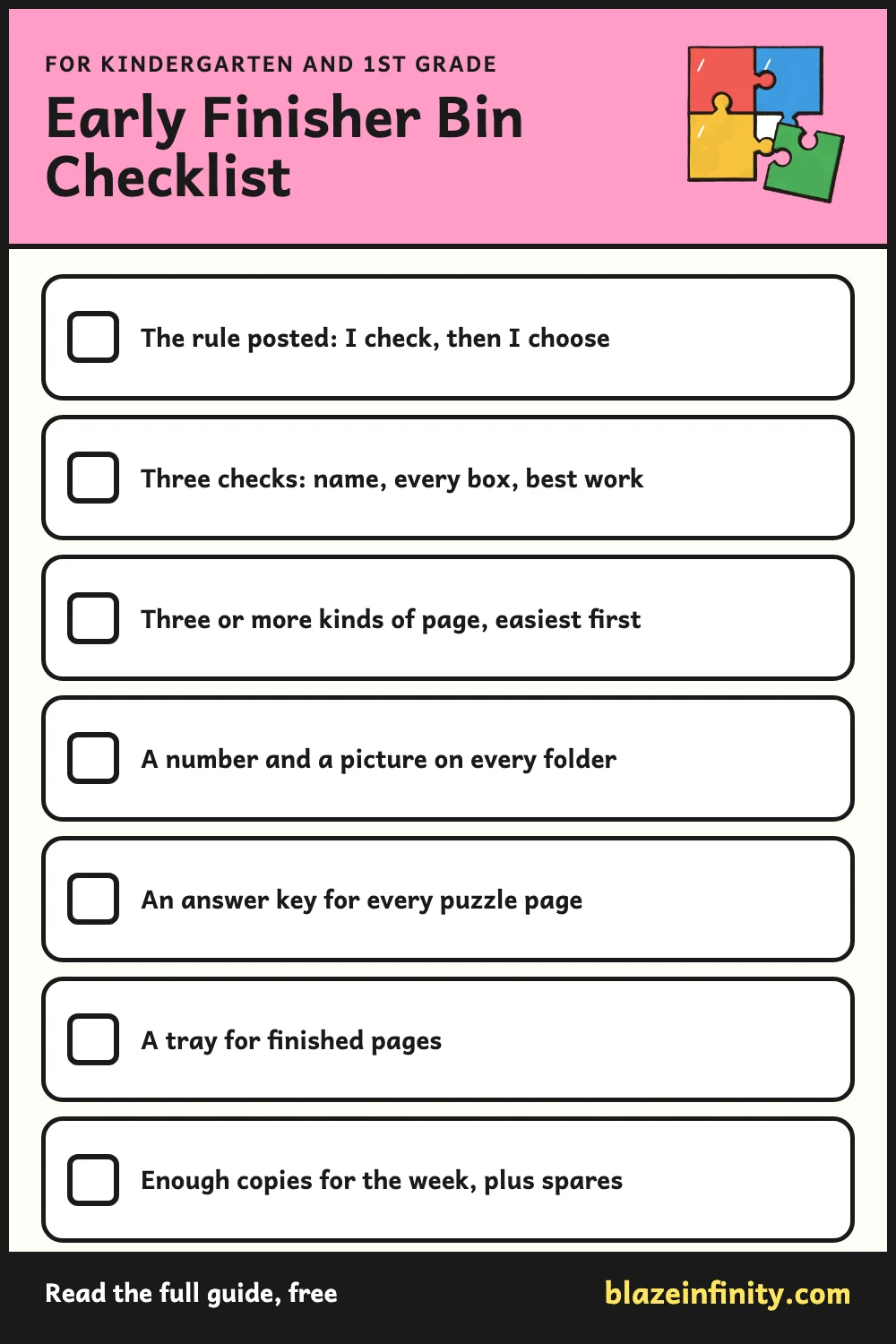
Run through this on Friday afternoon. It takes two minutes and saves you from an empty bin on Monday.
My early finisher bin has...
- The rule posted beside it: When I am done, I check. Then I choose.
- The three checks posted with pictures: name, every box, best work.
- At least three kinds of page, with the easiest in folder 1.
- A number and a small picture on every folder tab.
- An answer key for every puzzle page, in its own red folder.
- A tray for finished pages, and a second tray for writing.
- Enough copies for the week, plus one spare set marked refill.
- Only pages the children have seen before or can start alone.
- No pages left over from last season.
The bin covers the minutes after a task. The first minutes of the day are a different problem with the same answer: a page children can start without you while you take attendance. That is what a daily morning page is for, and 1st Grade Morning Work and Kindergarten Morning Work are the year-round sets we make for it.
Common questions
- What should early finishers do in first grade?
- Check their work, hand it in, then take one page from a bin of quiet puzzle pages they can do alone: mazes, word searches, color by sum, secret codes, I spy count pages or a picture writing prompt.
- What do you do when students finish early in kindergarten?
- Teach one routine and use it all year: check your name and every box, put the work in your usual turn-in tray, take one page from the bin and go back to your seat. Start with pages that need no reading, such as mazes and I spy count pages.
- Are early finisher activities just busy work?
- They are practice, not instruction, and it is fair to say so. A good page practices a skill the child already has, such as counting, adding or writing a sentence, and keeps the room calm so you can teach a small group.
- How do I stop students rushing to get to the early finisher bin?
- Make the check count. Work with a skipped box or writing you cannot read goes back to the child before any bin page. Keep the bin calm rather than exciting, and limit children to one page at a time.
- How many early finisher activities do I need?
- Fewer than you think. Three to six kinds of page, refilled once a week, is enough. Count how many pages are left each Friday and adjust the copies to your own class.
The full set for this skill
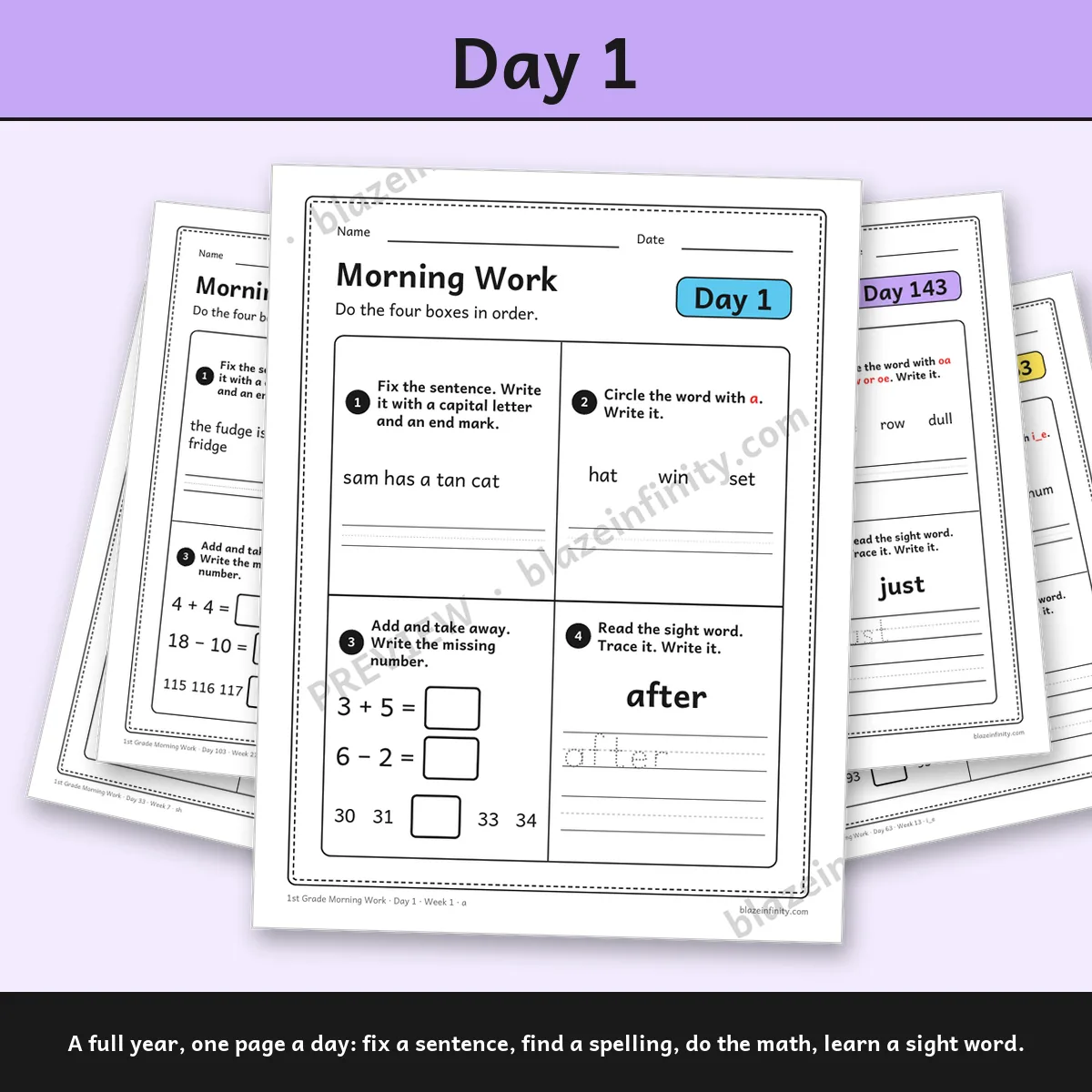
1st Grade Morning Work
180 days of the same four boxes, so children start on their own. Monday to Thursday follow the phonics order of our other sets; Friday reviews an earlier skill.
- 180 daily pages, 36 weeks
- Friday review of an earlier skill every week
- Math within 10, then within 20
- An answer key for every day
- Phonics in the same order as our other sets