





















B and D Reversal: Why Kids Flip Them and How to Fix It
Why kids mix up b and d (and why d flips more), what a study of 130 children found, and a simple start-the-stroke fix you can use on any page today.
In short
- Mixing up b and d is common in young children, and on its own it did not predict later reading problems (Treiman et al., 2014).
- d flips more than b because most letters face right and d faces left.
- The fix is the start of the stroke: b starts with the tall line, d starts with the c.
1Q
2j
3c
b or d? Start Here
SaveLetter: b
Start the stroke: Tall line first, then the circle
Letter: d
Start the stroke: c first, then the tall line
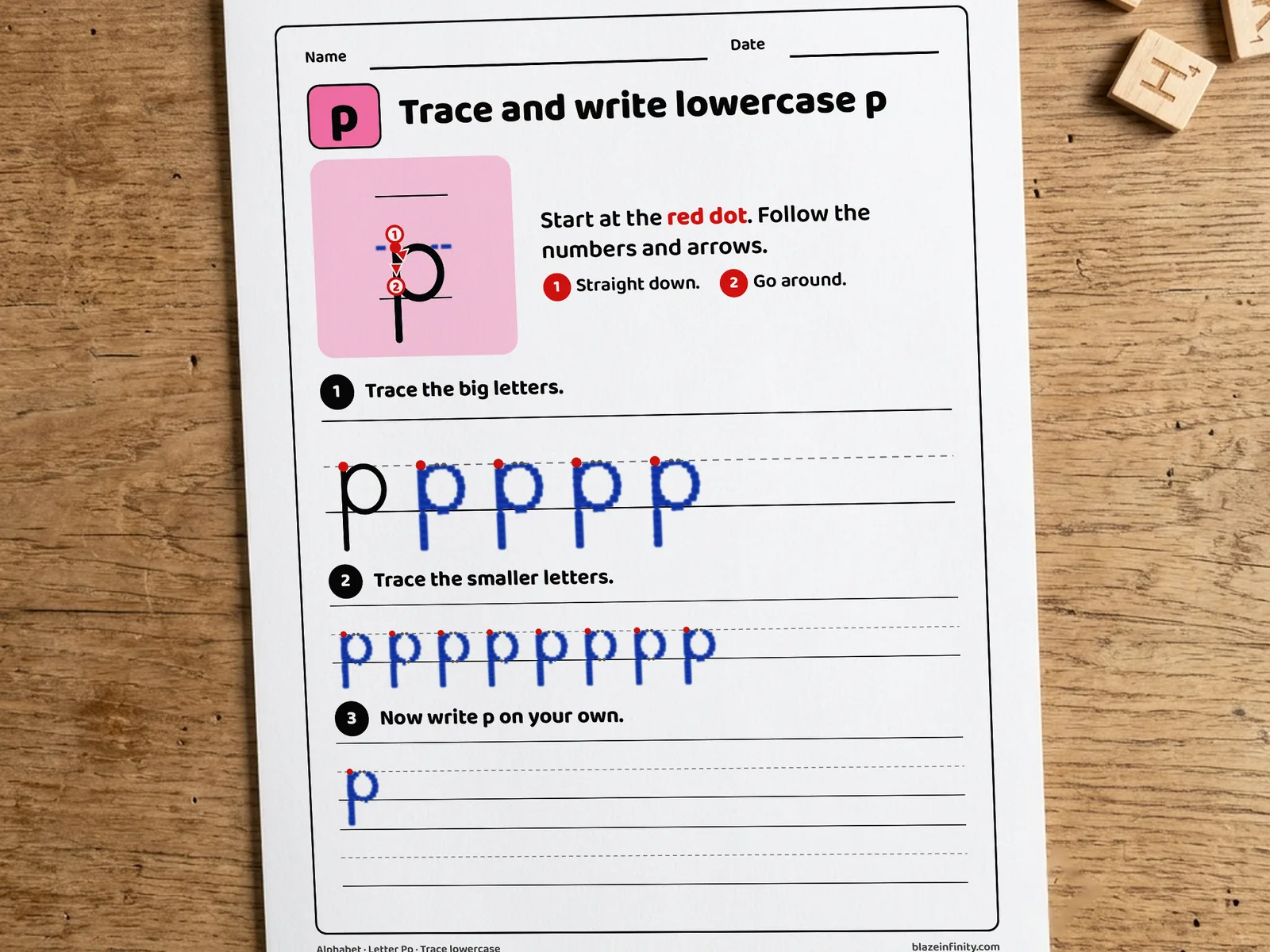
Letter: p
Start the stroke: Line down first, then the circle
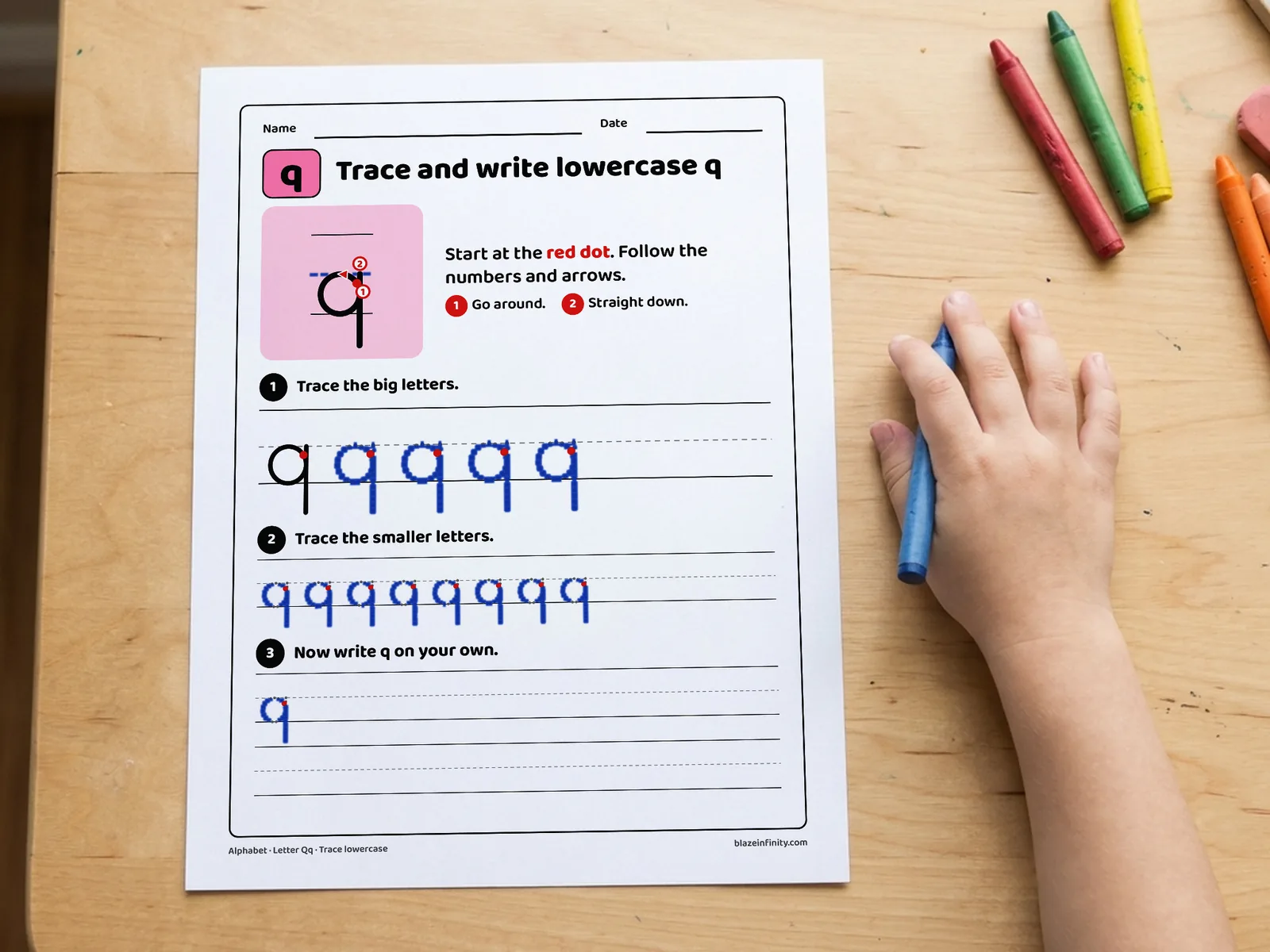
Letter: q
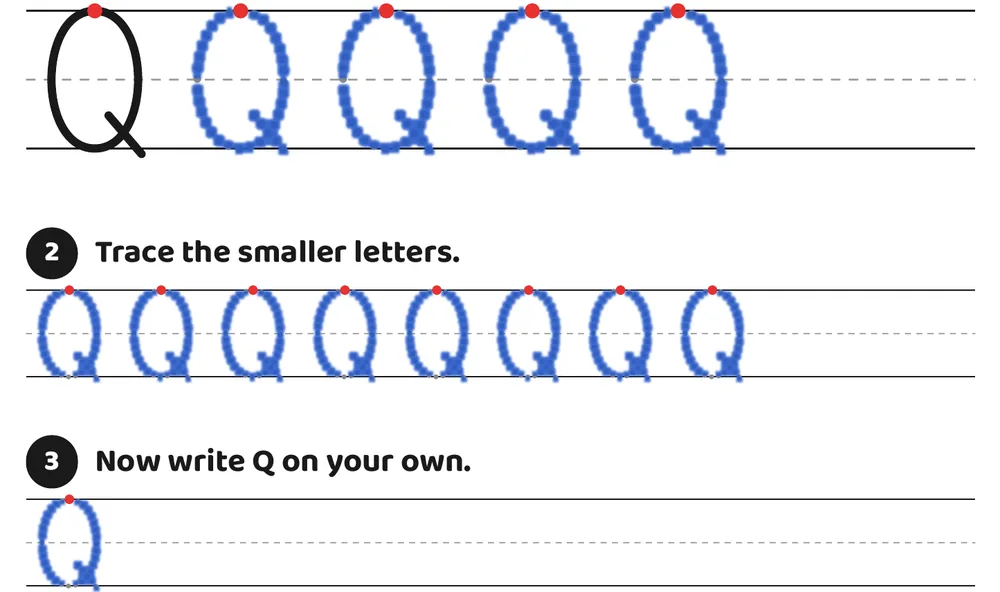
Start the stroke: c first, then the line down
Letter: bed
Start the stroke: b first, d last: headboard and footboard
Your child writes "bog" for dog, or reads "bad" as "dab", and you start to worry. Here is the short version: mixing up b and d is very common in young children, there is a real reason it happens, and there is a simple fix that works better than drilling the letters over and over.
First, the worry: does it mean something is wrong?
A team of researchers (Treiman and colleagues, 2014) followed 130 children aged 5 to 6. Children who later became weaker readers did make more letter-writing mistakes overall, but they were no more likely to make reversal errors than children who became strong readers. Flipping b and d on its own is not a warning sign. Keep teaching, and watch the bigger picture: is your child learning letter sounds, blending words, and slowly writing more of each word?
Why d gets flipped more than b
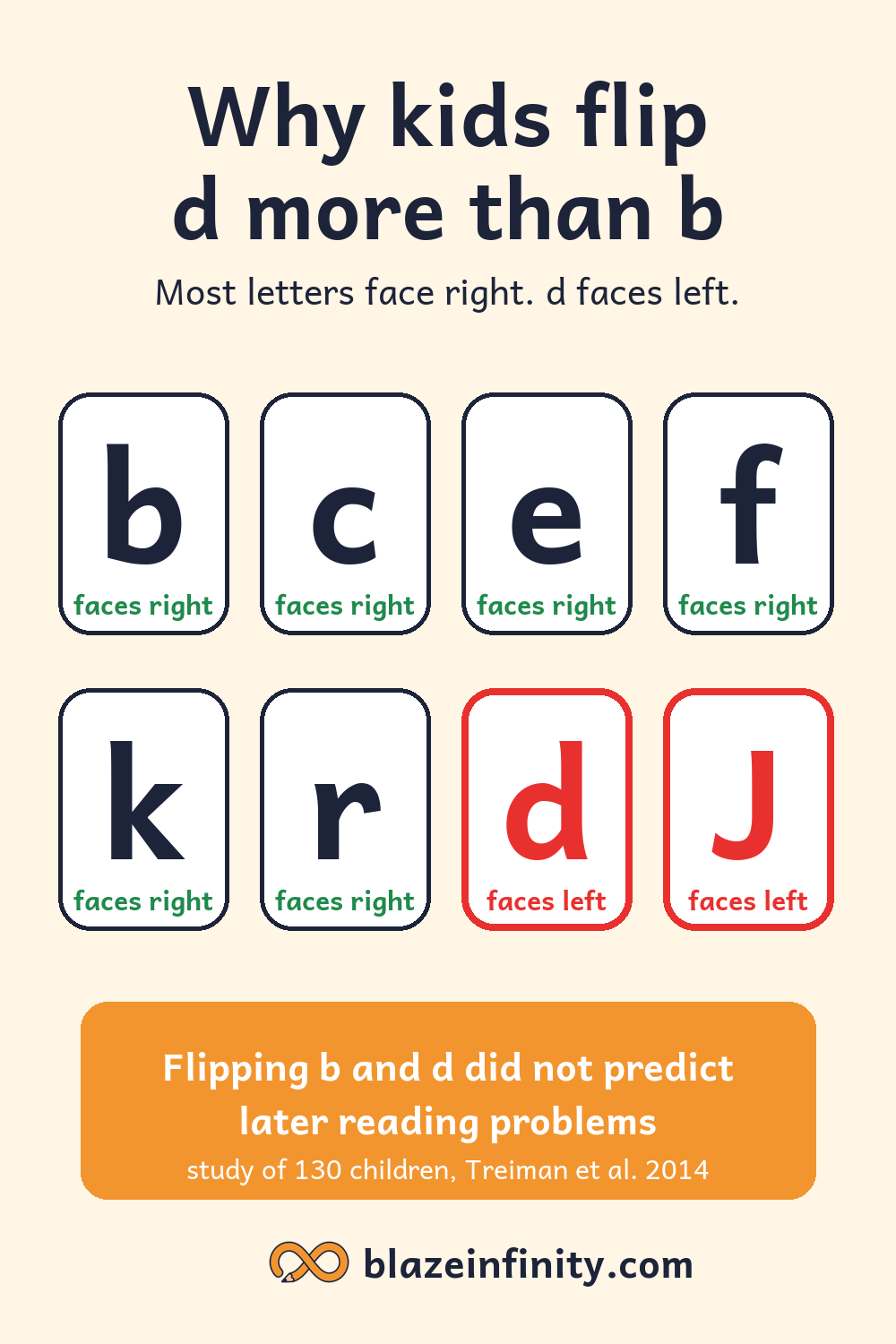
The same study found something most parents never hear: children reverse letters that face left, like d and J, more often than letters that face right, like b and C. Most English letters that point a direction point to the right, so a child picks up the pattern "letters face right" and applies it to d, which breaks the pattern. That is why "dog" so often comes out as "bog", not the other way round.
This is good news. It means your child is noticing patterns, and it tells you exactly which letter to give extra attention: d.
The fix: start the stroke in the right place
A review of handwriting research (Santangelo and Graham, 2016) found that teaching children how to form the letters themselves made their writing clearer and faster, while general hand exercises on their own did not help. So the most useful fix is not more tracing of random lines; it is teaching where each letter starts.
- 1
b starts with the tall line
Put the pencil at the top, pull straight down, then add the round part on the right. - 2
d starts with the c
Make a c first (the round part), then go up for the tall line and back down. - 3
Say it while writing
"Tall line, then the circle" for b. "c first, then the tall line" for d.
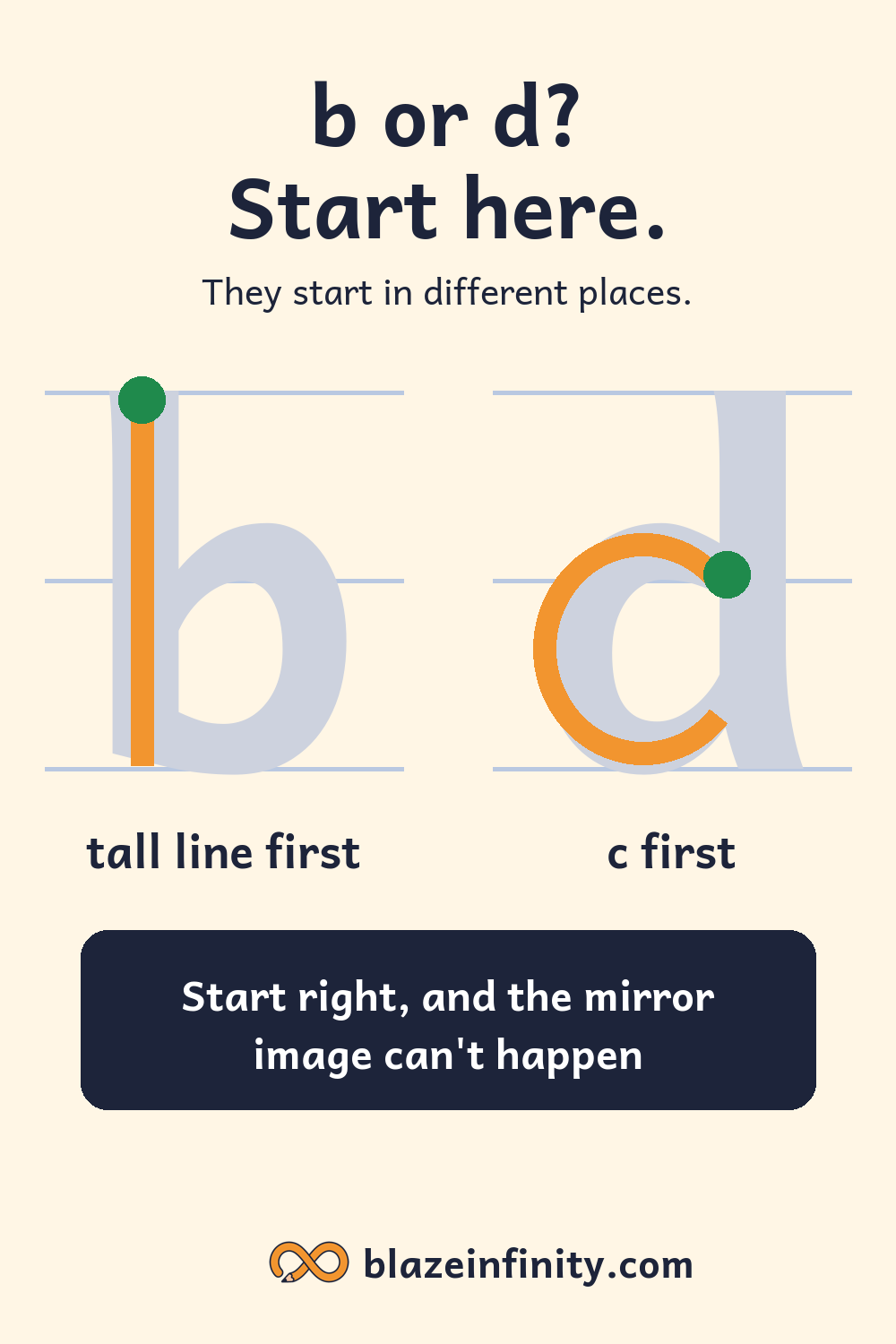
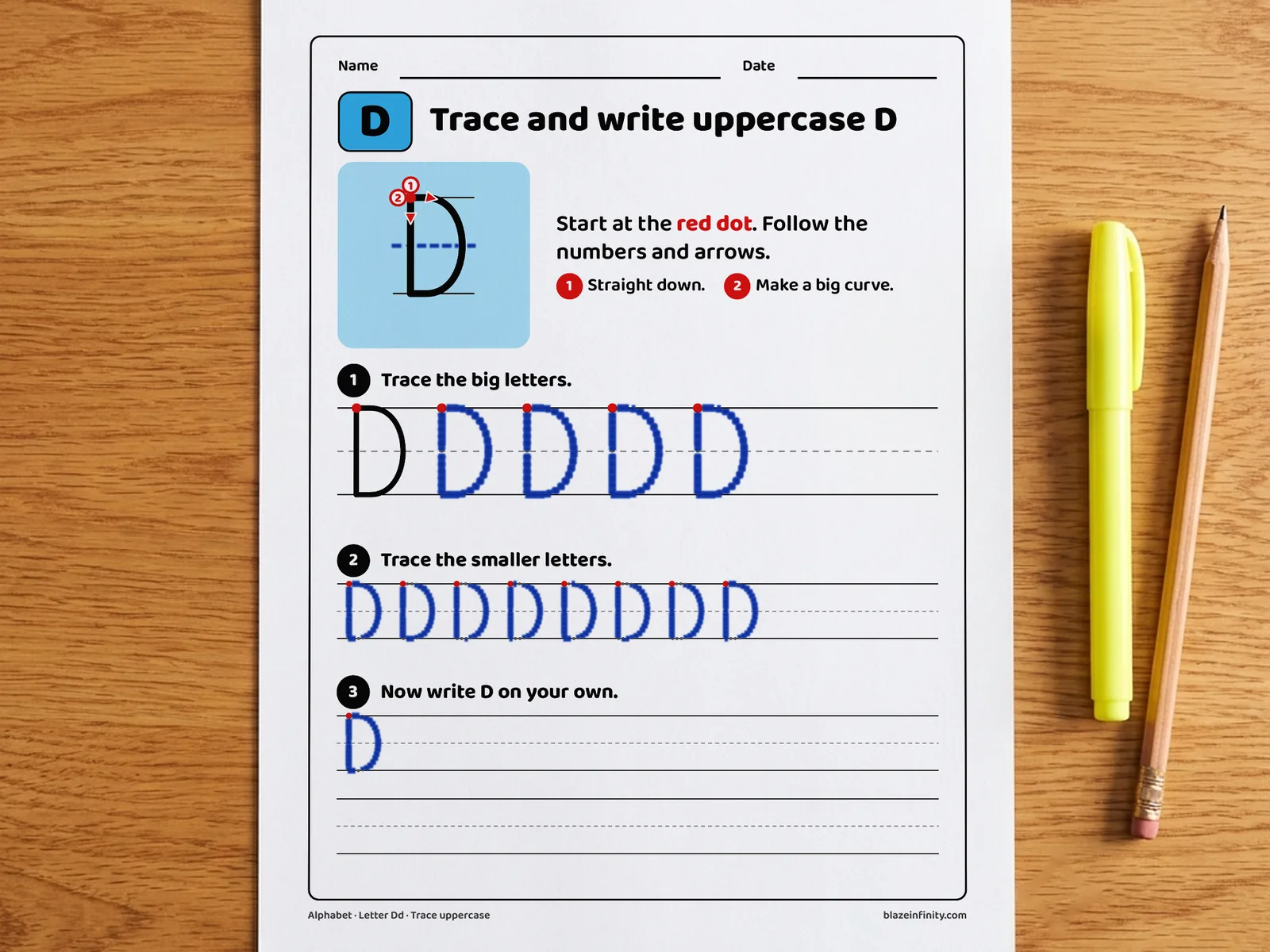
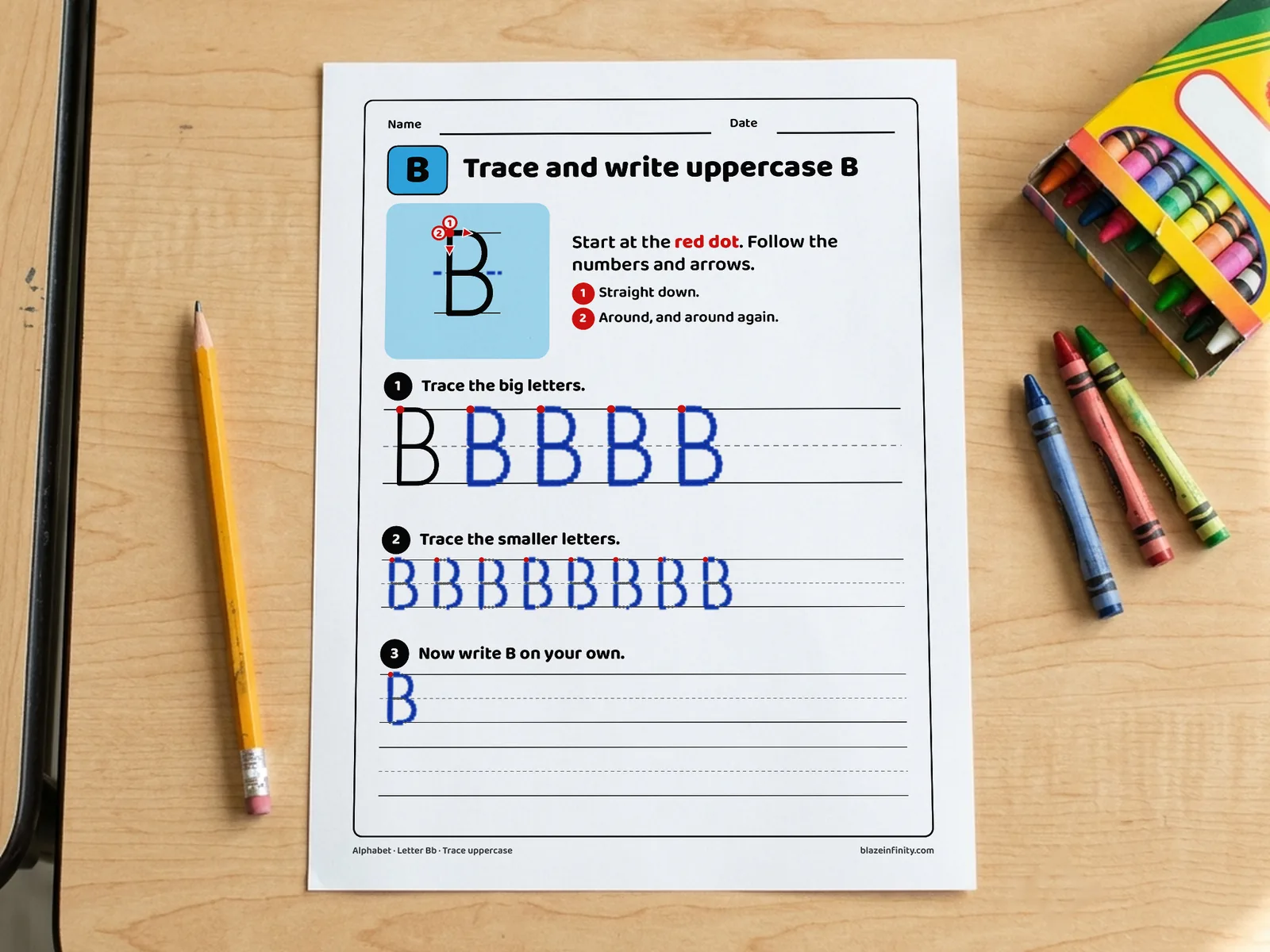
Because the two letters start in different places, a child who starts correctly can't make the mirror image. Our free letter formation worksheets give a start point for each letter, and the Handwriting and Writing and Alphabet sets carry the same stroke order through every letter.
The bed trick (a helper, not the whole method)
A 5-minute routine for a week
Day 1 to 2
Letters
Write 5 d's with "c first", then 5 b's with "tall line first". Say the words aloud.Day 3 to 4
Short words
Write dog, dad, bed, bad, bud. Circle every d.Day 5
Reading
Read a short list mixing b and d words, pointing under each word.
Keep it short and positive. A reversal during practice is just a cue: "Where does d start?"
What the research says
- In 130 children aged 5 to 6, future weaker readers made more letter-writing errors overall but were no more likely to make reversal errors; left-facing letters (d, J) were reversed more than right-facing ones (b, C). [1]
- Teaching handwriting directly made writing more legible and fluent; motor training on its own did not. [2]
Sources
- Treiman, R., Gordon, J., Boada, R., Peterson, R. L., & Pennington, B. F. (2014). Statistical learning, letter reversals, and reading. Scientific Studies of Reading, 18(6), 383-394.
- Santangelo, T., & Graham, S. (2016). A comprehensive meta-analysis of handwriting instruction. Educational Psychology Review, 28(2), 225-265.
Common questions
- Is it normal for kids to write letters backwards?
- Yes, it is common in young children who are still learning letters. In the study above, reversals did not predict later reading problems.
- Should I worry about dyslexia?
- Reversals on their own are not a sign of dyslexia. If your child also struggles to learn letter sounds, to blend simple words, or to remember words they have read many times, talk with their teacher.
- What about p and q?
- The same idea works: teach where each one starts and say the steps aloud.
The full set for this skill
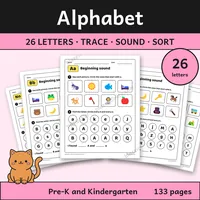
Alphabet
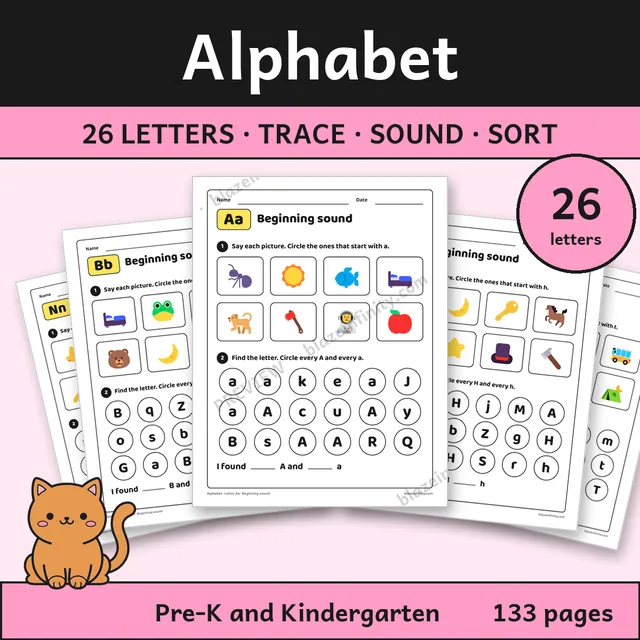
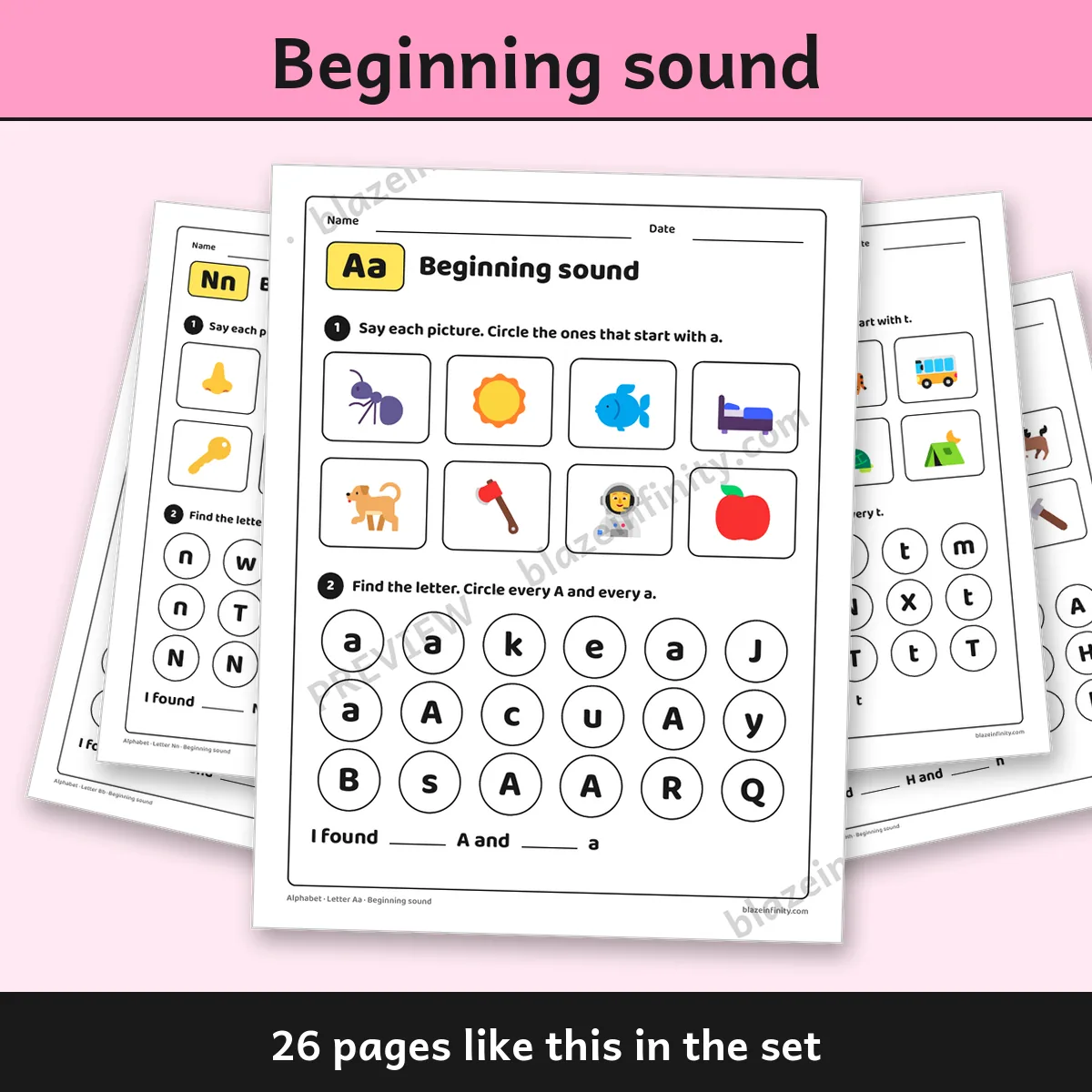
Five pages for every letter of the alphabet: trace the capital, trace the small letter, find the beginning sound, check with the key, then cut and sort pictures.
- Five pages for each of the 26 letters
- Tracing pages for uppercase and lowercase
- Beginning sound pages with answer keys
- Cut-and-sort picture pages
- An alphabet chart