











How to teach telling time in first grade
A step-by-step way to teach first graders to tell time to the hour and half hour on analog and digital clocks, with the mistakes to expect and simple daily practice.
In short
- First graders tell time to the hour and half hour, on analog and digital clocks.
- Teach the short hour hand first, on its own.
- At half past, read the number the hour hand has just passed.
First graders are expected to tell and write time to the hour and the half hour on both analog and digital clocks (Common Core standard 1.MD.B.3). Five-minute times come in second grade. That narrow goal is good news: it means a first grader only needs to read the short hand well and know two positions of the long hand. Here is a step-by-step way to get there.
Step 1: the short hand on its own
Start with a clock that has only the hour hand, or cover the minute hand. Ask children where the short hand is pointing and what number it is near. This is the hand that matters most, and children who learn it first are not confused later. When the hand points right at the 3, it is three o'clock. When it is between the 3 and the 4, it is “after three”.
Step 2: add the long hand at the 12
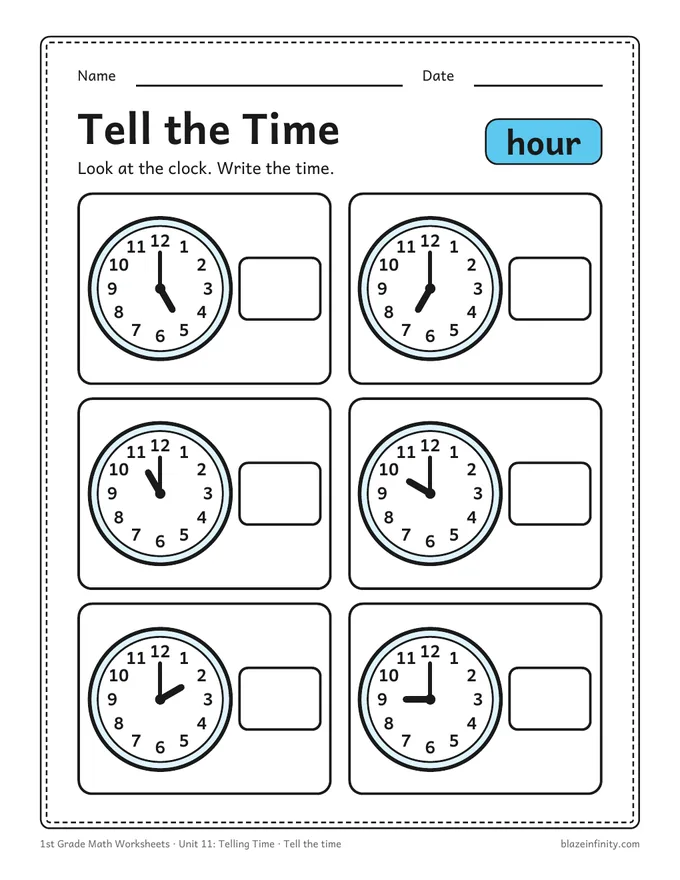
Now bring in the minute hand, pointing straight up at the 12. Teach one sentence: when the long hand points to the 12, it is something o'clock, and the short hand tells you what. Practice reading these times and setting them on a clock with movable hands.
Step 3: half past
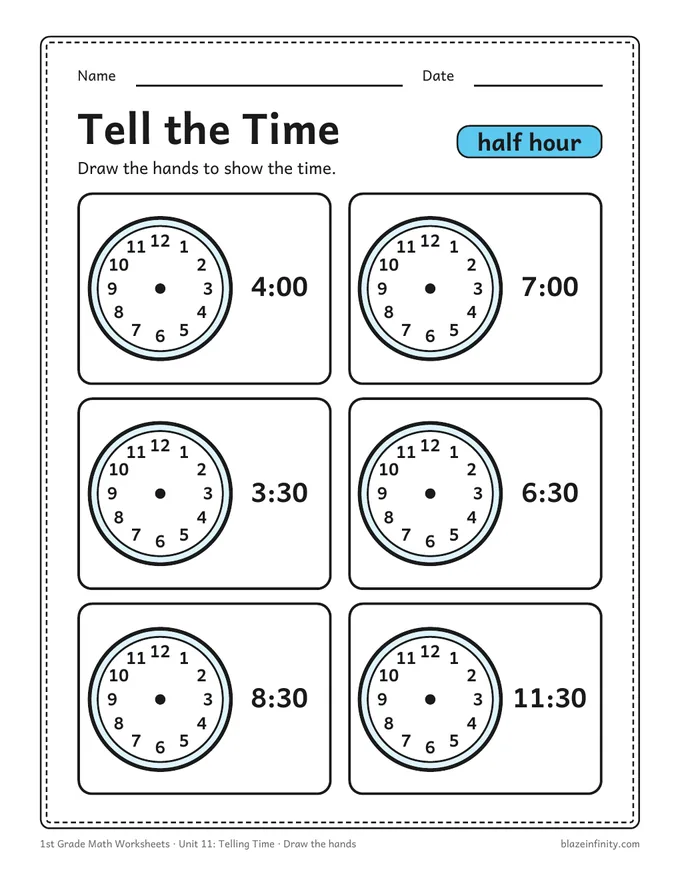
When the long hand points to the 6, it has gone halfway round the clock, so it is half past. Fold a paper circle in half to show it. The tricky part is the short hand: at half past three it is halfway between the 3 and the 4. Children often read it as four. Teach them to read the number the hand has just passed, not the one it is going towards.
Step 4: match analog and digital
Digital times are easier to read but harder to understand. Show 3:00 and 3:30 next to the matching clock faces and point out that the first number is the hour and the second is the minutes past it. Thirty minutes is half of an hour, which is why 3:30 is half past three.
Mistakes to expect
- Mixing up the hands. Reading the long hand as the hour. Say “short and slow, the hour; long and fast, the minutes” and color the hour hand.
- Half past the wrong hour. Reading half past three as half past four, as above.
- Drawing the hands the same length. When children draw hands, check the lengths before checking the time.
Make it part of the day
Ten minutes of worksheets will not teach time as well as a real clock on the wall. Ask “What time is it?” at the moments that matter to children: lunch, recess, home time. Put a paper clock face next to the class schedule showing when each thing happens. By the end of first grade, children should read any hour or half hour on sight.
Common questions
- What time do first graders need to tell?
- Time to the hour and the half hour, on analog and digital clocks. Telling time to five minutes comes in second grade.
- How do you explain half past to a child?
- Show that the long hand has gone halfway around the clock when it points to the 6. Fold a paper circle in half to make it visible.
- Why do children read half past three as half past four?
- At half past, the hour hand is between the two numbers. Teach children to read the number it has just passed.
Ready-made pages for this skill
1st Grade Math Worksheets: ready-made printable pages for this skill.
See the set