













Groundhog Day Activities for Kindergarten: A Shadow Science Day
A full Groundhog Day plan for kindergarten built around the sun: shadow tracing, a prediction graph, measuring shadows, true groundhog facts and writing.
In short
- Trace each child's shadow three times, from the same chalk footprints, to see it change as the sun moves.
- A class graph of yes and no predictions turns Phil's forecast into counting and comparing.
- Explain the forecast as a tradition, not science, then let the shadows be the real science.
Groundhog Day is February 2, and in 2027 it falls on a Tuesday. The whole holiday hangs on one question: will he see his shadow? The plan below follows the sun from morning meeting to the last bell. It needs chalk, a flashlight, blocks and sticky notes, no live animal, and it still works on a cloudy day.
What Groundhog Day is, and how to explain it kindly
Every February 2, a crowd gathers at Gobbler's Knob in Punxsutawney, Pennsylvania, to hear a forecast from a groundhog named Punxsutawney Phil. NOAA, the U.S. weather and climate agency, says he has been forecasting since 1887. The legend says that if Phil sees his shadow, there will be six more weeks of winter. If he does not, spring comes early.
It is a tradition, not a weather forecast. NOAA checked Phil's record, and its page says: "On average, Phil has gotten it right 30% of the time over the past 10 years." For five-year-olds, that is about 3 times out of 10.
What goes wrong: a child decides Phil is "lying" and gets upset, or tells the class it is fake. The fix is one sentence: "It is not a lie. It is a game, and everyone knows it is a game." Then move on to the shadows.
The Groundhog Day plan, hour by hour
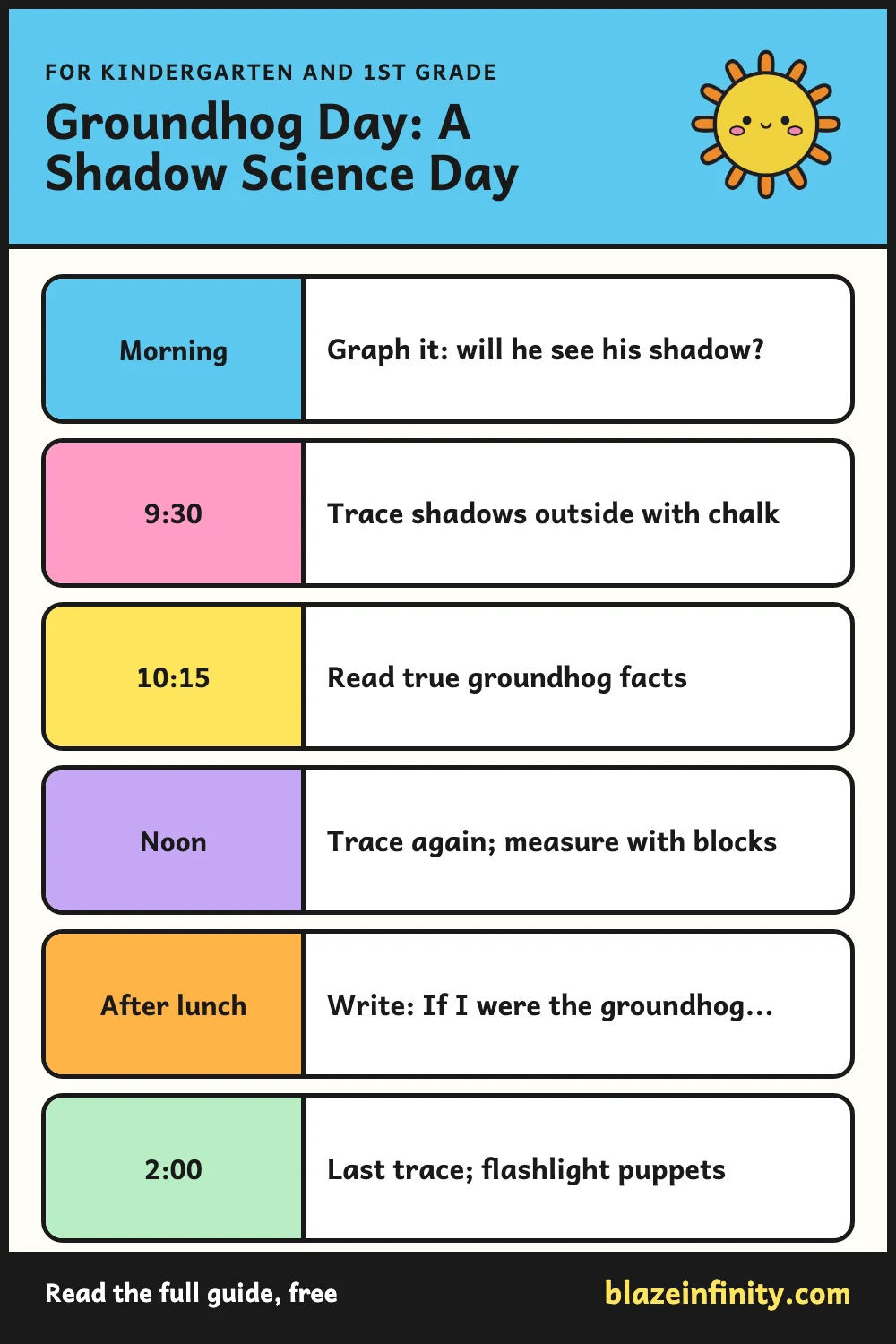
Shadows change as the sun moves, so the day is built around three short trips outside. Shift the times to match your recess and lunch.
Morning meeting
Make a prediction graph
Tell the story. Each child puts a sticky note under Yes or No: "Will Phil see his shadow?"
9:30
First shadow trace
Partners trace each other's feet and shadow in chalk.
10:15
Groundhog facts read
A short nonfiction read, then true or not true.
Around noon
Second trace and measure
Same footprints, new shadow. Measure both shadows.
After lunch
Write and draw
"If I were the groundhog I would ___." Then share Phil's real forecast.
2:00
Third trace and shadow puppets
One last trace, then flashlight shadow puppets inside.
Shadow science: what makes a shadow
A shadow forms when something blocks light. Your body stops the sunlight, so the ground behind you gets less light and looks dark. Kindergartners can say it in their own words: "My body blocks the sun."
How to run the trace. Pick a sunny patch of blacktop inside the playground fence, well away from cars, with no trees or walls close by. Coats and hats stay on, and each trip takes about ten minutes. One partner stands still with feet together. The other traces around both shoes first, then around the whole shadow, head to toe. Write the child's name inside the shoes and the time beside the head. At noon and again at 2:00, the same child stands in the same shoes, facing the same way, and the partner traces the new shadow in a different color.
What children will see. The morning shadow is long. The midday shadow is shorter, and it points a different way. The afternoon shadow grows longer again and points another way still. Ask: "Where is the sun? Where is your shadow?" Children will notice that the shadow always points away from the sun. In February the sun stays low, so even the noon shadow is not tiny, but it is still shorter than the morning one.
What goes wrong. A child stands a step to the left at noon, or turns around, and the two traces do not match. That is why you trace the shoes first: the child steps back into their own shoes every time. If pairs stand too close, the shadows overlap. Space them a big step apart, all facing the same way.
If it is cloudy. Go out anyway and ask: "Can you see your shadow today? Would Phil see his?" Clouds block the sun, so there is no sharp shadow. Do the flashlight work below in place of the outdoor traces.
Flashlight shadow puppets indoors
A flashlight lets children make a shadow on purpose. Dim the lights and lay the flashlight on a stack of books so it shines on a wall or a sheet of white chart paper. Children hold a paper groundhog on a craft stick between the light and the wall.
Ask three questions, one at a time. "What happens when you move the groundhog closer to the light?" The shadow grows. "Farther away?" It shrinks. "What if you hold up clear plastic instead of paper?" The shadow is very faint, because most of the light goes through.
What goes wrong: children pick up the flashlight and shine it in each other's eyes. Keep it on the book stack, and make moving it a job for an adult or one helper.
The prediction graph: will he see his shadow?
Draw two columns on chart paper, Yes and No, with a picture of a sun over Yes and a cloud over No. Each child puts one sticky note in a column. Count each column out loud, touching every note.
Ask: "Which column has more? How do you know?" "Yes, because it is taller" is right. Push one step further: "How many more?" Line the notes up side by side and count the ones with no partner. For more on this question, see our guide to comparing numbers in first grade.
What goes wrong: when the real forecast comes in, the children who guessed wrong feel they lost. Say: "Our graph shows what we thought, not what had to happen. Scientists predict, then check."
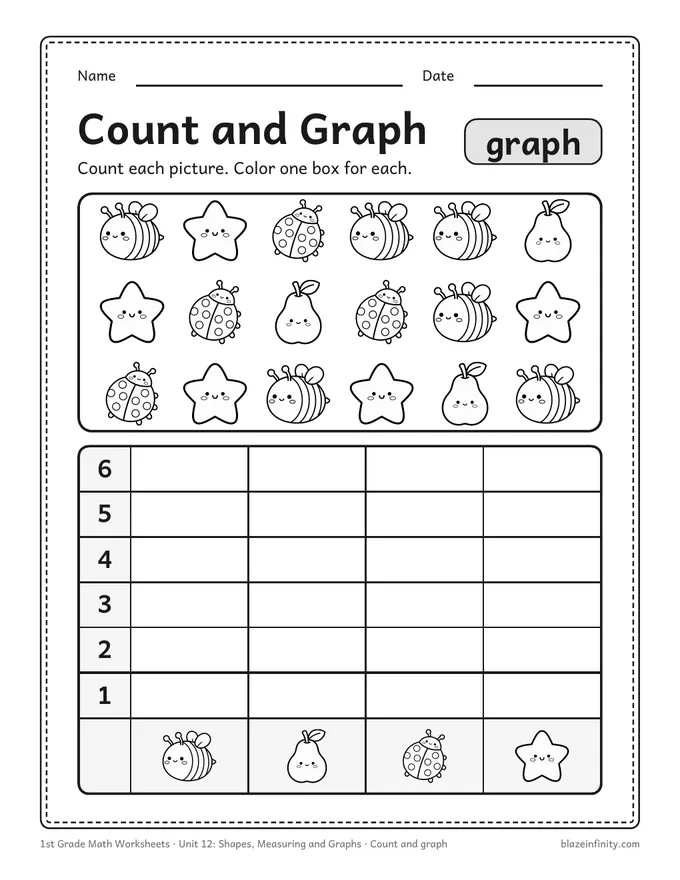
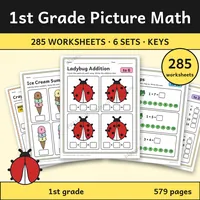
Use that page at tables after the class graph. Children count bees, pears, ladybugs and stars and color one box for each, the same idea as one sticky note for each child. It comes from our first grade set, so in kindergarten do the first column together.
Measuring shadows with blocks or footsteps
At noon, two shadows are side by side in chalk. Which is longer, and by how much?
Kindergarten: compare first. Cut a piece of yarn as long as the morning shadow, from the toes to the top of the head. Lay it along the noon shadow. "Is the noon shadow longer or shorter than the yarn?" That direct comparison is the kindergarten skill. Have children say: "My noon shadow is shorter than my morning shadow."
Then count. A February shadow is longer than a child is tall, so use big units. Each table group measures one child's shadows with long wooden blocks from the block center, all the same size, laid end to end from the feet to the head. Or walk it, heel to toe. Write the numbers in chalk. Back inside, chart the time and the number of blocks. By 2:00 children see the number go down at noon, then back up.
What goes wrong. Blocks get laid with gaps, and the shadow "measures" 9 when it should be 12. Or they overlap, and it measures too many. Show it once: "No gaps, no bumps. Each block touches the next one." With footsteps, two children often get different numbers for the same shadow, because their feet are different sizes. Ask: "Why did you get 9 and Maya got 7?" That is why blocks, all the same size, work better.
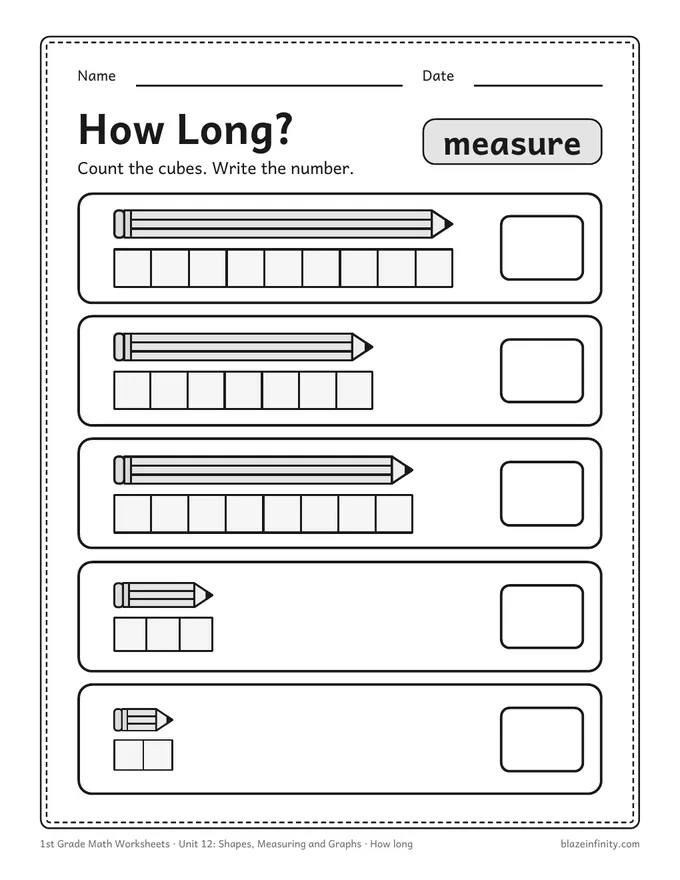
Use that page in the morning, before the noon trace. Children count the cubes under each pencil and write the number, so they see units laid end to end with no gaps before they try it on a shadow. It is a first grade page; in kindergarten, count the first pencil together. Save How Long? Page 2 for the next day as a check.
A short groundhog facts read
Read a short nonfiction book about groundhogs on the rug and stop on the facts that surprise children. These are all true.
- A groundhog is a rodent. It belongs to the squirrel family, so it is a cousin of the squirrels on the playground.
- It has other names. People also call it a woodchuck, and some call it a whistle pig, for its loud alarm whistle.
- It digs a burrow. Groundhogs dig tunnels under the ground and sleep in the burrow.
- It sleeps all winter. Groundhogs are among the few mammals that truly hibernate. They sleep in the burrow from about late fall until late winter or early spring.
- It eats plants. Groundhogs eat grass, clover and garden plants such as beans and peas.
- It can climb. Groundhogs sometimes climb trees, which most children do not expect.
Then play true or not true with thumbs up or down: "Groundhogs eat meat." "Groundhogs live in nests in the trees." "Groundhogs sleep all winter." After each, ask "How do you know?" and send children back to the page. Our guide to reading comprehension in kindergarten has more questions that work after any nonfiction read-aloud.
A child asks: if groundhogs sleep all winter, how does Phil come out on February 2? (tap to check)
Wild groundhogs wake at different times depending on where they live, and in many places they are still asleep in early February. Phil's morning is a ceremony that people plan. You can say: "Lots of real groundhogs are still asleep today. Phil's big day is a show that people put on."
Writing: If I were the groundhog I would ___
After lunch, children write about the day from the groundhog's side. Hand out paper with a drawing box on top and the sentence starter underneath. Draw first, so there is something to write about.
Model one sentence on the board and think aloud: "If I were the groundhog I would see my shadow and run back to bed." Kindergartners copy the starter and sound out the rest. Accept spelling that shows the sounds they hear.
What goes wrong: a child writes "I would see my shadow" and stops. Ask one question: "And then what would you do?" That turns one idea into two. Children still forming letters can find help in our guide to kindergarten handwriting.
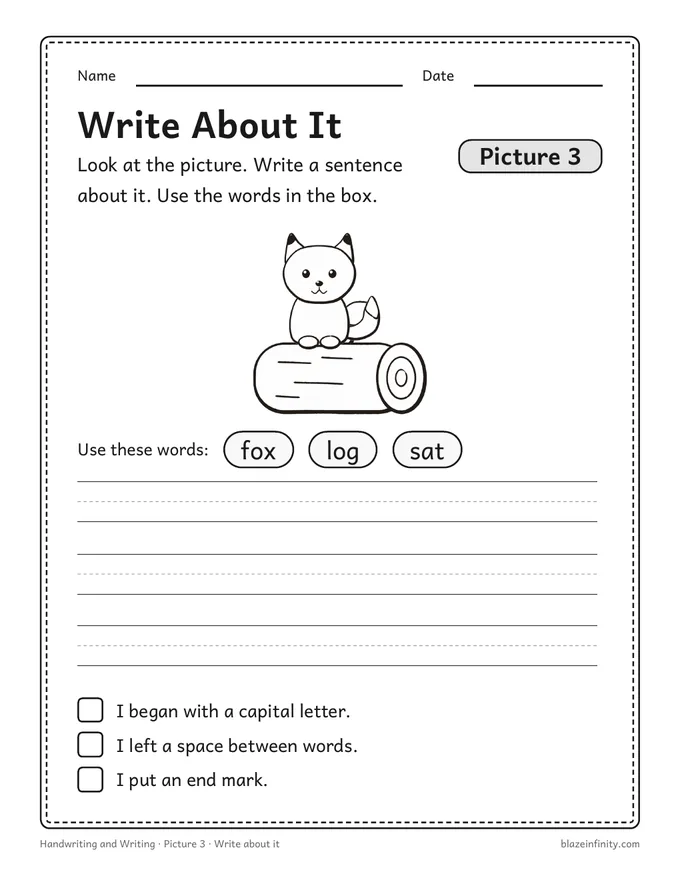
Give that page to early finishers or use it the next morning. It is the same habit: look closely at a picture, then write a sentence, with a word box and a short checklist for help.
Groundhog Day activities for preschoolers
The day keeps the same shape for every age; what changes is how much children say, count and write.
| Activity | Preschool | Kindergarten | First and second grade |
|---|---|---|---|
| Shadow tracing | Trace once, then play shadow tag | Trace three times and name the pattern | Trace three times; predict the next shadow before tracing |
| Prediction graph | Put a note in a column; count with the teacher | Count each column; say which has more | Write how many more as a number sentence |
| Measuring | Longer or shorter, with yarn | Compare with yarn, then count blocks | Measure in blocks and order three shadows by length |
| Facts read | Point to the burrow and the shadow in the pictures | True or not true, with thumbs | Write one fact in a sentence |
| Writing | Draw; tell an adult the sentence to write | One sentence from the starter | Two or three sentences, one with because |
For preschoolers, keep each part to ten minutes and hold hands on the way out. Shadow tag, where you step on a friend's shadow, teaches the same idea with more running; play it on open blacktop with a clear boundary.
Groundhog Day activities for 2nd grade and 1st grade
Older children can do more of the thinking. First graders draw the sun, themselves and the shadow at each time and write what changed. Second graders can measure each shadow with a yardstick, in feet and inches, and find how much shorter the noon shadow is than the morning one.
Before the day
Prep takes about twenty minutes: the graph on chart paper, chalk in three colors, a basket of same-size long blocks for each group, paper groundhogs taped to craft sticks, the writing page copied and a working flashlight. Check the weather the night before so you know whether to plan for traces or flashlights.
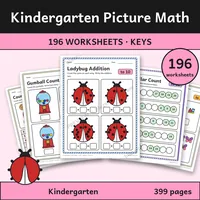
For more graphing and comparing, Kindergarten Picture Math has nearly 200 worksheets where the picture carries the math, with answer keys. Kindergarten Math Worksheets has 300 worksheets in 10 units, including measuring and sorting, and for the rest of the season there are Winter Worksheets and our winter activities for kindergarten. The 100th day of school is often close behind. Every sheet in this guide is on our free worksheets page.
What the research says
- Every February 2 a crowd gathers at Gobbler's Knob in Punxsutawney, Pennsylvania; Phil has been forecasting since 1887; "On average, Phil has gotten it right 30% of the time over the past 10 years" (page updated January 30, 2026). [1]
- The woodchuck (groundhog), also called whistle pig for its loud alarm whistles, is a rodent in the squirrel family; it hibernates in its burrow from late October to sometime in February, eats grasses, clover and garden crops such as peas and beans, and occasionally climbs trees. [2]
- Groundhogs are among the few mammals that enter true hibernation, which varies with latitude, generally from the end of October or early November until late February and March; they are strict herbivores and good climbers. [3]
- Kindergarten: directly compare two objects with a measurable attribute in common (K.MD.A.2); classify objects into categories and count the objects in each (K.MD.B.3). [4]
Sources
- NOAA National Centers for Environmental Information, Groundhog Day Forecasts and Climate History.
- Missouri Department of Conservation, Field Guide: Woodchuck (Groundhog).
- Penn State, Do groundhogs hibernate? What to know about groundhogs for Groundhog Day.
- Common Core State Standards for Mathematics, Kindergarten, Measurement and Data.
Common questions
- What are some Groundhog Day activities for kindergarten?
- Make a yes or no prediction graph, trace shadows outside in the morning, at noon and in the afternoon, and measure them with blocks. Then read true groundhog facts and write a sentence that starts "If I were the groundhog I would."
- How do you explain Groundhog Day to preschoolers?
- Say that a groundhog in Pennsylvania comes out every February 2, and people say that if he sees his shadow, winter lasts six more weeks. Tell them it is a fun tradition, like a game, and then go outside to look for your own shadows.
- Is the groundhog right about the weather?
- Not often. NOAA says that on average, Phil has gotten it right 30% of the time over the past 10 years, so the forecast is a tradition rather than a reliable prediction.
- What can you do on Groundhog Day if it is cloudy?
- Go outside and notice that there is no sharp shadow, because clouds block the sun. Then use a flashlight indoors to make shadows with paper groundhogs on sticks.
- What are good Groundhog Day activities for 1st and 2nd grade?
- Have children measure their shadows at three times of day and order them by length, with blocks in first grade and a yardstick in second. They can predict the next shadow before tracing it and write about what changed and why.
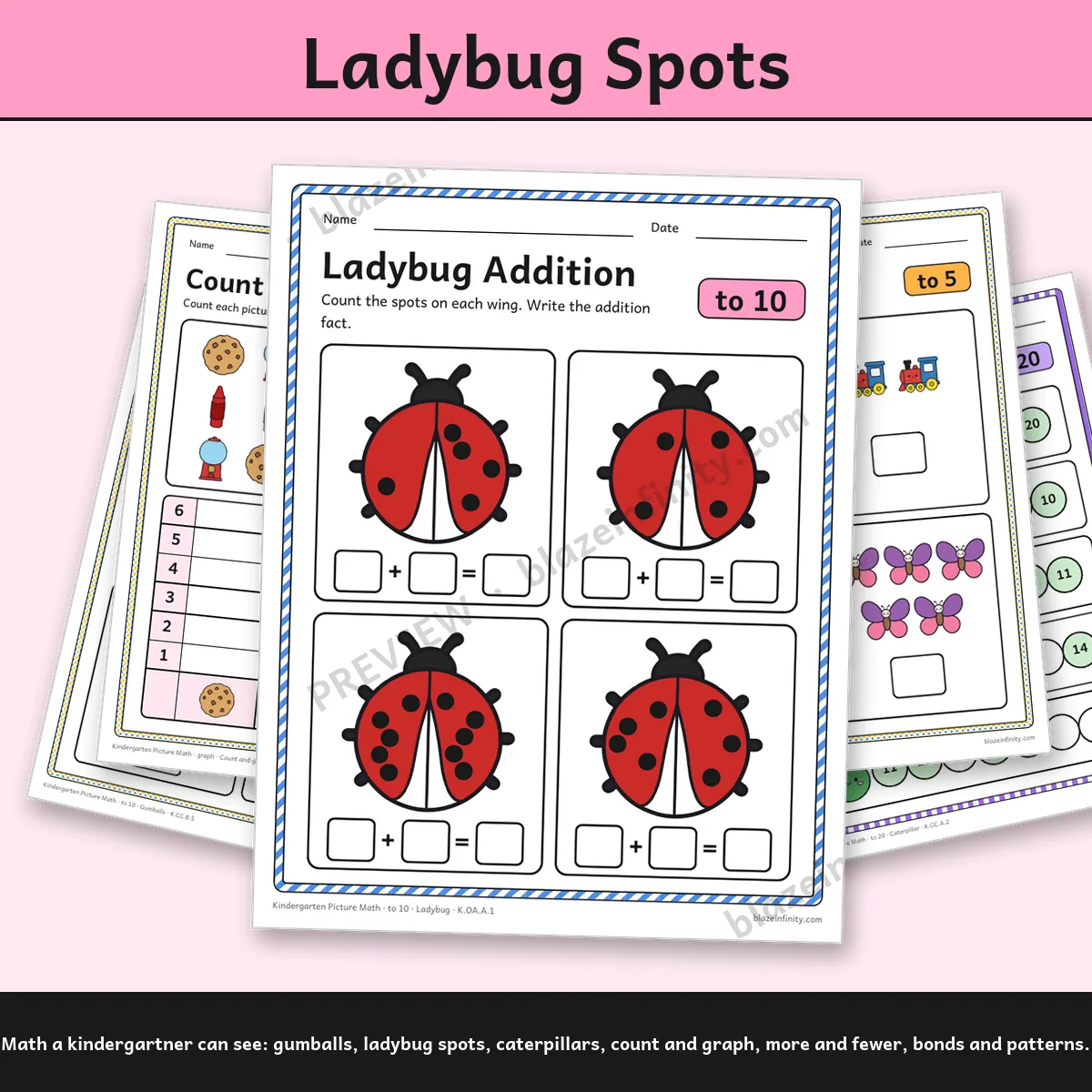
The full set for this skill
Kindergarten Picture Math
196 kindergarten math worksheets where a picture carries the math: count the gumballs, add the ladybug spots, count on along a caterpillar, graph, compare, take away and finish the pattern. An answer key follows every page.
- 196 worksheets
- An answer key after every page
- Counting to 20 with gumballs and caterpillars
- Adding and taking away within 10 with ladybug spots and pictures
- Count and graph, more and fewer, comparing numbers