









New Year Activities for Kindergarten: The First Week Back
New Year activities for kindergarten and first grade for the first week back in January: reset routines, write a goal, build 2027 and pack a time capsule.
In short
- Spend the first week back practicing routines in short rounds, not explaining rules in one long talk.
- Call a resolution a goal, and keep it to something a child can practice at school and you can see.
- Use the year itself for math: write 2027, build 27 on ten frames and count through a January calendar.
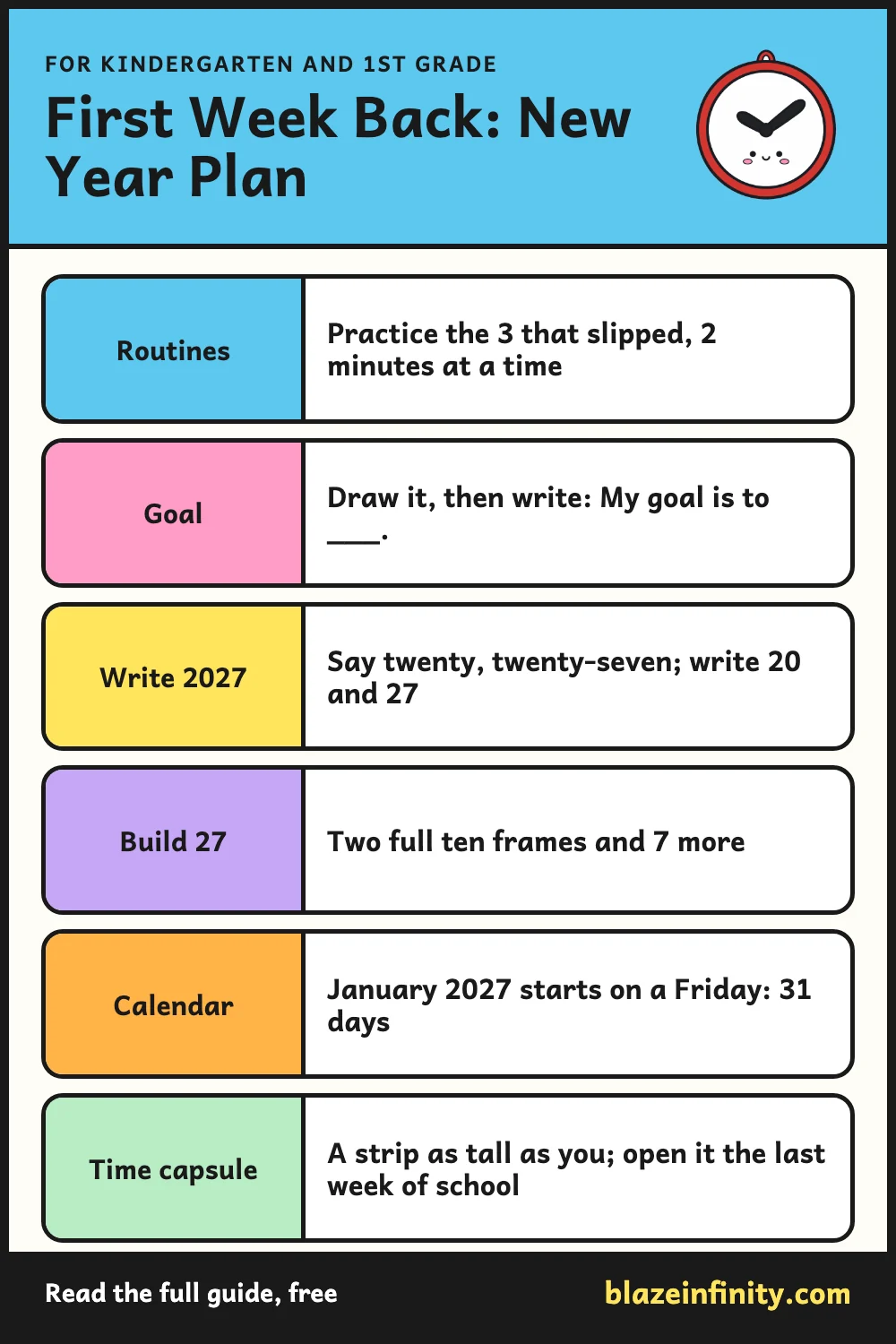
The first week back in January is not really about the New Year. It is about a class that has been out of school for one or two weeks and has forgotten how to line up. The New Year is the hook that makes the reset feel like something new instead of a lecture. This plan gives the week four jobs, in order, with the words to say and what to do when it goes wrong. Nothing in it needs food, noisemakers or confetti.
The first week back after winter break, in four jobs
Each job has a day, but the first one runs all week. If your first week back is short, keep jobs 1 and 2 and move the rest to the following week.
- 1
Reset the routines (Monday, then a few minutes every day)
Practice the three routines that slipped most before break. Practice them; do not explain them. - 2
Set one goal (Tuesday)
Each child draws and writes one thing they want to learn to do in 2027, something they can practice at school. - 3
Play with the new year's numbers (Wednesday and Thursday)
Write 2027, build the 27 in it on ten frames and hunt through a January calendar. - 4
Look back and pack a time capsule (Friday)
Compare September with now, then seal a class box to open in the last week of school.
Job 1: reset routines on the first morning back
Children come back knowing the rules. What they have lost is the habit. Talking through the rules for twenty minutes on Monday morning feels thorough and changes very little. Practice changes it.
Pick the three routines that slid most in December. For most kindergarten classes that is coming in and unpacking, coming to the carpet and lining up. Run each one the way you did in the first week of school: you show it, one child shows it, the whole class does it, then everyone does it again faster. Say exactly what it looks like: "Show me coming to the carpet. Walking feet, hands at your sides, sit on your spot." Then name what you saw: "Jayden walked, sat on his spot and looked at me. That is it."
Two minutes, three times on Monday, is better than one long session. From Tuesday on, practice only the routine that fell apart the day before. Start morning work on the first day back, at the same time and in the same place as before break, because a familiar first task settles a room faster than anything new. If you use Kindergarten Morning Work or 1st Grade Morning Work, pick up on the day you left off.
Pencils need a reset too. A break without writing shows up as letters started at the bottom and sentences with no spaces. A short traced sentence on Monday or Tuesday morning brings the three sentence checks back before anyone writes a goal.
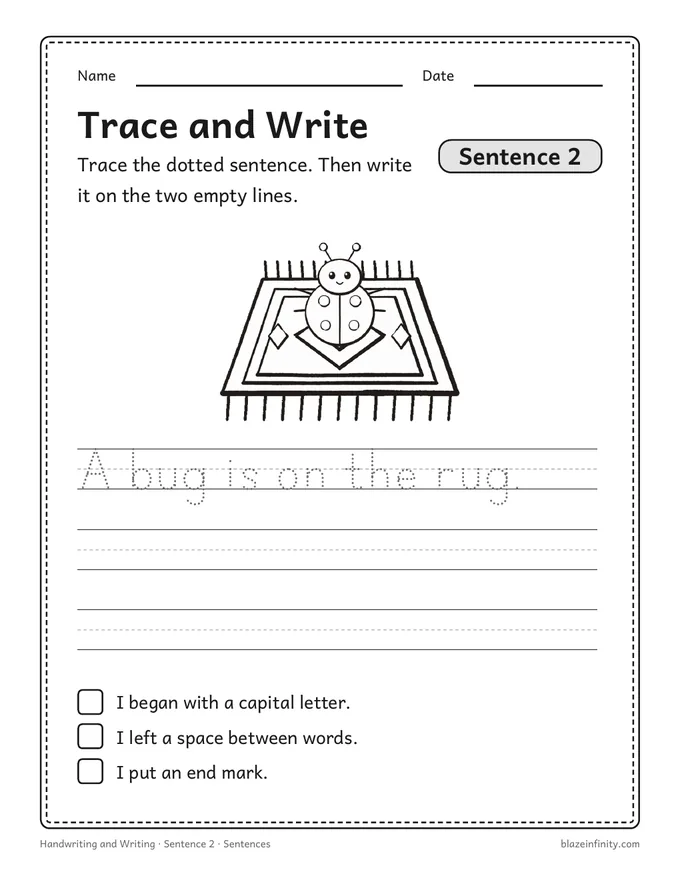
Use this page on Tuesday morning, before goal writing. The three boxes at the bottom (a capital letter, spaces between words, an end mark) are the same three things you will check on every goal sentence that afternoon. If letters are coming out from the bottom up, our guide to letter formation has the start points and the words to say.
Job 2: New Year goal writing for kindergarten
"Resolution" means little to a five-year-old. "Goal" works better, and so does a plain definition: "A goal is something you want to learn to do. You practice, and one day you can do it." Before anyone writes, model your own goal on chart paper and say how you will practice it.
My 2027 goal
Teaches: planning, drawing and writing one sentenceYou need: half a sheet of paper per child with a box to draw in and lines below; crayons20 to 25 minutes
Ask three or four children to say a goal out loud first, so the room hears examples like tying shoes, writing a last name or reading a book to a little brother. Then each child draws themselves doing the goal, already able to do it. Kindergartners finish the sentence "My goal is to ___." with as much as they can write, and you write the rest underneath as they say it. The kindergarten writing standards describe writing as a mix of drawing, dictating and writing, so a dictated sentence is not cheating.
First grade: two sentences. "My goal is to ___. I will practice by ___." The second sentence is the hard one and the one that matters.
Put the goals on a wall at children's eye level, not above the board. Come back to them on a set day: the 100th day of school is a good one. Children who can now do the thing get to tell the class how they practiced. For more writing practice after the goal, the Handwriting and Writing set has 20 traced sentences and 20 picture writing prompts.
Job 3: New Year math activities with 2027
The new year hands you a number on every date you write. Three short activities use it, spread across Wednesday and Thursday.
Write the year
Teaches: writing the numerals 2, 0 and 7You need: whiteboards or scrap paper; a paper strip per child for a crown; tape10 minutes
Say the year the way children hear it: "twenty, twenty-seven." Write 20 and 27 on the board with a gap between them, then write them again with no gap: 2027. Then form each digit with the class in the air, then on boards. For 2: "Around the top, slant down, slide across the bottom." For 7: "Across the top, slant down." Watch for a 2 or a 7 that faces the wrong way. Children write 2027 big on a paper strip and you tape it into a crown. Tape, not staples, near hair.
First grade: "How many years from 2027 to 2030?" Count on from 27: twenty-eight, twenty-nine, thirty. Three years.
Build the 27 in 2027
Teaches: counting past 20 with tensYou need: three ten frames and 30 counters per pair15 minutes
Pairs count out 27 counters onto ten frames, filling each frame before starting the next. Then they count the frames, not the counters: "Ten, twenty," and count on with the last frame, "twenty-one, twenty-two ... twenty-seven." The kindergarten standard asks children to count up to 20 objects, so 27 is a stretch. The frames are what make it possible: once two are full, nobody has to count those twenty again.
First grade: write it as 2 tens and 7 ones, then swap the digits to build 72 and say what changed: now it is 7 tens and 2 ones. Our guide to place value in first grade goes further.
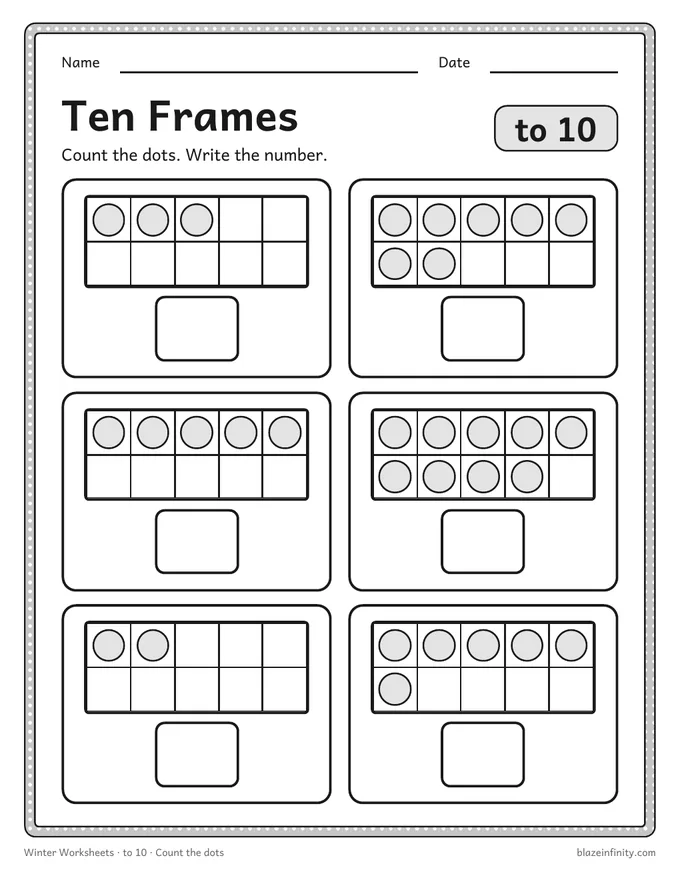
Use this page as the Wednesday warm-up, before Build the 27. Children who can read a single frame at a glance are ready to count two full frames as ten and twenty. If any are still counting every dot from one, start them at the ten frame basics and give them 17 to build instead of 27.
January calendar hunt
Teaches: reading a calendar; counting and comparingYou need: a blank January calendar per child, or one large one on chart paper15 minutes
January 2027 starts on a Friday, so on a calendar that starts with Sunday the first row has only two days. Children usually notice that and ask why, which is the best way into the lesson. Ask one question at a time: "What day is January 1?" (Friday) "How many days are in January?" (31) "Are there more Mondays or Fridays?" Children color the Mondays one color and the Fridays another, then count: 4 Mondays and 5 Fridays. Then find the third Monday, January 18, which is Martin Luther King Jr. Day.
First grade: 31 days is 3 tens and 1 one. Then the big one: 2027 has 365 days, and 2028 will have 366 because it is a leap year. Let them guess where the extra day goes before you tell them it is February 29.

Use this page on Thursday morning, after Build the 27. Children have just counted "ten, twenty" with frames, and the page carries that count all the way to 100.
Job 4: then and now, and a New Year time capsule
Friday is for looking back at the first half of the year and forward to the second. Children rarely notice their own progress. Putting the evidence side by side lets them see it.
Then and now
Teaches: recalling an experience and comparingYou need: a writing sample or name from the first weeks of school, if you kept one; paper15 minutes
Give each child the name they wrote in August or September and have them write it again beside it. Ask, "What can you do now that you could not do then?" Kindergartners draw two pictures, me then and me now, and finish "Now I can ___." If you did not keep samples, ask children to remember instead: "On the first day of school, could you find your cubby? Could you write your name?"
First grade: three sentences: "In September I could ___. Now I can ___. Next I want to ___." The third sentence connects back to Tuesday's goal.
Class time capsule
Teaches: measuring and recording; writing about yourselfYou need: one large envelope per child; one box; a roll of paper or adding machine tape30 minutes now, 15 at the end of the year
Each envelope gets a paper strip cut to the child's height, their hand traced on a sheet, a "Right now" page where they draw and label their favorite book and favorite thing to do at recess, and a copy of their goal. For the strip, the child stands against the wall, heels touching it, and you cut the paper level with the top of their head. Keep each strip in its envelope: never post heights on a wall, and never weigh children.
Every envelope goes in one box, and the box gets the open date in big letters: the last week of school. On the day you open it, children hold their strip up and see how much they grew, trace their hand on top of the January one in a different color, and write their name again. A child who moves away takes their envelope with them. A child who joins after January gets an envelope in their first week.
If you want one moment of celebration, end Friday with a 10-second countdown and a cheer while children wear their 2027 crowns. That is all a classroom New Year needs.
When the first week back goes sideways
These are the problems teachers see most in this week, and what to do about each one.
If you see
A goal that is a wish: "My goal is to get a puppy."
The child has not yet separated wanting something from learning to do something.
Try this
If you see
Half the class writes the same goal.
They copied a neighbor or the first example they heard. In kindergarten that is fine.
Try this
If you see
2027 written as 20207 or 227.
The child is writing what they hear. Twenty-seven often comes out as 207, or the zero gets lost.
Try this
If you see
Lining up falls apart again on Wednesday.
Normal. One good day of practice does not make a habit.
Try this
If you see
"I did not get better at anything."
Children compare themselves to classmates, not to September.
Try this
After the first week
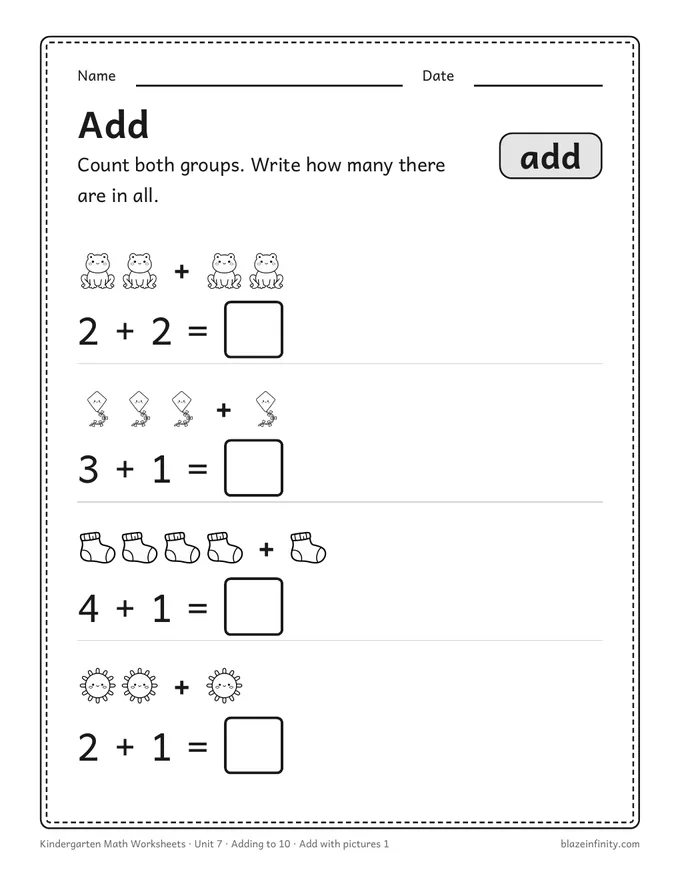
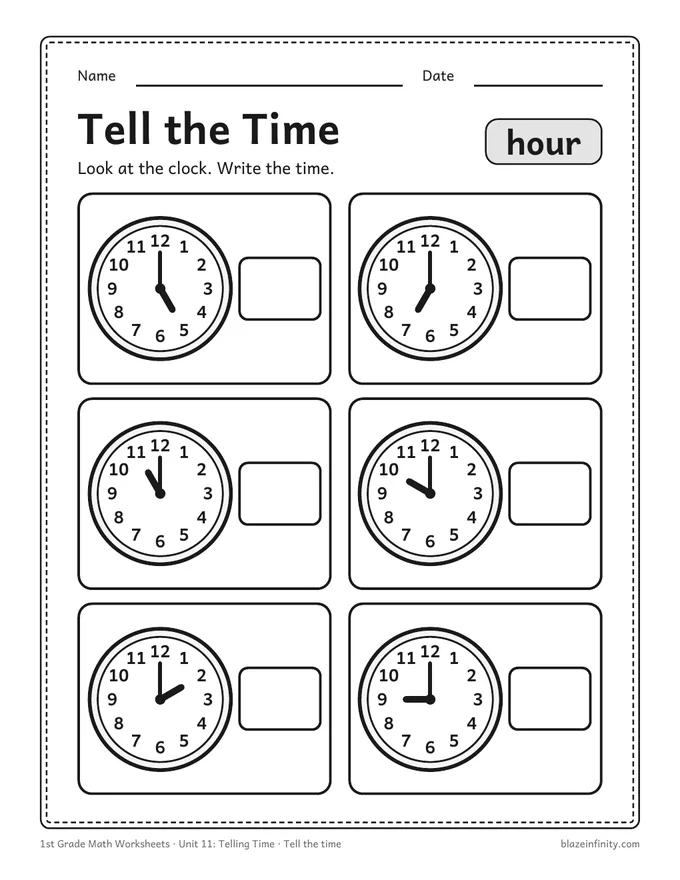
By the second week back the class should be running on its own routines again, and the New Year theme can step aside for the rest of the winter. Our winter activities for kindergarten pick up from there. The Winter Worksheets set has more than 140 winter and New Year pages for Pre-K to first grade: counting, ten frames, skip counting, tens and ones, adding and taking away, beginning sounds, mazes, word searches, color by number and coloring pages, with answer keys and a black-and-white edition. For quick extras, our free worksheets page has winter mazes and coloring pages for early finishers.
What the research says
- Kindergarten writing: use a combination of drawing, dictating and writing to compose opinion, informative and narrative pieces (W.K.1 to W.K.3); with guidance and support from adults, recall information from experiences to answer a question (W.K.8). [1]
- Kindergarten: count to 100 by ones and by tens (K.CC.A.1); count forward beginning from a given number (K.CC.A.2); count to answer "how many?" questions about as many as 20 things arranged in a line, a rectangular array or a circle (K.CC.B.5). [2]
- First grade: count to 120 starting at any number (1.NBT.A.1); the two digits of a two-digit number represent amounts of tens and ones (1.NBT.B.2). [3]
Sources
- Common Core State Standards for English Language Arts, Writing, Kindergarten.
- Common Core State Standards for Mathematics, Kindergarten, Counting and Cardinality.
- Common Core State Standards for Mathematics, Grade 1, Number and Operations in Base Ten.
Common questions
- What are some New Year activities for kindergarten?
- Write a goal for the year with a drawing and one sentence, write 2027 on a paper crown, build 27 on ten frames, hunt through a January calendar, compare a September name sample with one written now, and pack a class time capsule to open in the last week of school.
- How do you explain New Year's resolutions to kindergartners?
- Call it a goal: something you want to learn to do, that you can practice and one day do. Model your own goal first and say how you will practice it, then keep children's goals to things they can practice at school.
- What should I do in kindergarten on the first day back after winter break?
- Practice the routines that slipped most, usually coming in, the carpet and lining up, in short rounds of about two minutes. Start morning work in its usual place and time, and save new activities for later in the week.
- What New Year math works for first grade?
- Write 27 as 2 tens and 7 ones, count on from 2027 to 2030, find that January has 31 days or 3 tens and 1 one, and work out why 2028 has 366 days when 2027 has 365.
- What goes in a kindergarten time capsule?
- A paper strip cut to the child's height, a traced hand, a page about their favorite book and favorite thing to do at recess, and a copy of their goal. Open it in the last week of school and measure again.
The full set for this skill
Winter Worksheets
146 winter worksheets for Pre-K to 1st grade in eight sets: counting and ten frames, numbers to 120, adding and taking away within 10, winter words and beginning sounds, patterns and line tracing, mazes, word searches and codes, coloring and writing pages, and a New Year set with a countdown, clocks and goal pages. The pictures are snowmen, mittens, arctic animals and New Year party things, so it works all January and February.
- 24 counting pages: count and write, count and color, graphs, I spy and ten frames to 20
- 13 number pages: counting to 120, skip counting by 2s, 5s and 10s, tens and ones, number charts and measuring
- 21 adding and taking away pages: pictures, number bonds, number lines, facts and story problems within 10
- 10 word pages: beginning sounds, trace and write, read and match
- 10 pattern, line tracing and cut-and-paste pages