









Ten Frame Activities: 13 Games for Kindergarten and 1st
Thirteen ten frame games sorted by skill: quick looks, showing numbers, make 10, teen numbers, adding and taking away. Each with what you need and how long.
In short
- Pick ten frame games by skill: quick looks, showing numbers, make 10, teen numbers, then adding and taking away.
- In make 10 games, keep asking about the empty boxes. They are always the partner that makes ten.
- Show teen numbers on two frames with the first one full, and have children say them as ten and some more.
- Play one short game a day and repeat it for a few days before you change it.
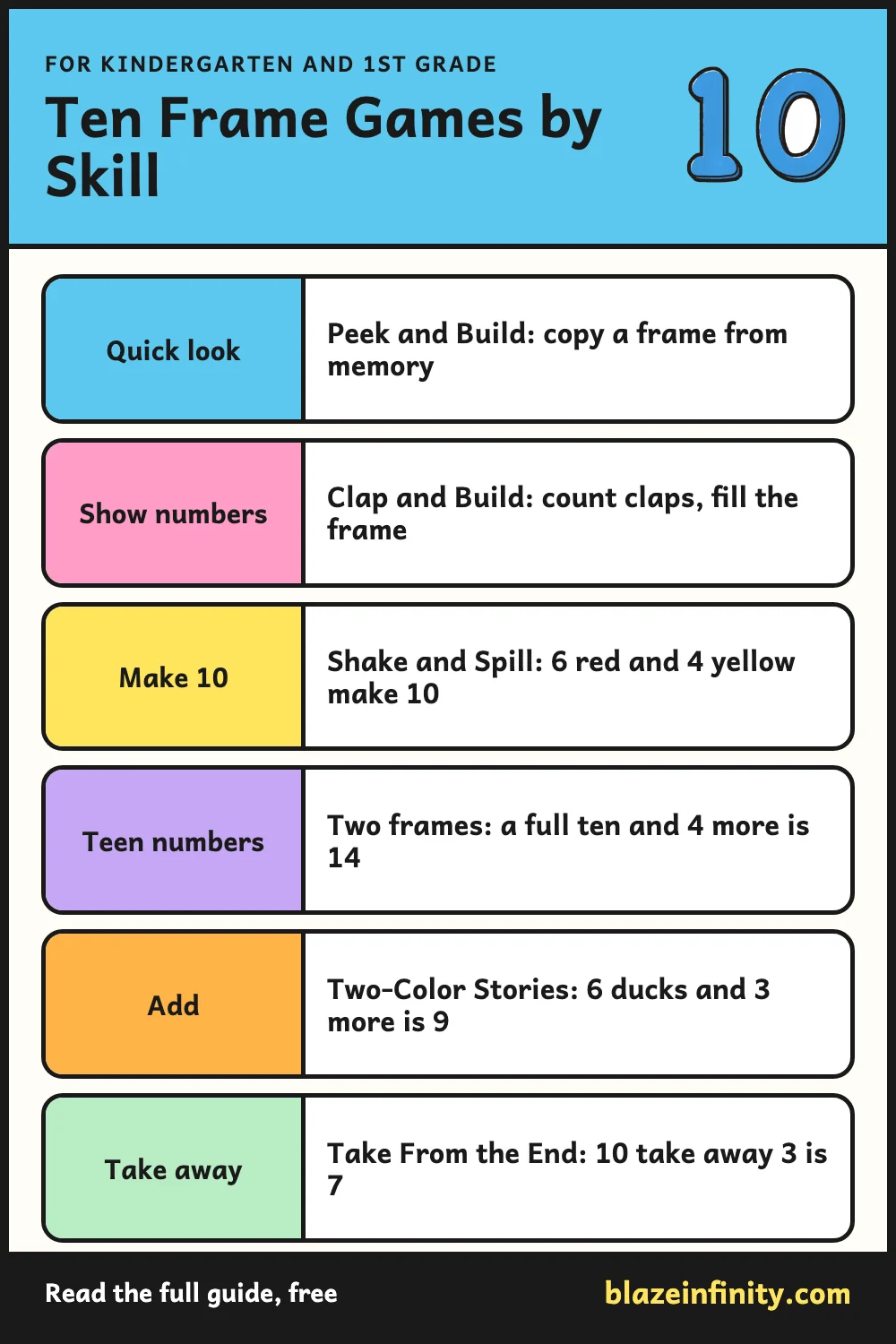
The best ten frame activities are short games where a child builds, sees or changes a number on a frame of two rows of five boxes. Choose by the skill the child is working on now. Below are thirteen games in five skill groups, in the order children usually meet them: quick looks, counting and showing numbers, making 10, teen numbers, and adding and taking away.
Every game works with a frame drawn on paper or a whiteboard and any small counters. Times on each card are suggestions. If the ten frame is new to your class, start with what a ten frame is and how to fill one. Its six starter games are not repeated here.
Which games to start with
| Skill | Usually taught in | Start with |
|---|---|---|
| Quick look (seeing without counting) | Pre-K and kindergarten | Peek and Build |
| Counting and showing numbers to 10 | Pre-K and kindergarten | Clap and Build |
| Make 10 | Kindergarten, reviewed in first grade | Shake and Spill |
| Teen numbers | Kindergarten and first grade | Build It, Say It Two Ways |
| Adding and taking away | Kindergarten within 10, first grade within 20 | Two-Color Stories |
Quick look games (subitizing)
These teach a child to know how many without counting. Show the frame for a second or two, too short to count.
1. Peek and Build
Teaches: seeing a number at a glanceYou need: frame cards; a blank frame and ten counters each5 minutes
Show a frame card while you count “one, two, three” aloud, then hide it. Children build it from memory, then you show the card again so they can check. Ask, “How did you remember?” You hope to hear, “The top row was full and three more.”
2. Five or More?
Teaches: five as a landmarkYou need: frame cards 0 to 103 minutes
Flash a card. Children show a thumb up for more than five, a thumb down for less, and a flat hand for exactly five. They only have to look at two things: is the top row full, and has the bottom row started?
3. Guess My Frame
Teaches: describing a number in wordsYou need: a folder to stand up as a screen; a frame and counters each10 minutes
A folder stands between two players. One builds a number in secret. The other asks only yes-or-no questions, such as “Is the top row full?” or “Are two boxes empty?”, then builds their guess and lifts the folder to check.
Counting and showing numbers
These games tie the counters to the number said aloud.
4. Clap and Build
Teaches: counting things you cannot seeYou need: a frame and ten counters each5 minutes
Clap between one and ten times while children count in their heads. They put one counter on the frame for each clap and hold their frames up. Clap again slowly while everyone counts aloud to check.
5. Ten Frame Train
Teaches: number order from 0 to 10You need: frame cards 0 to 1010 minutes
Children lay the cards in order from 0 to 10. One child closes their eyes while another turns a card face down. The first child says which number is hiding and how they know.
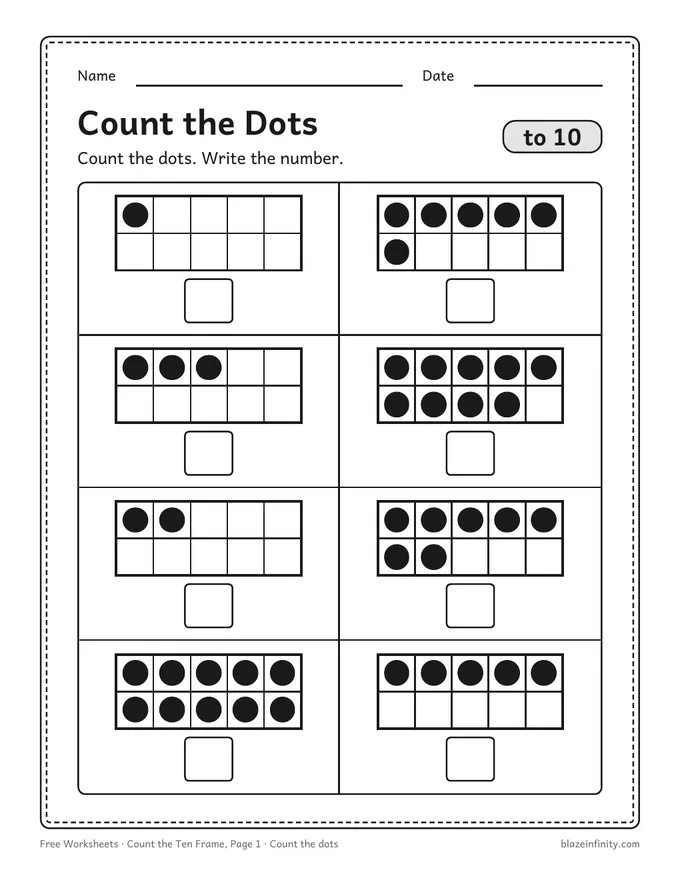
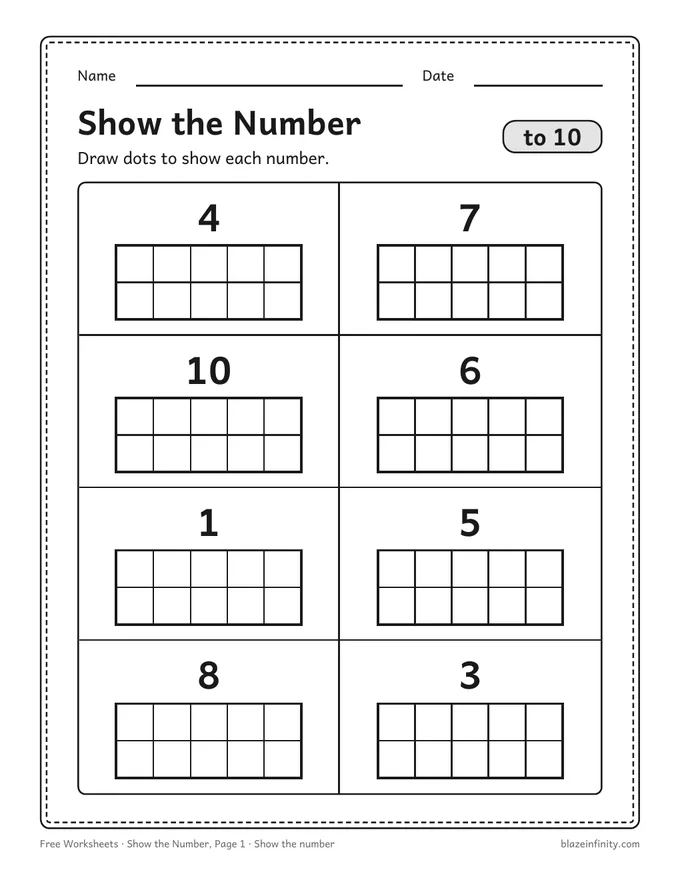
On paper, reading frames comes before drawing them, because drawing means keeping the fill order with no model. Our free ten frame worksheets have three pages of each. If a child scatters dots across the frame, have them say “top row first” and draw it again.
Make 10 activities
The kindergarten standard is to find the number that makes 10 with any number from 1 to 9 (K.OA.A.4). On a ten frame, that number is always the empty boxes.
6. Shake and Spill
Teaches: the pairs that make 10You need: a cup; ten counters with a different color on each side10 minutes
Shake ten two-color counters in a cup and spill them. Children put the red ones on the frame first, then the yellow, and say the pair: “Six and four make ten.” Tally the pairs and ask which have not come up yet.
7. Make Ten Go Fish
Teaches: remembering the pairsYou need: four sets of frame cards 1 to 915 minutes
Deal five cards each. Holding a 4, a player asks someone, “Do you have a 6?” A pair that makes ten goes face up on the table, and the most pairs wins. The partner is always the number of empty boxes on the card in your hand.
8. Bowling for 10
Teaches: seeing both parts of 10 at onceYou need: ten empty plastic bottles; a soft ball; a frame and two colors of counters15 minutes
Stand the bottles in two rows of five, like a ten frame. A child rolls the ball, counts how many fell and how many are standing, and shows it on the frame in two colors: “Seven down and three standing make ten.”
On paper, the child draws the missing dots in each frame and writes how many more make 10: count the empty boxes, not the dots. There are four pages in our free make 10 worksheets.

Teen number games
A teen number is one full ten frame and some more. The kindergarten standard asks children to build 11 to 19 as ten ones and some further ones, recorded with a drawing or an equation such as 18 = 10 + 8 (K.NBT.A.1). Two frames, the first always full, show exactly that.
9. Build It, Say It Two Ways
Teaches: teen numbers as ten and some moreYou need: two frames and twenty counters each5 minutes
Call out a teen number. Children fill the first frame, put the rest on the second and say it both ways: “Fourteen is ten and four. Ten and four is fourteen.” Then they write 14 = 10 + 4. Call the numbers out of order, so nobody can just add one more.
10. Race to Twenty
Teaches: counting on from tenYou need: two frames each; counters; one die15 minutes
This is Roll and Fill from the starter games, stretched to two frames. Players take turns rolling and adding that many counters, first frame first. Once it is full, they say the total as ten and some more after every turn: “Ten and three, thirteen.” The first to fill all twenty boxes with an exact roll wins.
Adding and taking away
Kindergartners add and take away within 10 with objects and drawings (K.OA.A.2). First graders go to 20 and use making ten as a strategy (1.OA.C.6). Two colors show the two parts of an addition, and lifting counters off shows taking away.
11. Two-Color Stories
Teaches: addition as joining two partsYou need: a frame; counters in two colors10 minutes
Tell a short story for children to act out: “Six ducks are on the pond. Three more fly in.” They put down six red counters, then three yellow, and say 6 + 3 = 9. Then ask: “How many more ducks can land before the pond is full?”
12. Take From the End
Teaches: subtraction as taking awayYou need: a frame and ten counters each; one die10 minutes
Each player starts with a full frame, rolls the die and takes that many counters off, starting with the last box filled: “Ten take away three is seven.” The frame stays in order, so what is left can be read at a glance. The first to clear the frame with an exact roll wins.
13. How Many More?
Teaches: comparing and finding the differenceYou need: frame cards 0 to 10; a pile of counters10 minutes
Each player turns over a frame card. Lay one above the other and point to the boxes full on one and empty on the other. The bigger number takes that many counters: for 8 and 5, three. Most counters wins.
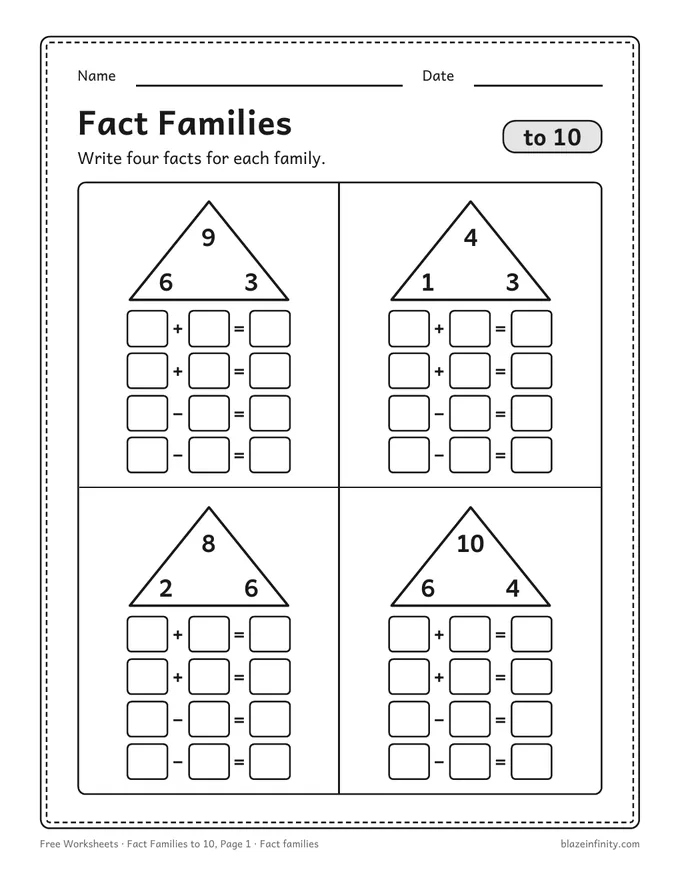
When a child can name both parts and the whole on a two-color frame, move the three numbers to a fact family triangle: the whole on top, the parts below, two addition and two subtraction facts. Our guide to teaching number bonds shows the steps in between, and fact families in first grade shows how to teach the triangle.
When to move a child on
You do not need a test. Watch during the games.
A child is ready to move on when they can...
- Say how many are on a frame from a quick look, without counting from one.
- Show any number from 0 to 10 on a blank frame, top row first, with no model.
- Say how many more make 10 for any number from 1 to 9 without touching the empty boxes.
- Build a teen number as one full frame and some more, and write it as 10 plus the rest.
- Say the number sentence for a two-color frame, or when counters come off.
Fitting the games into a week
One game a day is plenty. Repeat it for three or four days, so children stop learning rules and start thinking about numbers. In first grade, making ten becomes a way to add: 8 + 5 is 8 + 2 + 3. Our guide to addition strategies for first grade picks up from there.
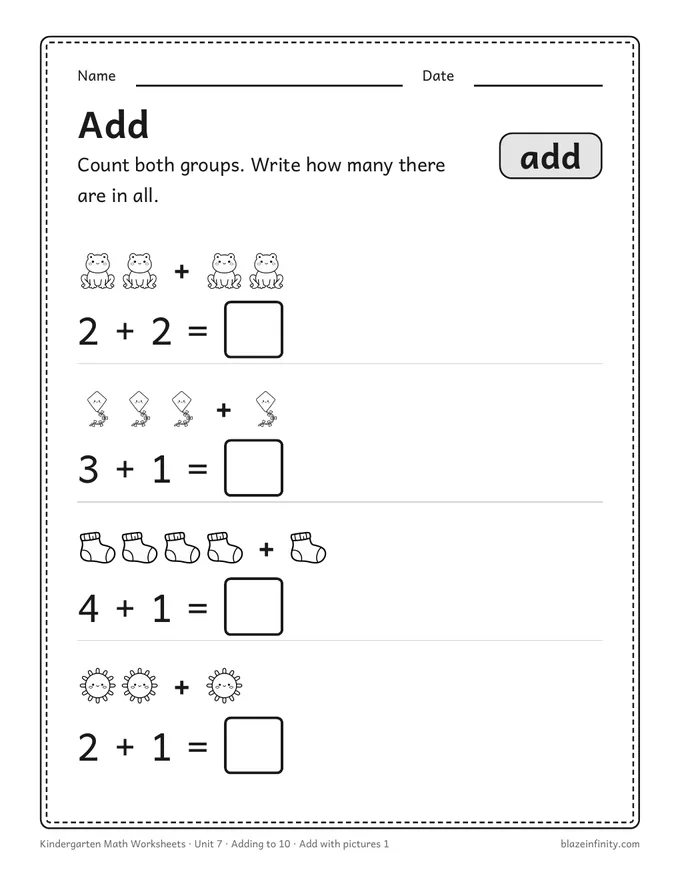
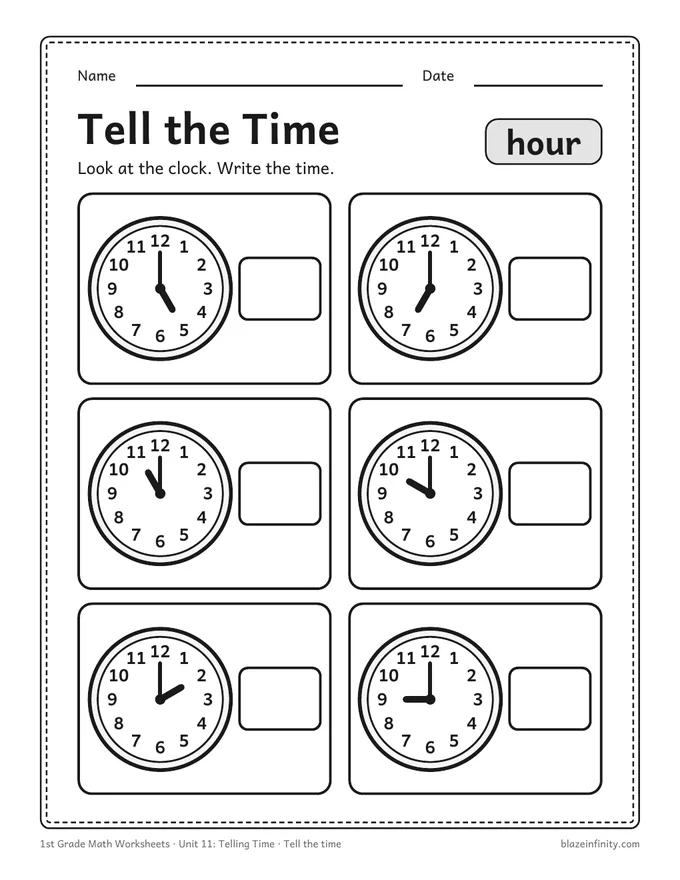
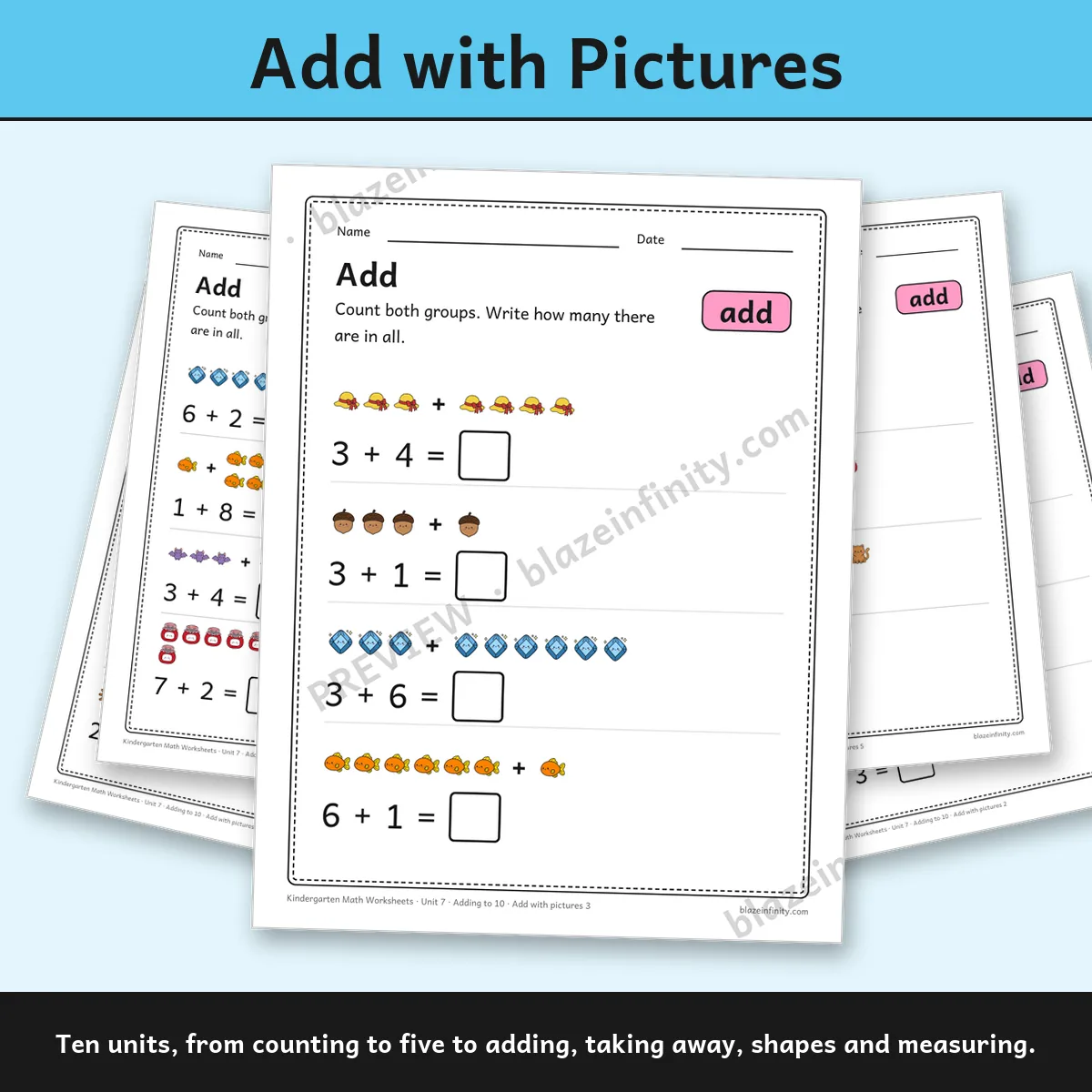
For a year of pages in the same order, Kindergarten Math Worksheets has 300 worksheets in ten units, including making 10 and adding and taking away within 10. Each unit starts with pictures, moves to ten frames and number lines, and ends with numbers on their own.
What the research says
- Kindergarten: for any number from 1 to 9, find the number that makes 10 when added to it (K.OA.A.4); add and subtract within 10 with objects and drawings (K.OA.A.2). [1]
- Kindergarten: compose and decompose numbers from 11 to 19 into ten ones and some further ones, recorded by a drawing or equation such as 18 = 10 + 8 (K.NBT.A.1). [2]
- First grade: add and subtract within 20, with strategies that include making ten (1.OA.C.6). [3]
Sources
- Common Core State Standards for Mathematics, Kindergarten, Operations and Algebraic Thinking.
- Common Core State Standards for Mathematics, Kindergarten, Number and Operations in Base Ten.
- Common Core State Standards for Mathematics, Grade 1, Operations and Algebraic Thinking.
Common questions
- What are some ten frame activities for kindergarten?
- Good kindergarten ten frame activities are short games: building a frame from memory after a quick peek, clapping a number and building it, spilling two-color counters to find pairs that make ten, and building teen numbers on two frames. Each takes five to fifteen minutes and needs only a drawn frame and small counters.
- What skills do ten frames teach?
- Ten frames teach seeing a number without counting, using five and ten as landmarks, the pairs that make 10, teen numbers as ten and some more, and adding and taking away. Children usually meet them in about that order, from Pre-K to first grade.
- How do you teach making 10 with a ten frame?
- Show a number on the frame and ask how many boxes are empty. The empty boxes are always the number that makes 10. Games like Shake and Spill and Make Ten Go Fish give children practice until they know each pair without counting.
- How do you use a double ten frame?
- Put two frames side by side and always fill the first one before starting the second. Then a teen number reads as one full frame and some more: 14 is a full frame and 4. Children say it as ten and four and write 14 = 10 + 4.
- What ten frame games work for first grade?
- First graders get most from games with two frames and from adding and taking away: Race to Twenty, Take From the End, and the How Many More? card game. They also use make 10 games to practice adding by making ten, such as 8 + 5 as 8 + 2 + 3.
The full set for this skill
Kindergarten Math Worksheets
300 worksheets in ten units. Every unit goes in steps: pictures first, then ten frames and number lines, then numbers on their own. Each unit ends with mixed review and two check-ups.
- 300 worksheets in 10 units, with answer keys
- Steps in every unit: pictures, ten frames, number lines, then numbers
- Story problems for adding and taking away
- Mixed review and two check-ups in every unit
- A progress record for each child